The incredible journey of the Farne Three
Post categories: The Curious Owl
 |16:53 UK time, Friday, 14 January 2011
Here's a story of animal derring-do to warm your cockles. The National Trust has reported that three grey seal pups from the Farne Islands have survived an incredible 350-mile journey across the North Sea. One of the pups was less than three weeks old.
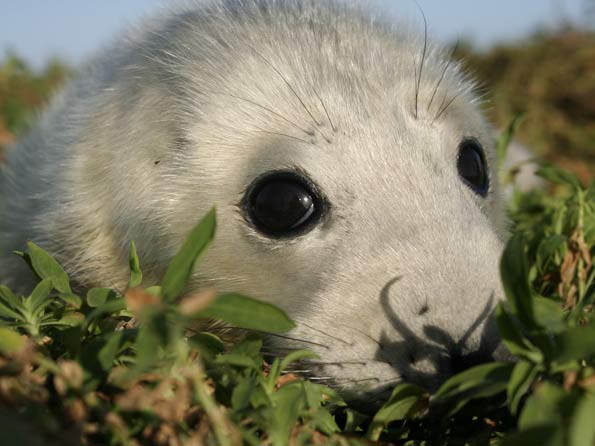
Grey seal pup on the Farne Islands © National Trust Farne Island wardens
They were discovered on a Dutch beach and identified by the coloured dye that the Farne Island seal wardens mark the pups with. It's likely that the storms and easterly winds of November and December swept the pups so far out to sea that they couldn't return to their birth beaches.
This story has a particular resonance for me. I spent seven hours a day for two weeks in Orkney filming and watching seal pups for last year's Autumnwatch webcast. (You can see some of the films Gordon Buchanan made on our Stronsay seals here.)
The pups we saw were in no mood for exploring. Thankfully, we didn't see any of them getting washed out to sea. But if we had, we would have more than likely reported them as gone forever.
The furthest we saw any go out in the water was about ten yards. Even then, they would be closely guarded by their mum. A study of grey seals at Froan in Norway, however, did find pups swimming up to about 12 km away. But we didn't see any behaviour like this.
And what about food? Remarkably, David Steel, the National Trust Head Warden for the Farne Islands, thinks that two of the pups found in Holland would have still been dependent on their mothers. These pups, normally fed every three hours, need to take on about three litres of milk a day.
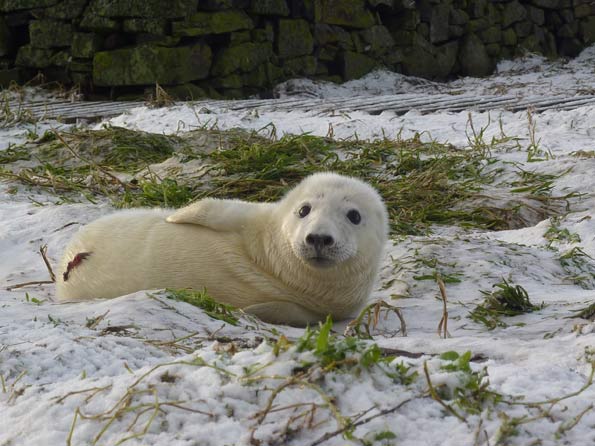
How could a pup like this have swum 350 miles? © National Trust Farne Island wardens
No one knows for how long the Farne seals were at sea. Even if we assume a pup could swim as fast as an adult, it would have taken them at the very least 17 hours to get to Holland. That's a long time for a pup to go without milk.
On Stronsay we watched helplessly for almost a whole day as one pup searched in vain for its mother. The next day it was gone.
The third pup on this amazing adventure had only just been weaned. While it's normal for these 'second coat' pups to fast and they are far more adventurous (we witnessed one lollop about 400 yards from the beach to a barn in the nearby farm), it's still a fantastic feat for one so young.
Life is precarious enough for these pups without making epic journeys. In the Farne Islands 45% of the pups don't survive their first winter.
In case you're wondering what's happened to the Farne Three (as I've decided to call them) now, they're all recovering well in a refuge centre near the beach where they were found. Once they've put on enough weight they'll be released back into the wild and maybe even swim back to the Farne Islands.

Comment number 1.
At 21:06 16th Jan 2011, unarmadillo wrote:thanks for all the great blogs jeremy
Complain about this comment (Comment number 1)
Comment number 2.
At 23:27 16th Jan 2011, leesteve wrote:This comment was removed because the moderators found it broke the house rules. Explain.
Complain about this comment (Comment number 2)
Comment number 3.
At 11:08 19th Jan 2011, Jbird wrote:Thanks for the story, I am constantly amazed at the stamina that some creatures have whatever nature throws at them. I am so glad those pups are now in good hands and will eventually be released back into the wild where they can carry on with their lives. We are often told that we shouldn't inter fear with nature but on these occasions it's good to know there are refuges that will care for wild creatures until they can be returned to their natural habitat.
Complain about this comment (Comment number 3)