Selling cats to the British public

Alex Ranken
is a researcher on Horizon
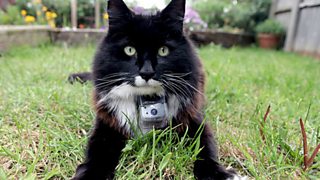
But that changed with the recent The Secret Life of the Cat programme I worked on for Horizon. We’d used state-of-the-art GPS trackers and miniature cat cams to set up an experiment to show what cats get up to when they’re outdoors.
Our experiment was unique and exciting and we’d have the scoop on whatever genuine scientific conclusions we could draw from our data. We wanted to make sure everyone would hear about what we’d discovered - and watch our programme.
Our collaboration with BBC News started early on. Zoe Heron, our series producer, put a call into the News team and we started meeting with science reporter Rebecca Morelle. Rebecca and her producer, Simon Hancock, came down to our chosen village in Surrey to film a piece during our experiment week. They wouldn’t use it until the day of transmission two months later when it would complement whatever story they could get from our analysis of the data we were collecting.
We also approached the BBC’s Visual Journalism team. These are the guys that produce the beautiful infographics on the BBC News website. As we had so much data from GPS collars and cat cams, the team wanted to produce an interactive portal for viewers to use as a ‘second screen’ while watching the programme. They assigned producers and designers to the project and started developing what would become the most shared and viewed article on the BBC News homepage.
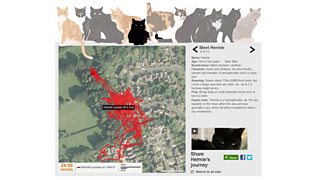
The Secret Life of the Cat: interactive online feature
The programme was to launch the summer run of Horizon. A trailer was aired. For a while it seemed that nearly every time anyone turned on a television they saw a black-and-white moggie bounding through the BBC Two symbol. That started to raise awareness for the project. With 10 million pet cats in the UK, we knew that it would get plenty of attention.
We sent the usual review copies out to the papers. But with an embargo on the experiment’s results until the day of transmission, it was BBC News which had the story - from BBC Breakfast and the Today programme onwards. That set the news agenda for the day.
BBC publicist Beth Regan had planned the press drive on the day and we needed to fill three separate nine-hour interview schedules for our three main scientists (Professor Alan Wilson, Dr John Bradshaw and Dr Sarah Ellis).
Many of the outlets were keen to try to get a cat on screen. As any cat owner will know, most cats don’t like new environments, so we used the only ‘show cat’ in the village. For each of our three scientists, we planned a two-hour stint doing GNS (General News Service). This is where they sit in a studio and have a different local radio station calling in every 10 minutes, asking the same questions. The rest of their day was filled with other radio and television interviews.
BBC Breakfast transmitted live from our village green. Unfortunately it looked a bit dreary, but if the weather wasn’t on our side the nation was.
After four slots on BBC News, a Today programme piece, Jeremy Vine BBC Radio 2 studio interviews, Richard Bacon 5 Live interviews, BBC World News studio and radio pieces, and a total of around 50 local radio interviews as well as double-page spreads in the Sun, Daily Mail, Radio Times, we felt we must have got the message across.
I walked the short distance from one BBC building to another with our cat and its owner and was stopped in the street by someone who remarked: “Oh my God, that’s a cat from the show tonight…!” Lilly, it seemed, was the most famous cat in the country. The head of Science, Andrew Cohen, later remarked that you should never underestimate the power of local radio.
As producer Helen Sage, Zoe and I sat down to watch the programme that evening, our eyes were firmly fixed on Twitter. At one point we were trending worldwide. Tweets were rocketing in at a rate of about one every two seconds.
The next morning we learnt we’d had an audience of almost 5 million - an amazing rating for a specialist factual programme. We were proud of the programme but there’s no doubt our news colleagues, six floors below, had played a crucial role in letting the audience know what we’d done.
