The power of the blog post
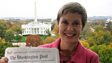
Philippa Thomas
is a BBC News correspondent. Twitter: <a href="http://twitter.com/#!/PhilippaNews">@PhilippaNews</a>
Tagged with:
On Friday, President Obama was questioned about it.
On Sunday, the spokesman, P.J. Crowley, resigned.
I've been a reporter for the BBC for two decades, broadcasting through the traditional mass media of television and radio. Now, as an individual, I've learned at first hand the power of the blog.
A digital world
Last year, I took up a Nieman journalism fellowship at Harvard University to focus on the fast-changing world of digital media and citizen journalism.
In September, I signed up for a class on Media, Politics and Power, attracted by lecturer Nicco Mele's motto that "to understand the digital age you need to live it". I took another class, New Media and Public Action, with the social media evangelist Clay Shirky, author of Here ComesEverybody. In October, we were debating the power of social media on the
day the New Yorker magazine published Malcolm Gladwell's broadside"Why the Revolution will not be Tweeted".
Since December, we've all watched as social media played its part in uprisings across the Arab world.
As a coursework assignment, I began to write a personal blog. And I'd already signed up to Twitter as @BBCPhilippaT.
I'm on sabbatical. But I'm a journalist on sabbatical and I live in a digital world.
So a Harvard event on Thursday 10 March featuring the State Department spokesman P.J. Crowley talking about new media and foreign policy was not to be missed.
How the story spread
It started as I walked back from the event at MIT (the Massachusetts Institute of Technology). I called my colleagues at the BBC Washington bureau to tell them what I'd heard Crowley say about Bradley Manning (above). Soon after that, I published my blog post and put a link to it on my Twitter account.
The BBC's North America Editor, Mark Mardell, retweeted it. Within 24 hours, my blog had registered 17,000 views.
But that was just the start. At breakfast on Friday, Ed Pilkington from the Guardian called from New York to confirm the facts, after contacting me via the blog.
At lunchtime on Friday, Josh Rogin at Foreign Policy magazine online had the first quote from Mr Crowley confirming that this was his personal opinion.
Shortly afterwards, President Obama was asked by ABC News Senior White House Correspondent Jake Tapper whether he agreed with Crowley's comments. Both the BBC and theGuardian published pieces on their websites.
The story was taken up online by commentators who have been following the case of Bradley Manning - like Glenn Greenwald at Salon.com. I didn't make any further comment. I'm a journalist on sabbatical - not an activist with a cause.
But my blog showed me the sources for the thousands of readers it was attracting. First, there were the social media tools - Reddit and Twitter. Then the websites of big media brand names - primarily the BBC and the Guardian. Hundreds at a time came from new media outposts like the Huffington Post, Salon and the Daily Kos.
I knew a lot of Washington insiders were across it when readers began clicking through from Politico.com and Washingtonpost.com. Today, the New York Times website has so far sent another 130 readers my way.
And readers online can make their voices heard. Which brings me to comments posted about whether I should have published this story, and whether I should have asked P.J. Crowley "are you on the record?"
The ethics of the blog post
We've always talked to our audience. Today the audience talks back. A few of them queried the ethics of going public with this story. Many more thought I should have published without asking Mr Crowley whether he was on the record.
Here are a few of the comments, in the order in which they were posted:
Gavin Greenwalt: "Reporting should be about discovering the truth, not just airing gossip and the daily embarrassing quote."
Rob: "He said it aloud in a public forum. Why would you effectively ask for his permission? Kinda weak."
Hoover: "Because that's the way the world works, Rob. Try being a journalist for a year and printing every juicy bit of gossip you hear, then after that tell us if you have access to anybody worth listening to."
Einar from Sverige: "But is there any purpose of [sic] being a journalist if you have to be a back-patting 'journalist'? I would prefer to rather be [sic] a real one, or no journalist ... it was a weak sign. I hope she has learned for next time."
Total Cynic: "The guy is a spokesman for the State Department, not some babe in the woods. Asking him whether he was on the record was typical media suck-up behavior."
Here's why I did it:
If P.J. Crowley had been standing in a lecture hall with a microphone attached to his lapel, I would have posted my tweet immediately, and phoned the BBC very soon after. (And, had I not been on sabbatical, I would then have filed a report.)
But I felt the need to clarify. He was speaking to a small academic audience in a relaxed manner. Sometimes these gatherings are as open as they seem. Sometimes they are off the record, as is often the case with our seminars at the Nieman Journalism Foundation.
I'd spoken briefly to Mr Crowley before the event, identified myself as a journalist and exchanged business cards with him. But, because of the setting, I thought it was fair to ask openly at the end of the event: "Are you on the record?"
Had he said 'no', I would have done what journalists do in these situations, which is to ask him whether I or one of my BBC colleagues could now speak to him on the record and to alert the BBC to investigate further the tensions within the administration over the treatment of the Wikileaks whistleblower. If you can't broadcast information, you can still use it.
I agree with 'Hoover': to publish every bit of inside information that came our way, on the record or off, would actually be stupid and counterproductive, shutting off sources of insight about difficult policy choices.
Twitter comment: "One word answer ends career"
Did I think, as I heard P.J. Crowley speak, that this would be a resigning matter? I thought, as I said at the time, that it was an extraordinary insight into the tensions within the administration over Wikileaks. And so it's proved.
Did I expect him to say "Sure" when I asked if he was on the record? No, I did not.
Would the story have taken longer to emerge if I were not a longstanding BBC News correspondent? Probably, although others present confirmed the details. The outlets that were swiftest to respond - like the Guardian - had no hesitation in linking to the blog post because they knew who I was.
It might have looked like a perfect new media storm, but a professional journalist for a well-established news outlet still has a voice that can emerge more clearly from the white noise of the blogosphere.
However - as I've found out in dramatic fashion - I'm as open to comment and to criticism as anybody else.
Feel free to talk to me about journalism. You know where to find me.
Philippa Thomas is a BBC News correspondent currently on sabbatical as aNieman Journalism Fellow at Harvard. She blogs at www.philippathomas.com and tweets as @BBCPhilippaT.
