Media owner meddling adds to pressures on Pakistani journalists
Amanullah Ghilzai
is a journalist and analyst specialising in Afghanistan and Pakistan
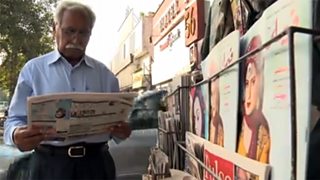
Reporters Without Borders lists Pakistan as one of the most dangerous countries for journalists over the past few years. Though most of the threats come from the religious extremist groups like the Taliban, some journalists complain that they are under pressure from some state institutions as well.
In the light of two recent high-profile attacks on prominent Pakistani journalists Hamid Mir and Raza Rumi, much has been written about the threats journalists face. Problems of the transfer of editorial control to owners of the media outlets and deep divisions within the journalist community haven’t had as much attention.
In Pakistan the electronic and print media regularly expose corruption and highlight weaknesses of government. They even criticise the most powerful institution in the country, the army. This side of the Pakistani media is very much in line with high standards of journalism.
But when it comes to media market dominance, the main TV channels tend to defer to commercialism rather than show strong editorial judgement based on journalistic ethics, because of the transfer of editorial control to media owners. On a recent talk show, one of the leading TV anchors, Asma Sherazi, deplored interference by media owners.
In recent years a number of journalists, mostly working with the main TV news channels, have been attacked, but the journalist community has been unable to show unity in sending a strong message to the perpetrators. So when an anchor of a particular TV news channel comes under attack, other channels generally avoid giving appropriate coverage - let alone fighting for the right of freedom of expression. Najam Sethi, a senior Pakistani journalist who works for Geo TV, says the lack of a united front against security threats is one of the major hurdles facing journalists in Pakistan.
During a recent visit to Pakistan, several young TV news journalists told me that, while covering some crucial events, they are simply told to stand in front of a camera on a live TV show and say anything in order to be the first in breaking the news. I asked what happens if they don’t know enough about what happened. They told me “it doesn’t matter, as long as our employers are happy.”
Another problem relating to editorial control is partiality. At least three of the big TV channels lean towards one of the main political parties. Geo TV, part of the Jang Media Group and controlling roughly half the media market, is widely accused of favouring the PML-N, the ruling party.
Another problem is the use of unverified social media, creating conspiracy theories and sensationalism in the country’s war against terrorism. When Pakistan’s teenage champion of girls’ education, Malala Yousafzai, was shot by a Taliban operative in her native Swat Valley, the mainstream media almost unanimously supported her and her cause. But subsequently unverified rumours started circulating about her on social media. Some sections of the mainstream media picked up those stories and started debating them, damaging the cause of the youngest hero of Pakistan.
As the debate over owners’ interference continues, Mazhar Abbas, a leading journalists’ rights campaigner, says it is important that steps are taken before the situation turns uglier. In several recent appearances Mr Abbas has suggested that media owners could form an alliance to unite the country’s journalist community.
If the news outlets in Pakistan follow more independent editorial rules, it would make the Pakistani media a role model for many other countries, replacing a competition in sensationalism with one to raise editorial standards.
BBC Urdu video on threats to the media in Pakistan
Pakistani journalist murder attempt flags a wider struggle for press freedom
Meeting commitments in Pakistan
Journalists in danger: Threats, torture and censorship in Pakistan
