Launch of Urdu TV from the BBC was sure to get them talking

Sajid Iqbal
is an Urdu media analyst with BBC Monitoring
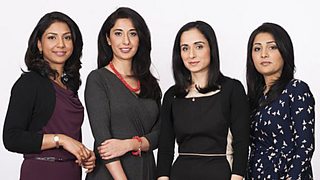
Sairbeen is a one-hour, nightly programme produced and presented from London and broadcast on one of Pakistan’s most watched news channels, Express News TV. It is the television version of BBC Urdu's flagship radio programme which has been popular for decades.
Interestingly, it has an all-female presenting line-up, which has unsurprisingly drawn its own share of comment. "Why the all-female line-up for TV? Men don’t sell well with Pakistani public?” was one tweeted challenge.
“Don't care where they air, as long as their USP stays the same,” tweeted one of Pakistan’s most popular talk show hosts.
The presentation should be “less stuffy and more informal" was the style advice from one Karachi newspaper editor, tweeted after the inaugural show.
The buzz in the Pakistani media about the new BBC venture began last July when Journalism Pakistan, an Islamabad portal which carries news about the country’s media, broke the news of a possible partnership between BBC and Express Media Group (EMG).
"The likelihood of an Express-BBC partnership would have enormous potential to further the reputation and development of the Express media machine," Journalism Pakistan said.
In the social media debate which raged until the launch of Sairbeen (Panorama in English) the pundits talked more about its possible impact on the entire media scene in the country than any benefits to EMG.
"The President on #BBCUrdu - will this new channel come out with a fresh perspective? An unbiased less chaotic more factual representation?" @alynaseer tweeted in the run-up to the programme's launch on Monday.
An interview with Pakistani president Asif Zardari in the opening show was clearly a scoop. That piece followed a report by Aamer Ahmad Khan, head of BBC Urdu, about the emerging political scenario in Pakistan ahead of a general election that could be as early as May.
Another report by Syed Anwar, BBC correspondent in Kabul, looked ahead to the withdrawal of NATO forces from Afghanistan. And then there was the interview with Hussain Haqqani, the controversial former Pakistani envoy in Washington who was forced to step down in November 2011, apparently under pressure from the military establishment.
Inclusion of the Haqqani interview was a bold decision by the BBC Urdu team as he stirs up extreme emotions. "Hussain Haqqani's in-depth & logical analysis abt. current issues on BBC. A great relief from routine shallow discussion shows@hussainhaqqani," @nasirazuberi tweeted after watching the broadcast.
“Great to see @husainhaqqani on BBC’s newly launched Sairbeen/ExpressTV. BTW interesting how he tuned his voice 2 match that of Sairbeen,” @ijattala added.
But veteran anchor of 24-hour channel Dawnnews English reacted differently. "Just lost any hope or respect for the transmission," @faisalqureshi wrote on Twitter after Haqqani's interview.
The editorial line taken by the BBC Urdu programme has been well understood by media observers. "Nusrat Javed, Sana Bucha, Najam Sethi, now Sairbeen/BBC - could sanity on air be reaching an effective counter-weight?" Dawn columnist Cyril Almeida tweeted after the programme.
He was referring to talk shows Bolta Pakistan, Yaqeen and Aapas ki Baat, hosted by Nusrat Javed, Sana Bucha and Najam Sethi on Aaj TV, Dunya News and Geo News respectively - all popular among liberal sections of Pakistani society.
Sana Bucha, one of the most popular talk show hosts currently on air in Pakistan, enthusiastically backed the BBC newcomer: "BBC Urdu is credible, accurate, balanced and objective. Don't care where they air, as long as their USP stays the same," she tweeted.
Lots of other tweets suggested ways to improve the programme. "At the risk of upsetting friends, I think Sairbeen's style needs to be less stuffy & more informal. Unless it's looking 4 a small niche," was the message from Talat Aslam, Karachi editor of Jang Group English newspaper The News.
"BBC taken measures to ensure uninterrupted programme on Pakistani TV channel?" was another tweet by @peshavar, posing an interesting question.
Most of Pakistan’s TV channels broadcast repeats of talk shows and summaries of news reports from 11pm to midnight, when BBC Urdu TV is aired. But Sairbeen faces tough competition from Geo News’s late-night programme Aapas Ki Baat, where veteran journalist Najam Sethi discusses the latest political issues, conspiracy theories and political gossip in his own distinctive way.
According to a report published in the Guardian newspaper in July 2012, Sethi's liberal politics show - generally out of step with a society that appears to be turning more conservative - has been a surprise hit on the country's most popular private channel, despite going out so late at night.
There has been much praise for Saibeen’s production values on Twitter this week, most commentators with reservations making allowances for it being early days. Perhaps the real test for the BBC show will come when the media pundits start scrutinising its editorial content on a daily basis.
