And the winner is: 10 tips on covering showbiz awards

Colin Paterson
Arts and Entertainment correspondent
It is not everyone who can say they have broadcast live from between the thighs of Salma Hayek.
There I was at the 2012 Oscars, on the red carpet at the Vanity Fair aftershow party, crouching down to allow my BBC Breakfast colleague a clear shot for his ‘top of the hour openers’. Radio 5 Live suddenly threw to me.
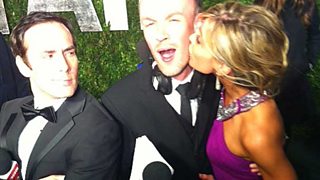
Colin Paterson with BBC Breakfast's Tim Muffet and a US TV reporter at the 2012 Oscars.
I have covered 10 Oscars, eight Brits, seven BAFTAs and one TV Quick Awards (one too many). I have never won an award, which may say something about the standard of my coverage, but then again Alfred Hitchcock never won a competitive Oscar. That is the kind of stat I would expect from someone covering award shows.
In the midst of the awards season, and in the build-up to the BAFTAs and Oscars next month, here are 10 other tips:
1. It is essential to do extensive preparation beforehand. The chances are you will have to interview upwards of 20 people during the night. Ask in advance for the list of who is turning up. Try to have three original questions written down for each. “What does it feel like to be nominated/win?” almost never produces an interesting response. “Judi Dench - Bond has not won an Oscar since 1966. What’s your theory?” is much more likely to give you a news line.
2. Put the award show in a greater context. If you were covering the Brit Awards this year, it would be wise to mention in any report that HMV, the biggest record store in Britain, has just gone into administration and artist album sales are down by 15% year on year. You would have an array of relevant guests to comment on the issue.
3. Try to avoid cheap clichés foisted on you by the newsroom. If a presenter asks 'How good an indicator for the Oscars are the BAFTAs?' don’t be afraid to say 'Actually, only four times in the past eight years has best film at the BAFTAs gone on to win at the Oscars.'
4. Having a producer can help enormously. Interviews are often carried out while the ceremony continues, so having another pair of eyes and ears to continue watching the show can be invaluable. I have often been asked 'What were the highlights?' and realised I have no idea because I have been chasing Stephen Fry down a corridor. Change your voicemail so it gives out your producer’s number or you tend to be bombarded with calls throughout.
5. If you are covering an award show for radio, ask for an audio feed of the ceremony and bring a second recorder. Every year at the Q Awards the news lines come out of the acceptance speeches (for example, Elton John saying Madonna lip-syncs). If the biggest names do not come backstage, you also still have audio to use.
6. It is often worth starting to write your script before the award show starts. The winners are often fairly easy to predict and if you are wrong at least you have a template from which to start.
7. Sound enthusiastic. Many listeners and viewers would love to be at an event with some of the biggest names in the entertainment world. Never comment that you are tired, bored or cold. They do not care. The reality is that often you are in a sweaty room with only equally sweaty sandwiches for sustenance, watching the action on a monitor. If you don't like it, change jobs.
8. Try to explain why award shows matter - for example, The Brit Awards give the music industry one of its biggest primetime audiences of the year (6.7 million watched Adele flick the Vs last year). The week after they won the Mercury Prize, Alt-J rose from 27 to 14 in the charts, demonstrating the commercial impact it can have.
9. Award shows tend to be in places with no phone reception. Always ask if there are broadband options for the press.
10. Do start your report with audio from the ceremony saying 'And the winner is…' followed by the big winner of the night. It just works.
Oh, and if you ever have the chance to cover The Razzies - do. They are the perfect antidote to everything above.
