Will anyone keep appointments to view in an on-demand world?

Chris Berthoud
is assistant editor in the BBC News impact team

Would the post of TV or radio scheduler soon be redundant like Betamax or reel-to-reel recording? Would the channel become just a programme factory to serve the web?
That was 10 years ago. In 2013 schedulers still have their jobs. In the UK around 90% of TV is still watched ‘live’ with no time-shifting. And iPlayer only accounts for 2% of the total BBC TV watched. People are still using red markers to ring programmes in the Radio Times, for heaven’s sake.
There is still an overwhelming attraction to being served up a good programme at the right time of day or night. When you combine this with a couple of basic problems with on-demand viewing and listening - that it requires mental effort to select a programme, technical effort to load it up, and your PC probably isn’t in front of your sofa - you can see why the schedule still rules the airwaves.
Perhaps this is why the BBC is experimenting with ‘appointment to view’ video strands on the web. Inside the BBC News division, we’re playing around with a few ideas: should we have recognisable video formats delivered to the audience on the News website every day, or every week? Is there an appetite for the audience to be offered formatted, branded ‘explainers’ (in video) on big news stories such as the Budget, the Leveson Inquiry or the inauguration of the Pope - probably less formal in tone than on TV?
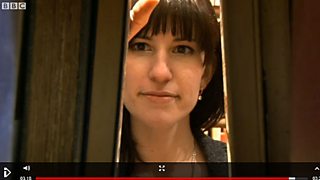
The answer - as is often the case - might lie in the US example. BBC Washington has hired three VJs (video journalists) whose main aim is to create engaging web video, packaged up into regular video strands which are published on specific days.
So if it’s Monday it’s First Person (like a film about the 'Mardi Gras Indians' of New Orleans, pictured top) which “tells the story of unique individuals from all walks of life in their own words”.
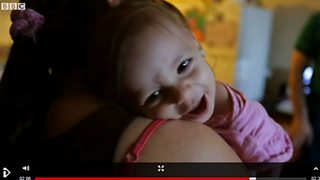
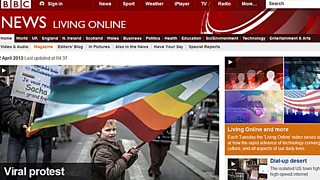
On Tuesdays it’s Living Online (a look at how the rapid advance of technology converges with culture). On Wednesday it’s Altered States - how shifting demographics and economic conditions affect the US on a local level (like stories of asylum seekers, pictured below right). And on Thursdays it’s Picture This: a series featuring illustrated interviews with authors about their new books.
Claudia Milne, the BBC News US edition editor and brains behind the experiment, says: “It’s all about great story-telling. The BBC is the world’s best broadcaster, and my aim is to bring these values to online video. Video is now just a part of the web landscape, and often video is simply the best way to tell a story.”
The truth is we’re reaching into the unknown here. There’s no audience research we can point to to say: ‘Yes, we want a video done in a particular style about a certain topic every Wednesday, please.’ But there are clues. The BBC News site hosts a Friday quiz, a test of how much attention you’ve been paying to the week’s news. Audience feedback suggests people have noticed it comes on a Friday, and even that they like its regularity.
A couple of ‘verbatims’ from the audience: “I like its fresh, energetic style and always look forward to doing the '7 days' quiz every Friday” and even “I've put together a network of people who do the quiz every Friday morning. We have league tables and an end-of-year competition on the annual quiz too.”
Herrmann concedes that producing videos on certain days can be a good discipline for the production process, but remains to be convinced about the audience appetite for such scheduling. He is however prepared to test that appetite.
So the BBC News site will be experimenting over the next few months, and we would be interested to hear your views on what you think of it. My gut feeling is that, because we are creatures of habit, offering regular strands on regular days may be more popular than we expect - even on that ultimate tool for choice, the web. Perhaps the time really has come, then, for the web to borrow a bit of that old schedule magic.
Top image byIlya Shnitser
