Generation 2014, the BBC’s window on Scotland's young voters
Dave Howard
is a senior broadcast journalist for BBC Scotland and one of the producers of Generation 2014. Twitter: @DaveHow4rd
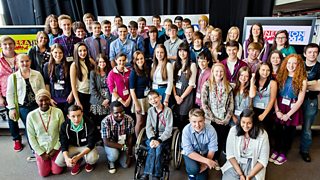
Generation 2014 participants meeting for the first time in BBC Scotland in September 2013
Broadcasting professionals will be used to hearing this kind of jargon from their colleagues but, as producers on BBC Scotland’s Generation 2014 project, we now hear it from an increasingly media-savvy cohort of 50 Scottish 16- and 17-year-old voters whose lives we have been following all year.
The decision in Scotland to let under-18s vote on independence was in itself a piece of constitutional history. With UK political parties considering the idea of votes for 16- and 17-year olds more generally, September’s referendum is seen by policy-makers as a test-bed for the idea of votes at 16.
Their age poses a unique editorial policy challenge for the BBC: as under-18s they are (rightly) more difficult to access than adults because of duty of care rules; but they are voters whose opinions must be fairly reflected in coverage.
As a demographic group, while they are immersed in social media, they are largely disconnected from mainstream channels like the BBC. But since their decision will help shape the future, not just of Scotland but the whole of the United Kingdom, getting their story right is vital.
Generation 2014 was BBC Scotland’s response to this unique editorial challenge.
The BBC project tracks the lives of 50 Scottish 16- and 17-year-olds up to and through the independence referendum, giving content-makers access to youthful and engaging voices that would otherwise have been hard to reach.
The cohort of 50 were recruited in an open application and casting process over several months in 2013. They cover the country, from the border with England to the Shetland Islands, and from points east to the Western Isles. They have grown up speaking not just English, Scots and Gaelic, but also Polish, Urdu and Hausa.
They were never intended to be policy-wonks, fascinated by the minutiae of ‘devo max’. They are a recognisable group of teenagers, just as excited by the Commonwealth Games and the headliners at Radio 1’s Glasgow Big Weekend as they are their new right to vote.
Thanks to Generation 2014, the cohort have grilled politicians, shared high and low points of their lives and discussed their hopes, dreams and fears for the future, on everything from the BBC News Channel to Radio Nan Gaidheal; and from Radio 2’s Jeremy Vine Show to CBBC Newsround and the One Show.
Last month three of them travelled to Westminster to quiz Chief Secretary to the Treasury Danny Alexander, and Scottish National Party chief whip Pete Wishart for Radio 1 Newsbeat. They have also had a week taking over Good Morning Scotland’s Thought for the Day slot, with a different individual appearing each day.
An Edinburgh-based team of four producers has achieved all this by forging trusting relationships with the young people themselves as well as their families, schools and guardians.
While the group is a superb portrait of young Scotland’s demographic and geographic diversity, it cannot be described as quantitatively ‘representative’. Many came to the project wanting to be involved with the media or to find out more about politics, so they are a ‘self-selecting’ cohort.
For us as producers, a great challenge has been matching up young people with areas of content and programmes they are best suited to. Who, for instance, would be best for an in-depth discussion on Radio 4's Westminster Hour? Or who has the vibrancy to cut through to a CBBC Newsround or One Show audience?
By the same token, what treatments can we offer outlets that would work well for them? It has all proven a great grounding for us in audience and format awareness.
Another key challenge has been dispensing opportunities in a fair way. Members of the group based in Glasgow and Edinburgh are more readily available to programmes than those in Skye or Shetland, so we always look for ways, editorially, to get out to Scotland’s wilder, further-flung places.
Over the time we’ve been working with the Generation 2014 group, they have grown from the ‘normal’ teenagers we originally aimed to cast to young adults with passion and real insight for the political issues we’ve been asking them to discuss. Others, more straightforwardly, have simply grown in confidence in leaps and bounds.
For them, this may end up as one of the project’s lasting legacies.
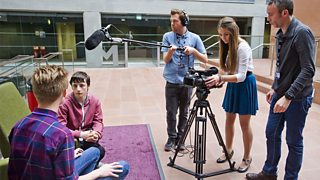
Generation 2014 find out about cameras, mics and being interviewed
How to access Generation 2014
Any request for access to the young people must come through the Generation 2014 team, to ensure that the people who know them best are pursuing bids. We know, for example, who’s got a tough week of exams and therefore should not be contacted, who’s on holiday or who might best fit a particular programme’s requirements.
We won’t produce your content, and we expect programmes to meet their own production costs if they use our cohort, just as they would with any other item.
We allow BBC teams as much freedom as we can to produce their own bespoke, creative items featuring Generation 2014. After all, we can’t cast and set up a One Show film like the One Show production team can.
The Generation 2014 project will culminate in a live referendum overnight outside broadcast from Stirling University. The 50 young people will be available overnight on 18 September and all the following day to respond to the vote's outcome.
Check out the Generation 2014 website and follow us on Twitter @bbcgen2014. And if Generation 2014 can help you cover Scotland’s big stories this year, please contact David.Stenhouse@bbc.co.uk or Dave.Howard2@bbc.co.uk.
