Why newspapers should take smartwatches seriously

Tom Quast
Co-founder of Creative Vikings @CreativeVikings
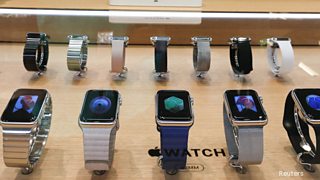
With the introduction of the AppleWatch, sales of smartwatches have skyrocketed. It is very likely that your colleagues, friends or family are using smartwatches already.
Smartwatches are always within the consumer’s reach, enabling news consumption in ways that have not been possible before. But to ensure the best reading experience, the news has to be tailored to the platform it is consumed on. So news written for mobile phones is normally shorter and has a stronger focus on visual elements compared to its web-based counterparts.
The news industry has historically been slow to adopt new technology, and only big players have been able to free resources to explore new platforms. Smartphones, and to some degree the web, were largely ignored before their value for news consumption was acknowledged. With the introduction of smartwatches to the broad public, we might witness the rise of a new disruptive technology.
However, news publishers have evolved since the early days of smartphones. News production is to a much higher degree digitised, which greatly eases the exploration of new platforms. We at Creative Vikings have integrated with several systems and provided news directly on smartwatches through the same software that publishers use every day. The next opportunity has presented itself to the publishers, and the question remains: how many will act now and seize it?
Described below are five game-changing features that enable news consumption in new ways. This is followed by some design suggestions based on our work with smartwatches:
Wearable while operational
One of the most distinguishing features of a smartwatch is that it can be used while walking or moving around. It is normally always within reach, enabling news consumption in ways that have not been possible before. Just imagine receiving a news notification while biking. Instead of fiddling to get your phone out of your pocket just to discover that it was not relevant to you, with a smartwatch you can determine this without lifting your hands from the handlebars.
Hands-free use
You don’t need both hands to interact with smartwatches. Applications offer other interactions which minimise the load on the consumer, such as glances, different vibration metrics and sound notifications, to mention a few. This frees consumers to continue with their primary activity while still being able to stay in the news loop.
Sensors
At the very core of a smartwatch are its sensors. They are both measuring the consumer and the environment, which enables a personification as yet unseen. The position on the consumer’s wrist enables better measurements of eg. location and orientation, and new ones such as heartbeat. Currently (also due to technical restrictions) no news app is utilising this new data. But just imagine a news app that automatically holds push notifications back when it detects the user is sleeping.
Attention-getting
A smartwatch conveys information to its user even when not actively used. Much like a smartphone, it can use subtle notifications such as vibrating or lighting up the screen. However, since it resides on the consumer’s wrist, it is more likely to be noticed. This opens a new array of notification levels that can be tailored to the consumer. Imagine news notifications that adjust their vibration intensity to the user’s interest eg. based on the context.
Always on
By default, a smartwatch is always on and working, sensing and acting. The user doesn’t need to do anything other than wear the watch. It is available in the consumer’s periphery, ready for them to take action if needed. It becomes the user’s personal assistant, presenting information when needed eg. upcoming appointments. Now imagine if it not only told the consumer their flight was delayed but linked to a news article explaining why the Eyjafjallajökull’s eruption causes these delays.
Designing for smartwatches
Through our work with smartwatches, we have tried numerous concepts and ideas. Just like with all platforms, there is no ‘one-size-fits-all’ solution. However, some general concepts have emerged which can guide the design process.
Micro-interactions
Interactions with the smartwatch are short and discontinuous. Research has shown that interaction with smartwatches rarely exceeds four seconds. This requires not only short and precise information but also easy access to that information. It should be possible to explore news in more depth - eg. by being able to hand it off to the smartphone or read more on the watch - but the main function of a smartwatch is to provide a quick overview.
Micro, visual and novel content
Good content for smartwatches is micro, visual and novel. Micro content is very short, often only a single sentence. It affords micro-interactions and gives condensed, relevant information at the right time.
Visual content is important to reduce the amount of text needed to tell a story. It is not only visually appealing but the information density in an image is much higher than text alone.
Lastly, it is important to be creative and think of novel ways to create and present content. A smartwatch is not just a small smartphone, much like a smartphone is not a small website.
Be proactive, but don’t spam
Smartwatches offer the possibility of delivering news directly on the consumer’s wrist, providing the latest news at the right time. However, this is a double-edged sword, since it can also be overwhelming if the news is not relevant to them. This usually leads to unsubscribing from that provider.
Therefore personalisation is core to providing news on smartwatches. It should both be possible for the consumer to set preferences and for data to be collected automatically to tailor the news presented to the consumer’s needs and preferences.
The future
No-one knows what the future will bring. But looking at Apple’s estimated sales combined with the qualities of smartwatches outlined here, it seems like a question of time before news publishers need to take a serious look at this field. News publishers like NYT and the Guardian have published apps for smartwatches, but they merely touch the possibilities this news technology offers.
In the end it comes down to the question: how long can news publishers afford to wait?
