Dairy farmer crisis - what’s the real story?

Dimitri Houtart
Rural affairs and environment editor, BBC Radio 4
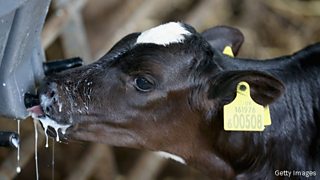
The milk crisis is not a new story. We have been reporting on it across BBC News since last September, and Farming Today especially has been pushing the story for months. But the recent stunts by dairy farmers in supermarkets have definitively had their desired effect: it has now moved the story up the news agenda and suddenly everyone is interested.
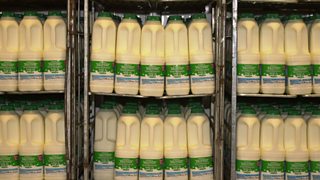
I get regular calls from news colleagues wanting a better understanding of the milk story. I am often asked why is the price farmers get for their milk (known as ‘farm gate price’) so low? Is it because of the supermarket price war?
As always with these kinds of subjects, the answer is never that simple. Like many rural affairs stories, it is a combination of issues which could be reported on by a whole series of specialist reporters. The milk crisis is a business story, a political story, a consumer story, an environment story, a global commodity story… oh, yes, it’s also a rural affairs story!
So providing proper context and background about how we got here, especially if all you have is two minutes of airtime, can be a real challenge. Each time we are faced with the same questions. What do we include? What can we leave out? What can we assume our audience already knows?
Feelings around farming issues can run very high, with very strong views on both sides of the argument. Our rural output is always heavily scrutinised by a whole range of organisations and lobby groups. So inevitably we will, on occasion, upset one side or the other - whether it is the choice of contributor we use to comment on the story, what a contributor is allowed to express, or how we cover the issue.
The milk crisis is no different. While many feel sorry for the plight of our dairy farmers and believe they are caught in the middle of a geopolitical commodity crisis, others believe this is just a simple supply-and-demand business story. They point out that when prices where high last year the farmers did not complain, and if a farm business is not able to be efficient and competitive enough to survive it should just close and not be endlessly kept afloat by European subsidies. I know that just writing that these views exist will upset some.
So keeping a balance in our reporting is very important. It is even more important on specialist output where we find ourselves reporting on the same issue repeatedly. We need to constantly think about different angles, as there are only so many times to just report that the ‘price of milk has gone down… again’.
Obviously the human angle is a big part of the story. While farming is certainly not the only industry suffering a downturn, the people working the land tend to be highly passionate and dedicated to what they do, and for them farming is always much more than just a job... it’s their life. As one young dairy farmer told Farming Today recently: “It’s not blood running through my veins… it’s milk!”
We also need to be aware that audiences from rural communities can get annoyed if stories about the countryside are tainted with a metropolitan bias. They can feel misunderstood or even patronised. So having an understanding of the story from a rural point of view is crucial. This is one of the reasons why having the BBC Rural Affairs Unit based outside of London (in Bristol) is very helpful.
The effects of the crisis have the potential to change our rural landscape too. Economies of scale make it easier for mega dairy farms to be profitable and survive. As a nation, we have to decide if we think it is important to preserve small farms as part of our rural landscape and economy.
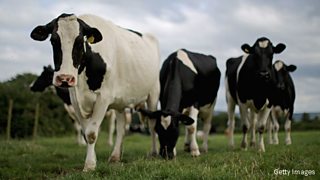
One possible outcome of a future with only mega farms would be that one would hardly ever see cows in fields any more, as most of them would be kept indoors all year long.
It feels to me that we would have lost something from our British countryside… and that would be sad. But I guess it’s easier to be sentimental if you don’t have to make a living milking cows!
Dimitri Houtart also has the role of the BBC’s rural affairs champion, advising on coverage of rural issues across the whole of the BBC, including in BBC News.
