Is this the real Pope? Five ways to spot a fake Twitter account

Sue Llewellyn
Social media consultant and trainer. Twitter: @suellewellyn
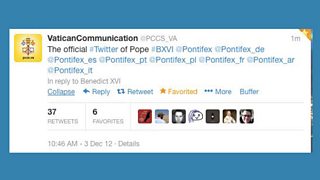
Even before the Pope’s officials launched his Twitter account (below), there were several fake accounts to distract the gullible.
Big news figures are a magnet for mischief-makers - but there are ways to spot the hoaxes. So, when fearless Felix Baumgartner leaped into the record books, his heroic feat inspired a host of parody accounts. One small step for man, one giant leap for the Twitter fakers.
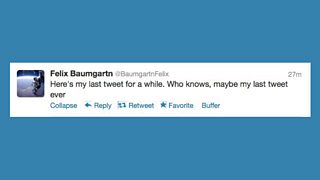
But that was enough to make me wonder: could he really be tweeting at a time like this?
I clicked on ‘Felix’s’ profile and found that his 19 tweets had already garnered more than 74,000 followers and this ‘amazing’ tweet had been retweeted more than 21,000 times. Yet a quick look at @BaumgartnFelix’s profile showed that it was clearly marked as a parody.
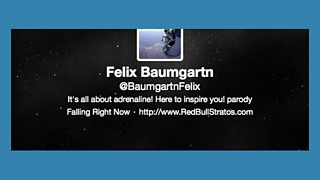
Nobody, it seemed, was bothering to verify the tweets. A couple of hours later the account had attracted nearly 150,000 followers - including a huge number of journalists. It was a classic lesson in look before you leap - or retweet - which I collected for training purposes.
So how can you spot a fake account? And what should you do to verify it?
Here are five simple things to look out for (with another five and a summary of my top ten tomorrow):
1. Is the tweet newsworthy?
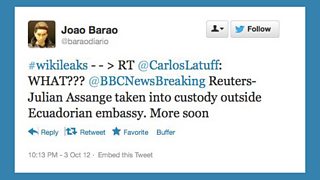
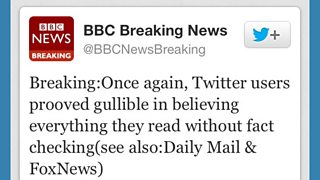
Be extra vigilant if someone famous has died or there’s a great news line. Some usually reliable Twitter users were fooled by a fake BBC account, @BBCNewsBreaking, which has nothing to do with the BBC (below):
2. Check the spelling and structure of the username.
How would you have known the BBC lookalike wasn’t the real thing? Fake Twitter accounts often use the real name, or something very similar, and the same photo as the genuine article, but the username is marginally different. So @BBCNewsBreaking (below) is a spoof of the official @BBCBreaking.
When the MP Andrew Mitchell hit the headlines for allegedly calling a Downing Street policeman a pleb, a fake @A_MitchellMP account sprang up to ‘apologise’ and wreak havoc. (Note the ironic hashtag.)

4. Check the bio - what does it say?
Does it say spoof or parody or contain anything unusual that might set alarm bells ringing (see Felix Baumgartner, above)? According to Twitter’s terms of use, parody accounts are not discouraged but they are obliged to make this clear in the bio. Many of the really obvious spoof accounts can be enormously entertaining and are justly popular: @Queen_UK and @50ShedsofGrey.
5. Is the account verified?
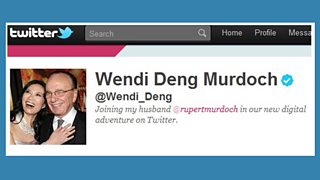
With one notable exception (@Wendi_Deng, below), which was mistakenly verified for a short period over the Christmas period last year, accounts with the official tick badge have been checked by Twitter and are who they purport to be. However, not everyone in the public eye has been verified. So, if they haven’t got the tick, it doesn’t necessarily mean they are a fake - just be careful.