Even if you aren't fooled by royal baby accounts - five more tips for spotting fakes on Twitter

Sue Llewellyn
Social media consultant and trainer. Twitter: @suellewellyn
Fake Twitter accounts can be obvious: @IamRoyalBaby (now suspended), @RoyalFoetus and @UnbornRoyal speak for themselves - or, rather, don’t.
But it isn't always so obvious. Yesterday I posted five tips for spotting fake Twitter accounts. Here is the second half of my top ten:
6.Is it apparently from someone famous or ‘in the know’?
Official-sounding accounts are ripe for exploitation by people like Tommaso De Benedetti, a notorious Italian Twitter faker. His spoof accounts, breaking fake 'news' of the death of the Pope and Fidel Castro, among others, are set up, he says, to show how unreliable Twitter is as a news source.
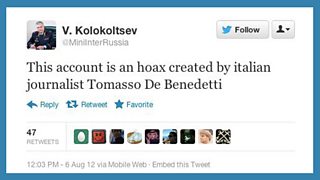
A tweet by @MiniInterRussia announcing the death of the Syrian president Bashar a-Assad was followed by this confession - unless it too is spoofing the spoofer:
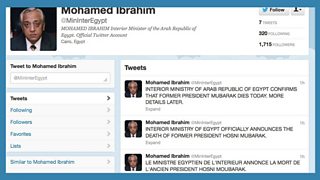
In the example below the (fake) Egyptian interior minister announces the death of President Mubarak. He has only tweeted seven times, in English (and, I noted with horror) in capitals.
Check to see who the account is following, is followed by and is engaging with. How do they look? Is it what you might expect? Don’t put too much store by follower numbers as these can easily be bought to lend an air of authenticity.
If so, click on it and look on the website for the ‘Follow Us on Twitter’ button: does it link back the Twitter account you came from?
9.Check the timeline
Does it feel right? Are the tweets what you would expect in terms of style and tone, or are there some random clues or strange tweets?
10. Search
Is the ‘news’ you are looking at on Twitter being reported anywhere else - on Twitter or other news sites? Track these back to the original source. Google the official website or agent of the person concerned and check the account details with them. Good old-fashioned journalism still goes a long way. And remember: if the story looks too good to be true, it probably is.
To summarise, here’s my handy cut-out-and-keep guide:
Ten tips to spot a fake Twitter account:
- Is the tweet newsworthy?
- Check the spelling and structure of the username
- Is the tweet from someone making news themself?
- Check the bio - what does it say?
- Is the account verified?
- Is it apparently from someone famous or ‘in the know’?
- Is it a new account, and with a piece of breaking news as one of its first tweets?
- Is there a link to an official website?
- Check the timeline
- Search.
Sue Llewellyn presents a video about social media for journalists.
