Filming for TV on iPhones in Nepal: a balancing act worth the risk

Mark Savage
is a documentary producer for BBC Radio current affairs
Producer Mark Savage and South East Asia editor Joanna Jolly filmed a TV package for BBC World News entirely on their iPhones. This is how they did it:
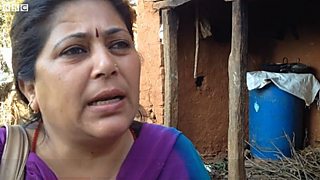
I wasn’t sure how he would take it. My experience of politicians is that they expect their interviewers to show respect and one way of judging that is by the television equipment and all the trimmings used to record the ‘great event’. But here we were with an iPhone about the size of a bar of chocolate perched on top of some oversized sticks, like a pea impaled on the Eiffel Tower. Well, almost. “It won’t be anything like the same quality,” added a helpful aide.
The reason we found ourselves in this situation was that both my presenter Joanna Jolly (below right) and I had been on a course run by the BBC College of Journalism (internal link for BBC staff only) to learn about the wondrous things you can do with an iPhone. This is going to sound like an advertisement for Apple but - aside from making calls - you can film, take photographs, record interviews and even use the battery to boil an egg. OK, I lied about the last bit, but you get the idea.
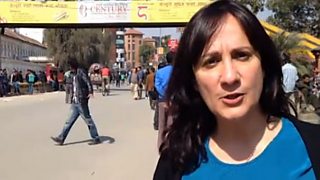
It started off fairly low key, filming in and around Kathmandu. We would record a radio interview using conventional equipment before persuading our subject to answer a few questions in front of the (iPhone) camera. It worked and the quality - being in HD - didn’t look half bad.
Our confidence grew and soon both of us were filming down in Kathmandu and up in the beautiful mountains that are peppered with pretty little mud houses, painted white or the deep orange of the Himalayan soil. There is so much to film in Nepal and each of us challenged the other to get the best shots, including - for reasons I don’t quite understand - lots of chickens pecking at the sunlit soil (none of which made the final cut).
So, back to the prime minister. He walked into the room where we’d set up and didn’t bat an eyelid, even when we pinned headphones from the iPhone on to his jacket (another handy tip - they double as a microphone and the sound quality is surprisingly good).
More problematical was our interview with the spokesman for the Maoist Party who is accused of being involved in the murder of a Nepalese businessman and yet remains scot-free. Unlike most men in Nepal, he is well over six feet tall and we had to extend the tripod to its full height with the iPhone on top.
We filmed the whole interview this time because we knew we wouldn’t get a second chance. “Mr Sapkota, the police have conducted an investigation and they have found you responsible in some way for the crime,”thundered Jo. “Are you above the law?”
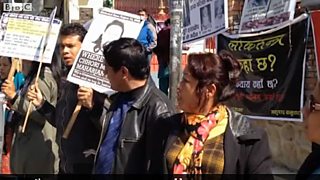
But the proof of the pudding is in the eating, or, in this case, the editing. We handed our pictures over when we got back and managed to produce a neat little package between us - good enough for BBC World News as well as the BBC News website, and a complement to our Assignment radio documentary. Not such an innocuous device after all then.
What else is putting iPhone on the map?
Inside the new iPhone: gains and losses for journalists
Smartphones for News - iPhone (course available to BBC staff only)
