TV women in a man's world: 'a different set of cards'

Cathy Loughran
is an editor of the BBC Academy blog
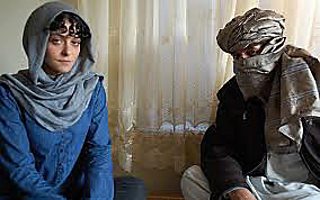
The packed ‘TV Revealed’ session at the Polis conference promised debate about how to still produce quality TV journalism on shrinking budgets. The ringmaster was former ITN boss Stewart Purvis, now a respected media consultant and professor at City University. On the panel were ITV News business editor Laura Kuenssberg, Sophy Ridge of Sky News, BBC Panorama’s Shelley Jofre and freelance journalist Jenny Kleeman, who has a five-year association with Channel 4’s Unreported World. Role models all, in parts of the industry (politics, business and investigative journalism) that remain pretty male-dominated.
They did get to the nub, eventually, via a tricky detour around Savile/Pollard (well, the theme of the conference was ‘trust’ and Jofre did make that difficult-to-watch Panorama: Jimmy Savile - What the BBC Knew) and Sky’s coverage of phone hacking at the News of the World (where Ridge had been a trainee).
They talked Twitter (between them the panellists have approaching 123,000 followers, @ITVLauraK claiming 93,818) and whether tweeting between broadcast and print journalists was just “a bit too cosy”. Yes, probably, sometimes.
And so to squeezed resources. The consensus was that, yes, it is tough but resourcefulness, prioritising and smarter working with smarter technology are ways around diminishing budgets. In the freelance world, observed Kleeman, it meant being more flexible than ever.
Had leaner times meant a greater use of interns, Purvis asked?
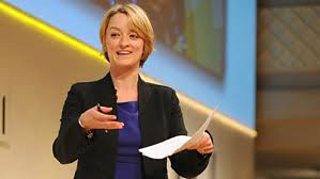
Laura Kuenssberg
Kleeman recalled: “I did two weeks unpaid at the Guardian and then got shifts. That doesn’t happen anymore.”
And Ridge touched on the whole question of unpaid placements limiting the diversity of new journalists - a whole other debate - adding that Sky, like the BBC and Channel 4, has schemes in place to target new talent from under-represented groups.
As so often happens at conferences, some of the best questions came from the floor. A young questioner called Orla wanted to know whether, as women in a male-skewed world, the four panellists felt they had to be more aggressive to get their points across - in fact, to do their jobs. It’s not a new conundrum but perhaps one with added resonance this week amid lengthy re-examination of the style of our only ever female prime minister.
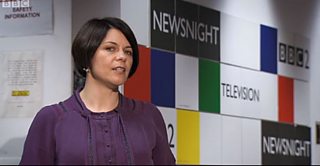
Shelley Jofre
Kleeman agreed: “I’ve never felt I had to be more pushy; just play a different set of cards.”
Ridge saw positive advantage to being in the minority among political journalists, although “you do need a thick skin”, she warned.
Kuennsberg had this advice: “Male or female, if you’re a wallflower [this job’s] not for you. You have to be tough, but you can be tough and nice.”
I wanted to know more, so later I asked the panellists to expand. Jofre told me: “In my experience, if we do try to be as assertive as some of our male counterparts, we are often criticised for being harsh or shrill. Whether we like it or not, some of the audience still seem to prefer women on screen to be warm and engaging rather than tough and combative. However, a bit of warmth can often get you further than naked aggression.”
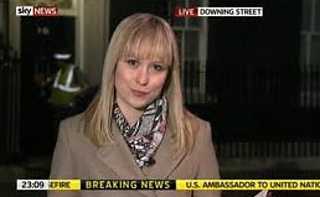
Sophy Ridge
“I confronted him about his involvement, but I was calm and polite. If I had been more threatening it would have been a problem, I’m sure. He was more bewildered than threatened by me and so did respond, instead of telling us to back off.”
She related similar experiences last year in an approach to a Taliban commander in Afghanistan, also for Unreported World.
“Being female is not a safety cloak, and I wouldn’t take unnecessary risks. But it can diffuse situations if you ask very straight questions politely and calmly, particularly in the developing world. In Afghanistan they say there are three genders - men, women and Western women. Sometimes, the fact that people aren’t sure how to respond to you gets you a few seconds leeway to ask your question.”
Given the range of human interaction, Kuenssberg argued: “To expect interviewees, politicians or anyone else to react uniformly to all journalists is a bit unrealistic. Sometimes there are negative implications of being a woman. I’ve certainly been in situations where it has felt harder to be taken seriously as a woman, relatively young to be doing the kind of job I was doing. But there have also been situations where I've felt that has been an advantage.”
Not all good, though: “That’s not to pretend in any sense that our industry is free from sexism - far from it. There've been plenty of times where I have been taken aback at how routine it can be. And I would battle hard to defend any colleague who has been unfairly treated or harassed. But I don’t think you can draw a straight line from being a woman equals being a victim of sexism, which always puts you at a disadvantage. We are all individuals and our relationships with each other are more complex than that.”
She also felt that the best thing about that Polis panel being all-female was that “people hardly mentioned it”. Sorry Laura.
