Nigerian media caught up in hate speech that’s stalking elections

Mathias Muindi
is Africa editor at BBC Monitoring
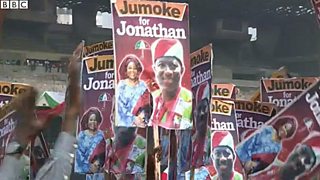
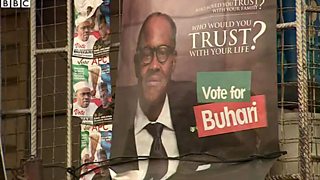
As campaigning for Nigeria's general election on 28 March enters its final days, accusations of hate speech are being traded by the country's politicians and media. Dozens have died in poll-related violence, some of which was incited by provocative comments.
The authorities are yet to sanction the offenders and instead continue to issue threats with little follow-up.
The main opposition party, the All Progressives Congress (APC), has filed numerous court cases on the issue and even referred the Nigerian first lady Patience Jonathan to the International Criminal Court (ICC), accusing her of inflammatory comments.
The APC presidential candidate Maj-Gen Muhammadu Buhari has threatened to abandon an accord signed by political parties on 10 January to ensure peaceful elections. He has said he will only continue to adhere to the pact if there are no more "insults and verbal attacks on his person" by allies of President Goodluck Jonathan.
Campaigning by allies of the president is mostly about firing "expletives at the opposition and totally devoid of a concrete agenda", according to Adesola Ayo-aderele, assistant editor of the prominent daily Punch.
Supporters of the president paint the challenger and 72-year-old former military ruler General Buhari as ailing. And Ayo Fayose, governor of Ekiti State, recently sponsored a newspaper advertisement portraying Buhari as dying.
Prominent TV channels were recently banned from airing a "negative documentary" on Buhari's running mate Professor Yemi Osinbajo, and some APC officials have sued local media outlets.
Violent elections are not rare in Nigeria, but the stakes are high this year as the opposition senses it could win. Most of the vitriol is being pushed out by supporters of the leading protagonists - President Jonathan and General Buhari - through speeches at rallies, sponsored advertisements and comments on social media.
There have been direct references to unfulfilled promises, corruption allegations, controversial statements and questionable political affiliations. Political analysts - some of partisan persuasion - are also getting a lot of airtime on news and talk shows.
Both Jonathan and Buhari have been relatively restrained, but have not reined in their allies. The rhetoric masks core issues confronting Nigerians and feeds national divisions and permanent instability - conditions in which a self-serving political elite can thrive.
Media fixation with the politicians has been at the expense of other issues. Nigeria is currently fighting a deadly Islamist insurgency in the north-east. Its economy has been hit hard by falling international oil prices which threaten to precipitate social discontent. The governor of Lagos State, Babatunde Fashola, has said that the inflammatory speeches "undermine the country's electoral process and democracy".
Editor Ayo-aderele says that on social media "it has been a season of mass unfriending. All you need to do to draw the ire of a friend of over three decades, for instance, is to criticise his/her candidate and that is it."
Regulatory bodies have not been inclined to act, either due to political pressure or lack of capacity. Both the National Human Rights Commission (NHRC) and the National Broadcasting Commission (NBC) have pledged to investigate the violence and "hate speeches" by politicians. But neither of the two bodies has bared its teeth. The NBC is a particularly powerful entity which could cripple the operations of errant stations if it chose to.
On 10 March, the Nigerian parliament warned the regulatory bodies to act, although the plea seems to have gone unheeded.
By 24 March, however, the chairman of President Jonathan's People's Democratic Party, Adamu Mu'az, was pledging to run “a fair campaign” and blamed any hate speech on “small boys” in the organisation.
Even if General Buhari does stick to the peace accord, his threats could provide grounds for a violent aftermath to the poll.
Hate speech will cast a sharp shadow on the winner: Buhari may blame a loss on incendiary campaigning by the incumbent, while Jonathan could resume power under the image of a violent propagandist. That will not be the end of the name-calling.
Boko Haram trumped by polls in Nigerian media: BBC News
How Nigeria’s presidential election works: BBC News