SocialMediaWhatsTrending - journalism’s brave new world?

Charles Miller
edits this blog. Twitter: @chblm
As James Purnell, BBC director of strategy and digital, said in an opening message to the College of Journalism’s #SocialMediaWhatsTrending conference, interactive content will be at the heart of a new vision for the BBC. Instead of informing and entertaining its audience, the BBC will, to an extent, invite them to inform and educate each other.
What’s harder to judge without the benefit of hindsight is the relative scale and importance of the technological and social trends, and therefore how to calibrate the right response to them.
To take a simple example, how much is a Twitter debate an indicator of audience opinion or interest? In the first session of the conference there was consensus among the panel that it’s a mistake for journalists and broadcasters to take Twitter reaction as a representative sample of opinion.
Martha Gill, a Telegraph blogger, summed up Twitter dismissively as the exclusive province of groups with time on their hands: mainly journalists, the unemployed and students. These are the groups that are “at war on Twitter”.
Security expert Graham Cluley agreed: “Twitter is the bit of your audience you see,” he said, but he estimated it’s no more than 2% - at least in terms of online referrals.
Chairing the session, Stephanie McGovern, BBC Breakfast business presenter, worried that she might be over-influenced by Twitter comments which for all she knew might be orchestrated by an interested party such as a business trying to get its point of view across.
And it’s not just journalists who have to keep Twitter comments in proportion. Tony Blair was interviewed in the Independent this morning: “I sometimes get political leaders who’ll say to me, ‘You want to see what’s happening on Twitter around such-and-such.’ And I say to them, ‘That may be real, and it may be representative, or it may not.’”
There are also more abstract levels at which the online world and our responses to it are still somewhat out of sync. The conference itself is the latest of many offering journalists a chance to debate and explore the impact of social media: there’s still a sense of ‘getting with the programme’.
And yet in another part of the new universe, as James Ball, the Guardian data journalist, pointed out, the NSA story has uncovered a well-established world of electronic surveillance that was firmly in place well before public awareness caught up with it.
The debate about whether government surveillance - whether of its own citizens or those of another country - is an outrage, or whether it’s an inevitable part of the modern world, is one that’s being played out without a reliable map of the parallel universe of electronic information. About as far as most people would go, as Ball put it, is that there’s a "trade-off between privacy and security".
A third problem of proportionality centres on legal sanctions. There are existing laws that in theory apply to hackers, virus-spreaders and other malcontents, but there’s inconsistency in how they are applied. Martha Gill, who gave some examples of how she’d been the subject of online abuse in comments on pieces she’d written, suggested that what was needed was some kind of measure of the power of the person doing the abuse: if they are influential online, or live next door to you, that should count for more in the eyes of the law.
But when it comes to ‘throwing the book’ at hackers it’s often the little guys who come off worst, with their “lives ruined”, said Cluley. When it comes to governments or the better organised criminals, on the other hand, the law is less effective.
For all that, there are signs of an emerging idea of legal proportionality: Ball said that in Germany organised attacks on a website, if shown to be motivated by political views, are treated as a kind of ‘online occupation’, with a more lenient approach.
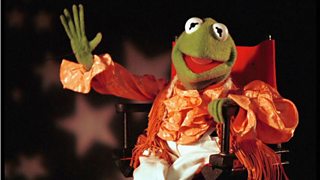
In some sense, it’s surprising how the original social problems of online communication are still with us. I was reminded of the famous New Yorker cartoon of two mutts behind a keyboard with the caption: “On the internet, nobody knows you’re a dog.” That was 1993. Twenty years later, Graham Cluley was on the platform commenting with the same kind of bemusement: “You don’t know if you’re talking to Bill Clinton on the internet or Kermit the Frog.”
What’s clear is that the context for these issues is a rich blurring of communication systems, a new continuum from the individual to small groups, larger communities, and on to big media. It’s an ecosystem with big players and small, and interaction in all directions. No wonder there are some new problems and issues to be worked through.
Perhaps a sense of bamboozlement about new relationships and shifting balances of power is simply the price we pay for an exciting, apparently limitless set of new opportunities.
We will be offering videos of all 11 sessions on the College of Journalism's YouTube channel shortly - so everyone is welcome to engage with the content and get involved - Twitter: #bbcsocial
