SocialMediaWhatsTrending – the old barriers are down

Charles Miller
edits this blog. Twitter: @chblm
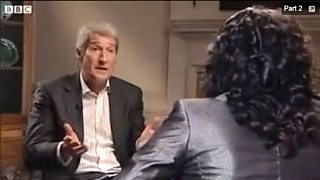
And Newsnight’s video of Jeremy Paxman and Russell Brand got eight million views on YouTube, which “far, far dwarves” the programme’s BBC Two audience, admitted editor Ian Katz.
Those are just three examples from the afternoon sessions at the #SocialMediaWhatsTrending conference which demonstrated that nothing in the media world is quite what it seems thanks to social media.
Tim Pool’s account of his ground-breaking live video coverage from trouble spots was a bracing example of someone defining a new kind of role. Pool started his career by live-streaming the Occupy Wall Street protest in 2011 as what he likes to call an independent journalist (not, please, a citizen journalist, who Pool sees as someone who happens to capture a one-off event with no intention of doing so again).
Within a few weeks of starting his Occupy coverage, he saw his audience grow to 3.2 million. People starting “telling me I was this great journalist”, he said. But he’d had no training, and wasn’t apologetic about that: he said he didn’t “understand why people are going to school instead of just doing it”.
Pool is an advocate for a new open journalism: in exploring new technologies he’s trying to “reduce the cost of getting people involved in telling the story”. There was a sense that the boundaries around the idea of being a journalist are melting away.
Ben Cooper’s Radio 1 is similarly losing its edges: it’s video; it’s streamed as well as live; and it’s big on YouTube and other social media as well as on the radio. In fact for the station controller it seemed the most important device is mobile: “We are in love with our phones.”
Ben likes to talk about the HD generation: that’s ‘head down’ looking at their phones. Radio 1’s strategy can be summed up as “listen, watch, share”. And it’s getting its own channel on iPlayer for short-form video, BBC director-general Tony Hall recently announced.
In order to follow its audience, Radio 1 will morph into whatever medium is useful. Ben commissioned research which studied what its listeners, if we can still call them that, are doing “from bed to bed” (and that’s nothing to do with promiscuity - just from morning to night).
Finally, we heard about a revolution in television news from two ends of the spectrum: Ian Katz is the editor BBC Two’s Newsnight while Alex Miller is editor in chief of VICE UK. Again, there was revolution in the air.
“Television news is a disaster,” proclaims the promo video for VICE. Having started as a subsidised magazine in Montreal, VICE now has 34 offices round the world producing online video. Its five YouTube channels have up to 3.5 million subscribers each. Strangely, the main content attracting them is news. And again, contrary to conventional wisdom, the average length of video viewed is 15 minutes.
Katz, the former deputy editor of the Guardian who only took over at Newsnight about seven weeks ago, is keen to use the “asymmetric” relationship with the audience to his advantage. While it’s hard to respond to all the tweets he gets during a programme, when it comes to tapping the collective expertise of his audience he sees great potential. He’d like to use it for “interactive editing” - in other words, making use of ideas offered to improve the programme’s journalism. And in a similar way social media is “the most powerful fact-checking machine in the world”.
So the conference was a tale of redefining roles - for the journalist, the media and the audience. And maybe even for social media itself. As one audience member asked provocatively in a conference about social media: “Isn’t social media a term that’s becoming useless because it describes so many things?” Is there nothing to cling on to any longer?
Follow the conference discussion #bbcsocial
Videos from all 11 of the conference sessions will be available soon on our YouTube channel
