Learning in the digital age: A new idea for curated content

James Harrod
is a senior trainer for the BBC College of Journalism. Twitter: @jamesharrod
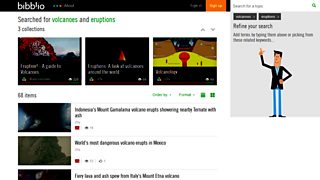
Bibblio search for volcanoes
No-one’s come up with definitive answers yet, but in the past few years big organisations - both companies and universities - have surged ahead in creating content across multiple platforms. Like it or loathe it, technology is acting as a powerful catalyst in the supply and demand of learning material.
But, according to a London-based tech start-up, the problem is that much of this content is scattered around the internet: you may use Google to find that thesis, YouTube to watch a keynote speech by an expert, and Wikipedia to get a detailed understanding of a topic. It’s one thing to have availability but another to have accessibility.
To address this problem, Bibblio was set up earlier this year by Mads Holmen and Roar Knüppel, two Danish graduates, and Rich Simmonds, formerly of AOL. “Put simply, the world needs a library which makes all these great things easier to find and easier to benefit from,” Holmen tells me over a coffee at their modest Camden Town base.
“The internet has given rise to many new ways to learn and an explosion in free online learning resources. We have built Bibblio to link that content to people
in a way that is simple to use and encourages self-directed, social learning.”
Although still in beta, Bibblio already offers thousands of hours of curated
video content via YouTube. There is the occasional broken link and the
site does feel ‘video heavy’, but podcasts, SoundCloud, SlideShare and PDFs are
gradually being added as the small team identifies and tags the best material.
Holmen thinks curation is the key to Bibblio’s prospects: “When you don’t exactly know how to look for that piece of content, Google does a tremendously bad job of helping you out. The thing that editors of newspapers and magazines would do in the past, we want to re-energise, in a way. We still think human curators are more valuable than anything.”
Well established educational organisations are already on board, offering their
material - including the Open University, TED, Khan Academy and YouTube names
such as Extra Credits, Bozeman Science and Wisecrack.
But how will Bibblio make money? The platform exclusively uses third-party
material and creates nothing it could sell.
“We started Bibblio with some savings,” said Holmen. “We did look at an
advertising model but decided against it. It’s a great motivation for
ourselves to make it work: if we can help creators get more clicks and make
more money from the likes of YouTube, then we think it’s going to be easier to
convince them to share a bit of that income with us.”
And one day Bibblio could start making its own content. “If we can generate
enough money, we can reinvest in the content makers to do what they do best:
create fantastic material. We can ask the community what they want to see
and provide it for them,” added Holmen.
So back to my question: is online education as effective as traditional methods
of learning?
Holmen answers with a wry smile: “I think there’s a tremendous amount we can learn from the formal education system and all the experiences from the past 200 years of that. But we should also learn from these new platforms and the new ways of learning.
“If we can marry those two worlds, we would end up much better off than we are today.”
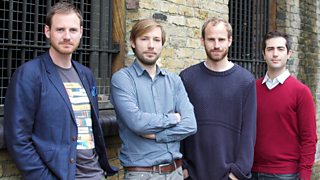
The Bibblio team, (from left) co-founders Rich Simmonds, Mads Holmen and Roar Knüppel, with technical architect Walter Badillo
