New Russian TV ad law sees indie joke about becoming a shopping channel

Stephen Ennis
is Russian media analyst for BBC Monitoring.
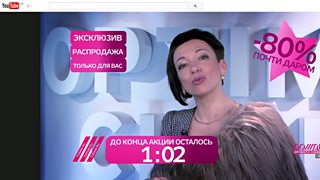
Dozhd's shopping channel spoof on YouTube
Instead of reading the news, Dozhd journalists and presenters are seen hawking merchandise (above) shopping channel style: everything from cut-price furs and miracle meat grinders to state-of-the-art fishing rods and erotic services.
It was intended as a jaunty yet nightmarish vision of what Dozhd's future might look like following the implementation of the new advertising law on 1 January. The only way to stave off the nightmare, the video said, was for people to sign up as Dozhd subscribers.
The ad ban is the latest in a series of trials and tribulations that have bedevilled Dozhd over the past year or so - the price it’s had to pay for independent reporting and swimming against the increasingly powerful tides of Kremlin TV propaganda.
In March it was dropped by all of Russia's major cable and satellite provides - thereby slashing its total broadcast audience from 18 million households to 2 million. The resulting turmoil forced it to shed around half its staff.
The immediate pretext for the shut-out was a controversy surrounding a programme about the Siege of Leningrad in World War II. But commentators have suggested the ultimate motive was Kremlin displeasure at Dozhd's extensive and sympathetic coverage of protest movements in Russia and neighbouring Ukraine.
Dozhd's problems did not stop there. In October it was given notice to quit the studios it had occupied since its launch in spring 2010. It is currently broadcasting from temporary premises ahead of a planned move to a more permanent new home early next year.
As Dozhd's editor-in-chief Mikhail Zygar recently observed: "Running the only independent TV channel in Russia is just like walking through a minefield." This was part of Zygar's acceptance speech for one of the US-based Committee to Protect Journalists (CPJ) 2014 Press Freedom Awards.
Conferring the honour, the CPJ said that under Zygar's leadership had Dozhd managed to "provide an alternative to Kremlin-controlled federal TV channels by focusing on news content and giving a platform to opposition voices". Zygar said the award was also due to the hostile environment in Russia that has lent Dozhd's reporting a special urgency and importance.
Through all the difficulties Dozhd has faced, owner and director-general Natalya Sindeyeva and her investor husband Aleksandr Vinokurov have remained true to Dozhd's motto: the "optimistic channel". They have launched a series of subscription drives that have helped keep the business afloat since March, and even turned the eviction to their advantage by treating it as a major media event accompanied by a garage sale of props and memorabilia under the slogan "new life".
As independent newspaper Novaya Gazeta noted, Dozhd appears to have succeeded in instilling a "revolutionary thought" into its viewers: "if you want high-quality journalism you have to pay for it".
The channel currently reaches viewers by a variety of means - including the internet, smart TV and various local cable providers. In addition to bringing Dozhd greater recognition, the channel's problems have helped it to "grow up", Zygar told Novaya Gazeta.
He said that in the coming year it was planning to concentrate more on investigative reporting - a genre that has virtually disappeared from Russian TV screens.
The lot of independent journalists in Russia is fraught with hardship and even threats to personal safety. But, as Zygar said, it also has its compensations. "All that we have been doing together with my colleagues over the past four years has brought us neither fame nor fortune. What's worse, it hasn't brought about crucial liberal reforms in our country. But we still have the feeling that we are doing something right," he told the CPJ.
It also probably beats working for a shopping channel.
Our Russian website
