Not every story needs a 'social media makeover'

Mark Frankel
is BBC News social media editor. Twitter: @markfrankel29
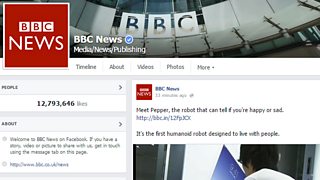
BBC News on Facebook
A colleague wandered up to me the other day. I’ve been told you can help me “to social” a TV report, he said, and prepared to walk away. What was it about? Had he given any thought to how the report could benefit from a social media “makeover”?
- Did he want to develop a conversation around an exclusive piece of BBC news journalism ahead of broadcast?
- Was there some extra footage; a great 15-second sequence that would whet appetites?
- Could it be to provide some audience feedback for the correspondent or programme editor?
The truth was a little more mundane.
He was just looking for a promotion: a clip, a quote and a ‘watch more here…’ link to push to our 12 million-plus followers on @BBCBreaking or the 12 million-plus fans on the BBC News Facebook page.
Don’t get me wrong. Clearly, there’s a value in directing the millions of followers and fans on our social media accounts to watch or listen to exclusive, original and powerful journalism across all our news programmes. We do this on a regular basis already. But we all know this isn’t ‘digital innovation’ in news.
When I re-read James Harding’s speech to staff about the "fourth revolution", I was reminded of a larger vision involving BBC Trending, #BBCGoFigure, news shorts, BBC Pop-Up, our new accounts on WhatsApp and Line, of Reddit AMAs, Facebook and Twitter Q&As, and attempts to make the most of smartphone technology in our reporting.
There’s plenty of discussion about the "future of news" at the BBC at the moment. I’m not going to attempt a vision of a newsroom in 2022. From where I sit, it’s hard enough to understand trends in social media usage six months from now. Few would argue with the fact we’re in the midst of a ‘digital revolution’ and that words like ‘viral’, ‘engagement’ and ‘metrics’ seem to trip off the tongues of everyone in meetings, presentations and corridors. But what does it all mean in practice?
This isn’t a ‘digital takeover’ of traditional broadcasting or about reinventing our core social media accounts as an ad agency for television, radio and website. In many ways radio has stolen a march on us all. iPM and Outside Source take their lead from the questions, interests and the daily rhythm of their audience. Some viewers and listeners who we reach out to on social media and encourage (or implore) to tune in to programmes for the ‘full experience’ may be tempted. We can pat ourselves on the back and say we’ve used Twitter, Facebook, Instagram or Vine to boost ‘social referrals’.
But what about those people who like to hear about BBC News on their social media platform of choice and don’t necessarily want to be driven somewhere else? And, what should we do about the daily discussions and conversations about BBC news content on these sites? Do we stand back and confine ourselves to the role of arbiter or moderator of last resort or look to them for inspiration on new story ideas and treatments?
Plenty of social media chatter is just that. We have a role as news journalists in helping our audience/readers to navigate through the noise; to illuminate the interesting and verifiable stories; and avoid becoming a mouthpiece for rumour, half-truths or click-bait.
But what we can - and should - do is think harder about social media as we plan and embark on a story. Not every story starts or ends with a conversation on Twitter, Facebook or WhatsApp, but there should always be space in our newsgathering operation to think more about how a Vine, some behind-the-scene pictures on Twitter or a 15-second Instagram video might enhance our storytelling and bring us a step closer to the audience.
The challenge for broadcast journalists is to stop thinking of social media as another thing to fit around our existing commitments and to recognise the opportunities it affords for fresh insight and a new, more immediate relationship with our viewers and listeners.
I for one am still committed to my favourite Radio 4 programmes and like to end my day with the News at Ten and Newsnight. But I also hope that 2015 will bring fewer conversations about how ‘to social’ something and more of a focus on how we make the most of our already sizeable social media footprint earlier in the news cycle.
Future of News (BBC staff only)