Military and media: ‘a deal with the devil, but more professional since Iraq'

Caroline Wyatt
is the BBC Religious Affairs Correspondent: @CarolineWyatt
In the second part of her blog on the relationship between the media and the military, Caroline Wyatt considers what has changed in the 10 years since the invasion of Iraq, and what remains the same:
On the plus side, too, genuinely mobile phones exist these days, making it easier to gather and disseminate information, while the internet and 24-hour news have changed reporting from the field enormously since 2003.
But both the internet and round-the-clock news pose some of the greatest dangers to good reporting. They have led to a rise in ‘rooftop reporting’, predicted since the first Gulf War, and also to a rush to judgement or comment. There’s a lack of time to go, talk, check and see with our own eyes and listen to as many stories first hand as possible before broadcasting or making up our minds.
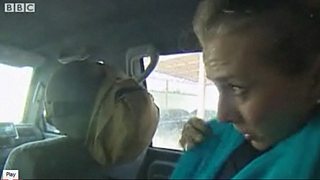
Citizen journalism or ‘user-generated content’ has become ever more vital in the reporting of conflicts which can be hard to reach or extremely difficult to report on because of the risk of kidnap or being killed (the photograph above recalls a close shave in Helmand province in 2009 when the convoy in which we were travelling came under fire). But do we always know who is uploading the material, or why? And is it genuine?
The availability of small cameras to soldiers has also changed the balance of power between the military and the media, with members of the military becoming savvier in using helmet-cams to show the soldiers’ perspective, and using blogs or first-person narratives to influence opinions, rather than having to go via the traditional media.
However, at the same time the media have also become more adept at sifting and using that same helmet-cam footage to craft compelling first-person accounts from soldiers or units in series such as BBC Three’s remarkable Our War, filmed in Afghanistan.
Some would argue that we are now too dependent - and have been since Iraq - on embedded journalism, because 'unilateral' or un-embedded journalists face the most risks in a risk-averse age when corporations are keen not to be sued and money is tight and wars are long.
But we know, when embedded, that those we are with will try to show us the good news stories, the best things that we could film, the situations which best suit the government or the military message of the day. Yet whatever we may feel personally, in terms of loyalty or kinship with those we are embedded with, we must and can maintain the ability to question and to challenge, even if that can mean biting the hand that feeds us our rations.
Because otherwise we become propagandists and lose trust. And if our audiences do not trust us to tell them what we see and hear wherever we are, without fear or favour, as well be honest about what we can and cannot know for sure, what point is there to our reporting?
Likewise, we need - as journalists - to be able to trust the military media operations officer, or public affairs officer, to give us a reasonably balanced picture, or at least access to see things for ourselves. We know that the gloss or the emphasis given in interviews or the situation chosen for filming will always tend towards the most positive possible, but the Ministry of Defence/military have and must continue to allow us to come, film and make up our own minds.
Because all we can try to do, in the end, is report on what we see, and what we hear, and to interpret that as best and as fairly as we can. It is a deal with the devil for both sides, as neither can wholly control the outcome nor what is reported, as so much depends on chance and timing on the day.
There are still arguments to be had over what we can and can’t cover while embedded - and there is a fine line between censorship and the terms of the MoD’s Green Book, which allow media operations officers or MoD civilians to check our material for ‘operational security’. There is an enormous difference between reporting material which could endanger military forces’ lives and material which might simply embarrass Whitehall, a distinction which has often produced some robust discussions.
What hasn’t changed since 2003, though, and that 'Scoop’-style drive into Iraq that I described in my blog yesterday, is the need to remain vigilant and not to be too seduced by reporting on the servicemen and women who carry out their jobs in the toughest of circumstances. More often than not they remain remarkably good-humoured and tolerant of the journalists who’ve come to film them, even as we are frequently viewed with some suspicion.
Ultimately, the military/media relationship is about individuals - on both sides. The better our access to the people on the front-lines and elsewhere, the individuals on the ground or in the air or at sea, the more accurate and vivid - I hope - the story that emerges. Even if it isn't always the one that commanders, politicians or governments want to hear, whether in Iraq or Afghanistan. At the very least, it may be a first very rough eye-witness account of what happened where we were, and if not ‘the truth’ then at least a truth - and as honest a story as we can tell.
How has embedding changed since the Falklands?
