Aid workers file stories while journalists treat the injured

Glenda Cooper
is a freelance writer and PhD student at City University’s Centre for Law, Justice and Journalism
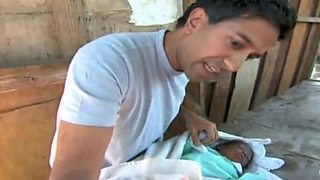
In the past it would have been pretty obvious which was the journalist and which the aid worker. But Dr Sanjay Gupta (pictured treating a baby in Haiti) was working for CNN as a reporter when he carried out the surgery; Prospery Raymond, who is named as the author of the Guardian piece, was Christian Aid’s country manager who survived the quake.
Meanwhile the latest news was being broken via social media. As the Columbia Journalism Review noted, new media platforms such as Twitter, Facebook and Skype were crucial in delivering early information about damage and relief efforts. By the time Hurricane Sandy occurred two and-a-half years later, people were using the photo app Instagram to upload pictures of the storm at the rate of 10 a second - 1.3 million hashtagged in total.
We’ve come a long way since Michael Buerk’s seminal piece from Korem in 1984. As a piece of journalism that report still has the power to move and shock. But what is astonishing is that in seven minutes only two voices are ever heard: Buerk and a white Medecins Sans Frontieres doctor.
But what does it mean for the way we report humanitarian disasters in future if ordinary citizens can break the news, aid workers can act as journalists, while journalists cross the line and get involved?
What kind of pictures and reporting are we exposed to if anyone can upload pictures of a dying victim of a hurricane - or a dying dictator, as happened in the case of Gaddafi?
And while a wealth of user-generated content made the 2004 tsunami a mega-story and saw mega amounts of aid donated ($1,241 per survivor - 50 times the worst-funded crises that year, according to the Red Cross), what kind of disasters will we end up covering if it takes tweets and Facebook updates to get our attention?
Next week, a conference organised by City University’s Centre for Law Justice and Journalism, in partnership with the Red Cross, will debate these very issues with some of the foremost names in academia, journalism and aid work. It will look at the latest developments in the use of UGC by mainstream media and aid agencies, the relationship between journalists and aid workers now that social media is a factor, and consider how, in a Twitter age, we should think about reporting emotion and trauma?
Speakers include:
Lyse Doucet, chief international correspondent at the BBC
Chris Hamilton, head of the BBC’s UGC Hub
Tim Singleton, assistant editor ITV News, ITN
Nevine Mabro, foreign editor of Channel 4 News
Professor Simon Cottle, Cardiff University
Prof Charlie Beckett, LSE
Brendan Paddy, Disasters Emergency Committee
Adrian Thomas, Red Cross.
The BBC College of Journalism will be blogging from the conference: full programme. Places are limited. If you wish to attend please email Peter Aggar, or for any queries about the schedule contact Glenda Cooper.
How to treat trauma and injury
Rewards versus risks for war zone rookies
