How to get an idea commissioned by Horizon

Charles Miller
edits this blog. Twitter: @chblm
About 1,600 episodes of the BBC’s science series Horizon have been made during its 50 years on air. And the series editor Steve Crabtree is trying to watch them all.
He told a BBC audience, gathered to learn how he and his series producers Zoe Heron and Paul King commission their films, that his viewing odyssey reveals Horizon has constantly reinvented itself. And for anyone who wants to complain that today’s series isn’t a patch on the old days, he reported the some of the earliest episodes were in fact, “with the greatest respect, unbelievably boring”.
But back to today: what kind of films does Horizon commission?
Well, Steve likes to answer the question with an appropriately scientific acronym: LAB. It tells you about three kinds of film that each Horizon series will include in roughly equal numbers:
L is for lifestyle
For example, films about diet, nutrition or drinking. These films tend to have presenters, be mostly based in the UK, and give Horizon its highest ratings.
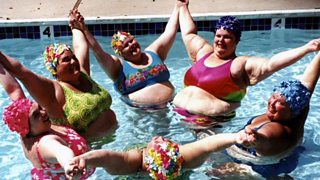
Fat Files: A Horizon Trilogy: Born To Be Fat, 1999
A is for anything
This category includes things like cats, autism or topical subjects like ebola. They depend strongly on a producer coming up with a winning idea for how to tell the story, or how to frame a question to which solid, new science journalism can provide an answer.
B is for big science
These are the big co-production numbers that keep Horizon’s reputation high in the US and around the world. They typically don’t have a presenter and deal with anything to do with cosmology, physics or the brain. As one US partner described the series, admiringly, Horizon specialises in “visualising the impossible”. Many people still think all Horizons are in this category.
So those are the three broad categories of films - although there’s a bit of blurriness between L and A. But whatever their category, when making commissioning decisions, Steve and his colleagues look at three dimensions of an idea - and winning ideas need to score on all of them.
First, there’s the basic need for solid science journalism, sourced from reputable research papers and revealing something interesting and new.
Second, there’s the story of the film: how does this subject matter turn into a narrative - framed by a question to be answered, or a quest to be uncovered during the 60 minutes of the film?
Finally, there’s the form, or treatment. What will we see; how will it be directed; what genre of film or television will it borrow from to communicate with the audience?
And it’s the last of these that Steve and his colleagues wanted to emphasise.
Zoe advised anyone making a pitch to “put form at the top of your list: is there something more experimental that we can do with the form?”
Steve supported her: “We don’t just want another straight documentary about X, Y and Z.”
And Paul said they weren’t impressed with pitches that amounted to the question “why don’t you make a film about…?” Instead, “we’re much more interested in what happens in the film.”
But don’t be put off. Steve said that a commission can start with just a single paragraph containing the germ of an idea. And if the person behind it hasn’t got the time or resources to research it in more detail, Horizon’s own development team can help.
With 15 films a year to commission, all made in-house at the BBC, and the Horizon team, unusually, able to make their own commissioning decisions, there’s plenty of scope. So, if you think you’ve got an idea that will make a great Horizon for the next series, don’t be shy.
The production section of the BBC Academy website
