Latest BBC Academy language sites focus on clarity as well as impartiality

Najiba Kasraee
editor of the BBC Academy's language websites
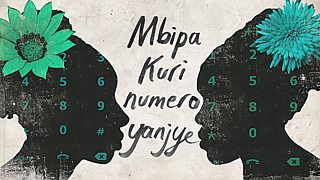
The BBC Academy has this week launched three journalism training websites in Kinyarwanda, Kirundi and Uzbek.
The product of close co-operation between the BBC World Service and BBC Academy, the latest sites aim to help train BBC staff as well as share our experience of independent reporting with users around the world.
And, as with our other language websites, they focus on core editorial values such as independence, accuracy and impartiality as well as practical skills for journalists.
The BBC Great Lakes Service, broadcasting to Burundi and Rwanda, was launched as a lifeline service in 1994 in response to the horrific events in Rwanda.
Service editor Ally Yusufu Mugenzi said he and his colleagues in the BBC Gahuza team have been enthusiastic contributors to an “excellent new training resource” that draws on the “standards and insights” that have guided their journalism since 1994. Those standards of independent reporting can now be shared with colleagues across the region, he said.
Accurate, impartial language is one of the main focuses of these sites, and for our Great Lakes journalists linguistic accuracy is a key challenge.
The languages spoken in Rwanda and Burundi are similar but with notable differences. For example, the word ‘uruhara’ means ‘role’ in Kirundi (above), as spoken in Burundi, but the same word means ‘boldness’ in Kinyarwanda (below), which is mainly spoken in Rwanda.
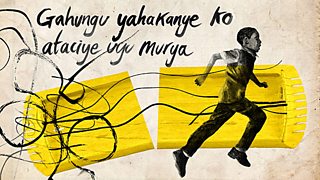
The word ‘Nzero’ means January in the Kirundi language, whereas ‘Nzeri’ means ‘September’ in Kinyarwanda. So which word should a presenter broadcasting to both countries use on radio to avoid confusion? The team’s answer has been to use numbers (month one, month nine) rather than the names of months.
But for the BBC Academy site, where language issues like grammar, spelling and pronunciation are key components, we had to come up with a different solution.
Frank Ip, a senior member of the Academy’s international team, proposed creating two separate but linked websites where users have the ability to switch between the two languages. It’s a model he borrowed from the Chinese BBC Academy website and BBC News sites where there are two versions of Chinese - simplified and traditional Chinese - but the two are interlinked and users can swap as and when they need to.
And it’s a very proud moment for me and the BBC Academy to present to our users the first such interlinked sites for Rwanda and Burundi, with beautifully enhanced bespoke illustrations and images reflecting the regional culture and environment. The Kinyarwanda language category and our Kirundi skills section are good examples.
The Great Lakes sites also offer content on law, accountability and impartiality, with experienced regional journalists explaining how these values are essential in their everyday work.
The third of our new websites is in the Uzbek language for the Central Asian country of Uzbekistan. The site covers certain linguistic issues for Uzbek journalists working in Afghanistan, where Uzbek is one of the languages spoken.
As with our new African additions, the Uzbek training site is informed by more than two decades of regional insight and best journalistic practice, BBC Central Asian Service editor Hamid Ismailov points out. He too now looks forward to passing some of that on to Uzbek speakers.
In 1993 the Uzbek government issued a ruling to change its official writing form from Cyrillic to Latin script. As a result all Uzbek-speaking schools have adopted the Latin alphabet. However, the process is not yet complete so the advice from the BBC Uzbek Service was to create the new Academy site in Cyrillic and add the Latin version later.
At its launch the Academy Uzbek site captures the impartial use of language in BBC Uzbek broadcasts and online journalism. Crucially, we also looked at how the language is developing, the effects of social media and specific linguistic challenges journalists face in delivering content in Uzbek - be it for Uzbekistan or Afghanistan.
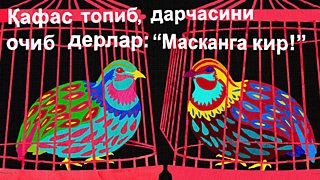
The site also offers skills content on production, presentation, original journalism, writing and investigative journalism. And as you’d expect the audience’s culture and environment are reflected in the images we use (below).
These latest launches bring the total number of the BBC Academy international language sites to 18. (Our other sites are in Arabic, Burmese, Chinese Simplified, Chinese Traditional, French, Hausa, Hindi, Indonesian, Pashto, Persian, Russian, Swahili, Turkish, Urdu and Vietnamese.)
In the pipeline are similar Academy sites for journalists writing in Bangla, Somali, Spanish and Ukrainian.
The BBC Academy’s international language sites
