Telling Sophie Hayes trafficking story: A slow building of trust

Tracy Gee
is a broadcast journalist at BBC Radio Leeds
This month the Frank Gillard Awards once again celebrated the best of BBC local radio. Tracy Gee was named journalist of the year, partly for this powerful interview she did with a victim of sex trafficking. Here, Tracy explains how she secured the interview and her approach to such a sensitive subject:
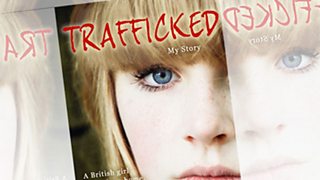
One of my first pieces of original journalism for the station was one I researched and produced on sex trafficking. My inspiration for the story was a disturbing book called Trafficked, by a woman from Leeds who had been sold into prostitution.
Sophie Hayes had been groomed here in Leeds, but as her name was an alias it took me two months to track her down. I finally found her via a charity she now represents and in the first instance I had to introduce myself in writing. I had no idea whether she would respond, but a few weeks later my personal mobile rang one evening while I was at home. The woman on the end of the phone simply said: "Hi, it's Sophie."
Sophie's story affected me personally. She could have been anyone. A young woman from Leeds, in love with a man she considered to be her best friend - a man she thought she could trust.
Sophie thought she was going on holiday with him to Italy for a week. Instead she vanished for six months. Her so-called boyfriend had a very different motive for taking her abroad. He owed 100,000 euros and Sophie was to be sacrificed to cover that debt, by selling her body on the streets.
When I spoke to Sophie, she told me he used levels of violence she’d never imagined. He pinned her up against a wall and strangled her, threatening her with “consequences” if she disobeyed him. He put a gun to her head, held a knife to her throat, broke her shoulder blade, and beat her.
I had so many questions. Why didn't you run? Why didn't you scream for help at the top of your voice when you were outside? Why didn't you call your parents? Why didn't you go to the police?
Sophie smiled when I asked. The man had threatened to abduct her beloved younger brother. “I was never willing to take that risk,” she said.
These conversations were all ones I had with Sophie long before I ever put a microphone in front of her. I knew I had to gain her trust and talk fully through her story. This level of transparency meant she trusted me and I trusted her.
Sophie told me she was petrified throughout her ordeal. She was forced to have sex with up to 30 men a night, never knowing which one might attack her. And there were rules: when to speak, sleep, eat, what make-up to wear, and how to style her hair. She found out she wasn't the first person to be trafficked by her drugs and firearms dealer ‘boyfriend’.
Sophie told me that after six months her life “just wasn't worth living”. At this point she became so ill she ended up in hospital, where doctors allowed her to make a phone call.
She rang her mum. Sophie didn't immediately ask for help because that very day the man who’d enslaved her had entered her hospital room and stabbed her in the leg. She bravely asked her mother, mid-conversation: “How’s Aunty Linda?" This was a code that Sophie had agreed with her parents years before to alert them if she was ever in trouble. Within days her family arrived at the hospital and whisked her back to the UK.
I discussed with Sophie in depth how her story could be portrayed on radio. I drafted a storyboard of how the piece would unfold so she understood the procedure. At her request, we talked about how she would answer my questions, to appropriately reflect the emotive aspects of her experience. I produced a pre-recorded package of Sophie's story, sympathetically accompanied by background music - at times completely faded out as the interview content was so strong.

Sophie's ‘boyfriend’ was never prosecuted as his whereabouts are unknown. She knows he is still out there. For me, this made the fact that she agreed to my interview - one of the very few detailed, recorded interviews Sophie has given about her experience - all the more incredible. I put it down to the solid relationship we established over many weeks of conversations and the fact that she's an incredibly strong person.
As well as my pre-recorded piece, I supported Sophie though a live interview with breakfast presenter Liz Green at BBC Radio Leeds. This was set up from a studio in London via ISDN. I made sure Sophie had visited this studio prior to the interview to make sure she was at ease with her surroundings.
I also set up three live interviewees on the day of broadcast to add some depth to the feature: a local spokesperson from Barnardo’s who talked about the number of young people it works with who have been groomed; the Leeds charity CROP which helps parents of abused children; and a police inspector from the county who talked about the scale of human trafficking in West Yorkshire.
The piece prompted a lot of listener interaction on Facebook and Twitter, and was submitted as part of my entry for BBC Journalist of the Year at the 2013 Frank Gillard Awards.
It was thrilling, not to say amazing, to win a gold award in my first year at the BBC; the judges citing “captivating output” that “tackled harrowing topics with sensitivity and a real deftness of touch”. Definitely one for the scrapbook.
I feel lucky to be part of a team that provides so much support and encouragement for its journalists to chase original stories. I'll carry on striving to represent those who really have a story to tell.
Human Trafficking - Sophie's Story, produced by Tracy Gee
