True or false? ‘You’re only as good as your last story’ - and other newsroom cliches

Paul Wiltshire
Regional editorial trainer for Local World. @Paulwiltshire
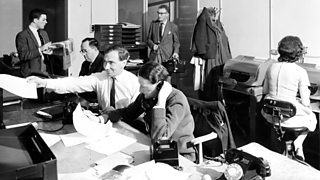
BBC Wales newsroom in the 1960s
You’ve probably heard them so many times they’ve lost their meaning. At any one time somebody in a newsroom somewhere is trotting out one of these little sayings about journalism. But is there any truth in them?
‘You’re only as good as your last story’
Really? Perhaps if you’re doing shifts on the Mail.
I like to think we play a slightly longer game in the regional media, aiming for a greater degree of stability as we look at the bigger picture, rather than a daily snapshot verdict on performance.
But the development of analytics sites such as Parse.ly means that there is little doubt that the output, web success and social media reach of journalists will be under more intense scrutiny in the future.
And specialist reporters will increasingly be expected to act as mini-news editors – although we really need to find a less awkward word than ‘curating’ to describe the skill of sifting the wheat from the chaff of user-generated content.
Add to that the pressure on many reporters with their own editions to find a decent splash every week - as well as engaging web content every day - and I’m forced to conclude that this pearl of wisdom still has some merit.
‘There’s a story on every street’
This is one of my favourites.
I like to think that a reporter should be able to go to any street in the country and come away with something worth writing about.
In my own street I could point to someone who helped Nick Clegg understand how underperforming primary school pupils can get better at maths; another neighbour who’s mastered the art of combining walking with running to enjoy marathons; and a dad whose life is on hold as he waits for a liver transplant.
So it’s a definite ‘yes’ to this one.
We’ve just got to get better at getting out on those streets to find them.
‘If you wanted a nine to five job you should have been an accountant’
Harsh but true.
Journalism is now more 24/7 than ever.
If David Cameron’s people give you less than an hour’s notice of a midnight visit to your patch, as happened in Bristol last night, then out you go.
But what if there’s a new series of Britain’s Got Talent to review on Saturday night? What if we need travel and weather news online at 6am? And what about all those parish council meetings?
Journalism has always involved working unsociable hours.
The challenge now is to ensure journalists don’t end up wishing they’d gone into accountancy instead.
‘Those stories write themselves’
Undoubtedly, the best stories end up being the easiest to write.
They’re probably simple; lending themselves to headlines and intros that instantly draw you in.
And they are likely to involve the sort of human emotion that produces cracking quotes.
So, yes, the best sort of human interest stories shouldn’t be hard to tell.
But that’s not to say there isn’t a skill in finding new words to avoid off-the-shelf cliches; in allowing those quotes to breathe; and in taking real care to treat the people you’re writing about with decency and respect.
‘We’re a vital part of the democratic process’
Sometimes this can feel a more difficult claim to justify.
And there is no doubt that the drive for instant web gratification and limited resources can present challenges when someone needs to step off the diary for more complicated stories or investigative work.
But the best titles manage it on a regular basis.
And I’ve been really impressed by the way our papers and websites rose to the challenge of covering the election in a multimedia, politically apathetic age.
We didn’t get massive web hits - let alone a boost in sales - but it’s something that we should be doing - and we’ve been doing it well.
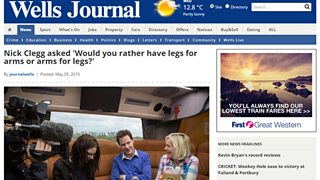
My favourite piece - in amongst all the serious seat-by-seat analysis, the questioning of party leaders and the useful background information - was by the Wells Journal: Nick Clegg asked “Would you rather have legs for arms or arms for legs?”
That question was never going to be on Jeremy Paxman’s clipboard.
But it’s very much in the spirit of my final newsroom rule:
‘Don’t bore the reader.’
This piece was first published in Paul Wiltshire's blog, and appears here with his kind permission.
