Sharing knowledge: how Hausa got its hooks

Sulaiman Ibrahim Katsina
is a part-time producer and presenter in the BBC Hausa Service
Yet for many countries this is still a luxury. My language, Hausa, is a case in point.
Or was…
Hausa is spoken mainly in the north of Nigeria and Niger, but also widely spoken in northern Ghana, Chad, northern Cameroon and Sudan. For centuries, Hausa has been written with a version of the Arabic script known as Ajami.
A version of Hausa written with the Latin alphabet, known as Boko, began to emerge during the 19th century. From the 1950s, Boko became the main alphabet for most Hausa speakers.
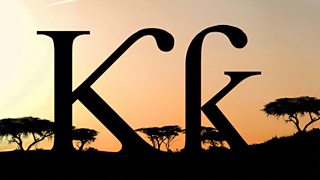
Yet the Latin alphabet could not cover all of the phonetic sounds of the Hausa language, so ‘hooked’ letters were created by adding a little hook to the following:
ɓ Ɓ ɗ Ɗ ƙ Ƙ
This allows us to denote some of the hard sounds which are pronounced from the roof of the mouth. Without hooked letters, you can easily confuse similarly spelt words. For example, the word for horse is spelled ‘doki’. The word for enthusiasm has the same spelling but the ‘d’ is hooked: ‘ɗoki’.
So lack of hooked letters makes it difficult for presenters to be accurate.
It wasn’t uncommon in the BBC Hausa service to see presenters manually add the hooks to letters in their scripts just before going live on air. Last week all of this changed, thanks to the BBC College of Journalism.
We have published our first story since the 1990s with all the correct letters.
How did this happen?
The College of Journalism is currently working on the launch of a Hausa site, which will focus on journalism as well as the use of correct Hausa language in the BBC. I was asked to write a spelling guide, which would have of course been impossible without all the right letters being available.
But how?
Well, it turns out that if you look carefully in some of the obscure menus hidden deep in Word, all the correct hooked lettering is available. The College of Journalism’s own Donald Eastwood made this amazing discovery, which the College has shared with the Hausa service.
The College team has shown us how to download the letters and here we are, typing for the first time with correct letters, hooks and all.
This will not only help the presenters to avoid mistakes on air; it also means that our BBC News website BBC Hausa can publish in the correct standard language.
The BBC College of Journalism recently re-launched its Arabic, Persian and Russian sites.
