Why radio is the crucial medium in Afghanistan

Amanullah Ghilzai
is a journalist and analyst specialising in Afghanistan and Pakistan
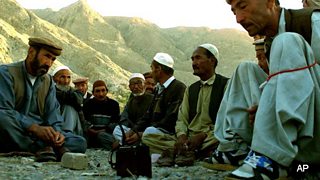
Afghan refugees in Pakistan listen to the radio news, 2001
But since the defeat of the Taliban in 2001 there has been a mushrooming of media outlets, with the number of radio stations rising to around 200.
Several media surveys over the past 12 years suggest that, even if Afghanistan remains peaceful in the near future, the role of digital media will still be limited over the next decade or so - at least compared to most other countries. The surveys suggest radio will be the main source of information in rural areas for many years to come.
Over the past decade efforts were made to extend the reach of print media, but low literacy rates, particularly in rural areas, limits these efforts: more than 70% of men and 85% of women still cannot read or write.
The reach of television is limited to the main cities because of the lack of electricity and the fact that many Afghans are too poor to buy a TV set.
And internet use in Afghanistan is one of the lowest in the world. Only 1.7 million people use Facebook, Twitter, YouTube, Google+ and other social media tools, out of a population of 30 million. Around 2.4 million Afghans have access to the internet.
So the gap is filled by radio in rural areas and TV in the cities. But radio continues to be the most popular medium, accessed by almost all the population. It played a crucial role in mobilising millions of Afghans during the first round of the April vote.
And commercialism is almost non-existent on Afghan radio, with the economy almost completely dependent on foreign aid. That’s helped to provide some good radio journalism, but any shrinking of foreign aid would definitely have negative effects on many of the stations - and therefore would also threaten the gains made in the past 13 years.
The College of Journalism’s Pashto website
