Journalists feast on ‘food bank’ stories - some get indigestion

Rebecca Wells
is a former BBC producer and a visiting lecturer at London's City University where she is studying for a PhD in food policy and journalism
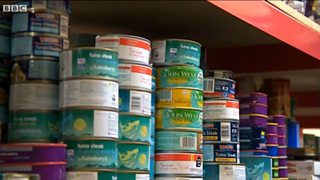
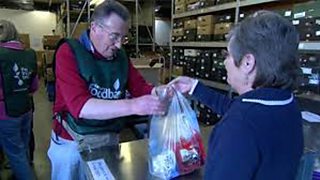
In the early 2000s the term ‘food bank’ was used in stories about asylum seekers or when reporting on poverty in the US. By 2011 local news outlets from Glasgow to Gloucester were reporting news of the food bank on their doorstep. Both local media and national outlets like the Sunday Express and the Guardian have run or reported appeals for donations. Journalists with an eye for a personal story have visited food banks to tell vivid tales of ‘bread-line Britain’ - heart-rending stories of hungry children, poverty and need.
Academics who analyse media coverage talk about the way the media ‘frame’ an issue - as a way of thinking about how it’s discussed in society. Those trying to get their message across via the media often try to control the way that message is framed.
A classic paper on media framing by Shanto Iyengar from 1990 looked at the way poverty was reported by US media outlets: “How people think about poverty is shown to be dependent on how the issue is framed. When news media presentations frame poverty as a general outcome, responsibility for poverty is assigned to society-at-large; when news presentations frame poverty as a particular instance of a poor person, responsibility is assigned to the individual.”
Experts on food welfare such as Canadian academic Graham Riches have long been concerned with the way food banks are reported - arguing in 1997 that the media can depoliticise hunger by reporting calls for donations to food banks: “This is precisely what government wishes to hear and it helps them promote their argument that it is only in partnership with the community that the hunger problem can be solved.”
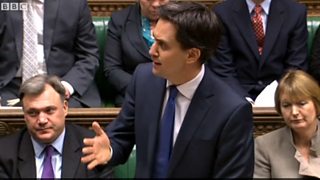
Last month the Trussell Trust, a Christian organisation which set up many of the food banks in the UK, issued a press release putting politics firmly at the centre of the food bank story. The trust called on the Prime Minister to set up an inquiry into the causes of food poverty in the UK and blamed rising numbers of food bank users on the Coalition’s programme of welfare reform - as well as rising food prices and stagnating pay.
It included in its press release all the ingredients to whet the media’s appetite: the story was ‘pegged’ to World Food Day, featured some digestible statistics (that food bank use had tripled) and some eye-opening information about those using food banks - that some of them were returning food because they couldn’t afford the energy to cook it.
And did this press release pay off, with headlines as rewards? To some extent.
The ‘triple’ statistic was widely reported in headlines. The Mirror took the opportunity to continue its attack on the so-called ‘Bedroom Tax’ with “Bedroom Tax TRIPLES the number of people needing charity food banks to survive”, while the Guardian went with a more sedate “Charity calls for official inquiry as food bank use triples in a year”.
The Independent interviewed ‘poverty tsar’ Frank Field, who lamented a lack of action from Number 10, while the Financial Times’s “Food bank demand triples as welfare changes bite” headline also blamed welfare reform for the rising demand.
However, the Government’s response to news of rocketing numbers of food bank users was cool, and widely reported. “The Trussell Trust itself says it is opening three new food banks every week, so it's not surprising more people are using them,” quoted both Mail Online and the Express. Meanwhile the Guardian had spoken to the Department for Work and Pensions, which said there was "no robust evidence that welfare reforms are linked to increased use of food banks".
Meanwhile, the Telegraph did not cover the story as a news item, leaving it to blogger Brendan O’Neill to rubbish the ‘food bank frenzy’ in acerbic style: “The opening of a food bank is ultimately a very fancy press release about the need to keep the charity sector and welfare state flourishing. It’s politics dolled up as emergency aid. It’s poverty porn, providing a kick for those activists and commentators who like nothing more than to feel the thrill of pity for the less fortunate.”
With food banks booming and the battle to make political capital out of them continuing, it seems that food banks are on the news agenda to stay.
