#BBCTrending’s first question-and-answer session just had to be on Twitter

Benjamin Zand
is lead video producer for #BBCTrending
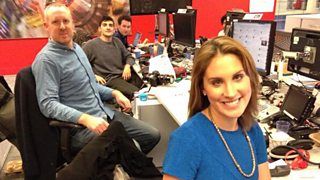
I’ve done quite a few of these things before, as I worked on social media for BBC World News. For #BBCTrending though, and our relatively small amount of followers, it was a completely new thing.
So, what did we learn? First off: promotion, promotion, promotion. This really is essential. If you want live interactivity in a Q&A people need to know it’s happening, and they need to be reminded. So use the facilities you have. We had the advantage of being able to use the BBC’s social media heavyweights in the BBC World Twitter and Facebook accounts. But use whatever you have. Give them an exact time and date so they know exactly when to come.
One issue we had as a new programme was the topic of the Q&A. We’ve only been around since November 2013, so we’re not yet big enough or old enough to have a general ‘ask us anything’ Q&A. Not enough people know who we are yet, and might not have known what to ask us. We worried that a broad invitation would put people off or make them scared to ask a ‘silly’ question.
So we decided to focus on a specific topic that was related to what we do, but also something we thought people would have questions about. This was social media in the news - can it be trusted etc. It paid off - we had quite a healthy response.
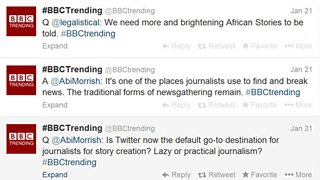
The final point I’ll mention is that you need to have a number of people working on the Q&A. Ours was an hour-long ‘Q&A with the presenter’ (Anne-Marie Tomchak), but it was very much a ‘Q&A with the whole team’. The presenter took the main seat but the whole team had a say in the answers, advising on the next question. We had a producer looking at the incoming questions at all times, and then the rest of us made sure there were no mistakes and kept an eye on the responses as we were doing other work.
Our inaugural Q&A had some real success. Questioners wanted to know how information on social networks was verified; what the impact of citizen journalism had been on traditional reporting; whether Twitter was now the ‘default’ destination for story hunters (and whether that was just lazy journalism); why there are not more optimistic African stories (we agree, and we do them); whether journalism was becoming too social; and how #BBCTrending picks the trends it reports on (through our own observations and with context from our network of BBC journalists worldwide).
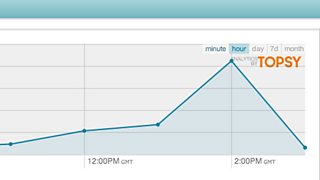
What will we do next? Well, a lot more to engage with new users. But in terms of Twitter Q&As I think a great next step would be to do one with a guest - someone reasonably high profile with a good Twitter following. This would allow us to create more of a buzz and potentially harness a new and interested audience that hadn’t heard of us before.
And we’d make sure we promoted the Q&A further in advance. This time we promoted it just the day before, which is already pretty late. So I think a longer, more thorough run-up to remind people it’s happening would not hurt at all.
Engaging social media audiences
Perfect Twitter for journalists? Take a masterclass from @ITVLauraK
SocialMediaWhatsTrending - journalism’s brave new world
When false 999 calls are the story, tell it on Twitter
My first Twitter adrenaline rush - and glad you liked the jacket
