What it’s like when a reporter takes the stand as the main witness

Guy Lynn
Investigative TV news reporter, BBC London @guy_lynn
Guy Lynn has more experience than most journalists of giving evidence in relation to undercover investigations. Here he recalls the pressures and the lessons involved in many hours of legal testimony, after a BBC London Inside Out expose of pharmacists selling controlled drugs over the counter led to the “biggest crackdown” to date on the rogue practice. Conclusion of High Court appeals in this case now allow him to describe that experience:
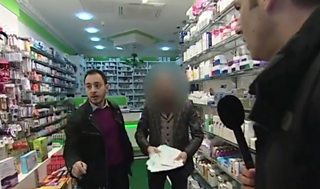
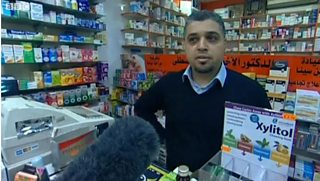
Guy Lynn confronts Jamal Rasool in his Paddington pharmacy. The chemist was later struck off
It was the dryness of my throat I remember most. And the booming voice of the lawyer cross-examining me who, whenever I spoke, fell into a default position of shaking his head, seemingly in frustration, making loud audible sighs of disbelief.
Then there was the constant presence of the pharmacists I had exposed taking part in dangerous and illegal activity - staring at me, just metres away, also shaking their heads. Most of all I recall how the shortest silence, as I attempted to think through an answer, felt like hours as a room full of people observed me.
When you’re involved in a complicated undercover investigation, as I was in September 2012, you rarely consider the scale of scrutiny you may be under at some point in the future in a courtroom.
Your first priority is to get the story right for the public. You are thorough and diligent, particularly with anything involving secret recording. But journalists aren’t police officers and the requirements of a TV investigation are not in the same league as law enforcement.
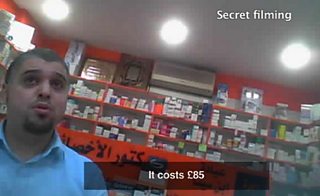
London pharmacist Chawan Shaida is secretly filmed naming his price for controlled drugs
Back at the end of 2012 I’d heard reports of pharmacists in London who were selling dangerous drugs like Temazepam, Valium and morphine products over the counter without prescription. These are highly addictive and potentially dangerous drugs, being sold at huge mark-ups to anyone who came in and requested them. We launched an undercover investigation, using several confidential sources to record evidence.
When our expose was broadcast in December 2012, the findings rocked the pharmaceutical industry and led to requests from both the police and industry regulatory body the General Pharmaceutical Council (GPhC) for all of the BBC’s evidence.
The BBC handles such requests for unbroadcast material with extreme care to ensure that bodies like the GPhC meet the legal criteria (usually by submitting a production order) to be able to receive the footage.
In my case, the secret recordings were being requested as they were the key aspect of the evidence. So we spent days combing through the undercover footage to ensure that nothing - from the smallest reflection in a pane of glass, to the slip of a name or mobile number - might reveal the identity of a confidential source and if there was, it would be edited.
At the same time, I was required to complete numerous witness statements, focusing on each of the nine pharmacies we exposed and for each pharmacist involved. I was then told that I would be the chief witness in the hearings, particularly as all our undercover sources had refused to take part (partly in fear of possible repercussions in an industry known to have a rough side).
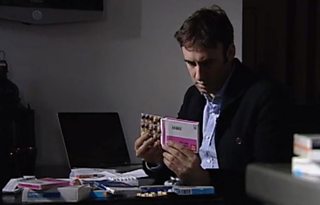
Guy Lynn inspects samples of controlled drugs bought without prescription by undercover sources
The number of hearings I was required to attend seemed enormous, as did the level of scrutiny about the way our investigation was undertaken.
I attended a witness familiarisation coursewith Simon Jelf, a barrister from the Partnership Counsel. Although those sessions couldn’t focus on the specifics of what I might be asked, it was useful to think through some basic principles of what it is to be a credible witness.
“Have you ever broken the law?” he asked, in mock interrogation. I hesitated before answering: “I try not to break the law.” Jelf interjected: “What do you mean you try not to break the law? Do you break the law? Yes or no?”
“I can’t think of any times I’ve broken the law, no,” I replied.
“So you don’t break the law?”
“No, I don’t break the law.”
“Do you drive?”
“Yes.”
“Ever driven above 30 miles an hour in a 30 mile an hour area?”
“Erm, not quite sure.”
“You don’t mean to tell me that you’re not sure that you’ve not ever driven above 30 miles an hour, in a 30 mile-an-hour area.”
“Erm I don’t think I’ve broken the law, no”
“I find that hard to believe Mr Lynn… ”. You get the idea
Jelf explained the importance of always answering in a credible way, not concentrating on what I thought I should be saying. I was not on trial. The defence barristers were going to be using every device possible to make me look less than credible, he warned. And they did.
But over the course of a few hours he gave me some great tips that were extremely helpful when I came to give my evidence:
- If you don’t know something, always say so. Never suppose or guess. Just say, ‘I don’t know’
- Try to remember detail. The reasons why you remember something are key. No one expects you to remember minutiae, but central details are important
- Never take things personally. When a barrister tries to attack you, treat it as water off a duck’s back. Stay calm and stick to the point
- Always refer to your statement and read from it. It adds to credibility
- Don’t address the barrister, ignore them and answer all questions back at the panel. It’s a way of showing respect to those who are deciding
Once the hearings began, I faced some challenging moments, particularly around source confidentiality. As you might expect, when a BBC journalist undertakes a confidentiality agreement, it is treated very seriously indeed. For the defence, however, the anonymity of our undercover sources presented an ideal opportunity to suggest a lack of credibility in the whole investigation.
There was one interchange I’ll never forget. It was with the solicitor acting for Jamal Rasool who had been recorded selling potentially deadly morphine over the counter of his Edgware Road pharmacy in Paddington (above) to anyone who was prepared to pay his asking price - £200 - and whose removal from the register to practise was later upheld by the High Court.
Time and again, the terrier-like solicitor tried to get me to name the source. I remember freezing inside. Regrettably, I couldn’t do that, I told him, repeatedly. The BBC was under an obligation not to reveal the source’s name.
Could I perhaps say where the source was from - which country, which continent even? No? Well, could I reveal whether I did a criminal record check on the person involved?
I remember my thought process at the time, desperately trying to think about whether there were any BBC guidelines about always doing a criminal record check for anyone we worked with. I had to admit that I hadn’t.
The solicitor looked buoyed. He challenged me that the person who did the undercover recording exposing his client may have been a criminal: “What do you expect the panel to make of that Mr Lynn?”
I stayed calm and answered that our undercover researcher was doing something that any member of the public could do - walking into a shop to buy goods. There was no need to do a criminal record check.
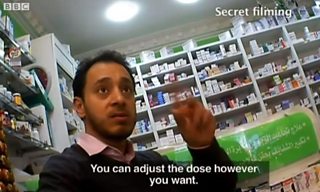
Chawan Shaida denies selling prescription drugs illegally when confronted on camera by Guy Lynn
At several of the hearings, there were discussions about the secret recording footage itself. The equipment we use tends to be small, button-hole type cameras, recording onto hard drives and usually with a date stamp. On one occasion, there appeared to be a mistake in one of the dates - it was just one of those things.
The defence went to town on that, suggesting that if a date was unreliable, my other evidence might be too. I agreed there had been a mistake, although I insisted that that footage was recorded when I said it was and the panel only had to look at the recording to see what was going on.
The night before the hearing, the BBC litigation team and I prepared a supplementary statement, using bank records from that day to show that I had been on the Edgware Road at the relevant time. I also supplied copies of my notes.
Several years after the events, I was asked to field countless questions about how the material was edited, where I was sitting as the undercover recording was taking place and what exactly was said to the undercover researcher.
I was asked to explain the very basics of how a TV piece works and why the BBC did not include every second of what had been recorded in the final piece. We’d recorded many hours of footage. We would probably have needed a 24-hour broadcast to do that.
I even faced accusations that I was secretly linked to recently convicted reporter Mazer Mahmood, the so-called ‘Fake Sheikh’ and that the BBC was in league with one of the pharmacy’s competitors in order to bring the business down.
I gave evidence more than ten times over a number of years. In several of the final determination hearings, the GPhC panel cited me as a helpful and “credible” witness.
Sometimes I was giving evidence for four hours at a time, having to remember details that I had not thought particularly hard about at the time, at a distance of several years.
But the hard work had a result. At the end of the hearings, ten pharmacists were banned or suspended from practice in what was the president of the Royal Pharmaceutical Society described as “the biggest crackdown” on professional abuses to date.
Three of the cases reached the High Court, where there the integrity of the original BBC investigation was recognised. None of the appeals by the pharmacists who’d been struck off were successful.
Watch the original 2012 investigation by BBC London Inside Out and the programme’s follow up report about the crackdown on rogue pharmacists.
EmailGuy Lynnwith other topics worth investigating. Twitter @guy_lynn
Undercover investigation goes out on a limb to expose racist letting agents
Infra-red cameras expose hidden world of migrants at risk
Inside Out: Reporting Roma tensions in Sheffield
The BBC Academy’s Investigative Hub
Investigative journalism blogs by web research specialist Paul Myers
