3D surround sound for the headphone generation

Catherine Robinson
Audio supervisor, BBC Wales
Expect more immersive, 3D sound coming out of BBC Wales now that programme makers in Cardiff have got their hands on the BBC’s first binaural mixing facility. Catherine Robinson unpicks the technology and gets excited about the potential:
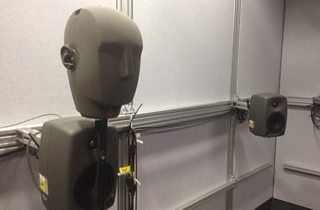
For decades there has been the means to capture something called binaural audio, or sound with the perception of 3D space around it.
The capture method is essentially a stereo microphone in what looks like a fake human head (above). Two microphones capture sound from inside replicas of human ears onto a stereo recording. When you play these recordings back on headphones it sounds as though you are in the space that the recording took place.
The space between the ears, the face shape and head is known as the HRTF (head-related transfer function) and this is what’s required to be able to localise the direction of sounds on playback.
Until now, binaural hasn’t really caught on due to the inconvenience of having to wear headphones. Now, in the age of the smartphone, mobile technology, streaming and personalisation, headphone use is growing year on year. And so is the appetite for immersive audio or 3D sound.
But are we mixing our audio to that growing audience? Over the last few years, BBC R&D has been working with a few programme makers to experiment with mixing a 3D audio version for headphones using their object-based mixing tools – adding the binaural element digitally to ordinary mono or stereo recordings.
In contrast to a channel-based mixing system, here the sound sources are seen as objects in a listening field which you can move around on a 360-degree map of a space. This means you can produce a binaural version of any type of content and still be able to create a normal stereo version for traditional broadcast.
I was lucky enough to be involved in mixing an adaptation of Japanese horror classic Ring for Fright Night on BBC Radio 4 last year.

As an audio supervisor who is very used to mixing radio drama in stereo, the 3D mixing environment opened up a whole new technique to explore – genuinely new territory with a yet-to-discover set of rules and workflow. If stereo played back in headphones gives an ‘in your head’ experience, then the binaural version is like a whole other world of space has opened up. You can localise the sounds from around you, above and below you, as though you’re actually there, placed in the heart of the sound picture.
When mixing in stereo you may choose sound sources to mask artefacts you don’t want the listener to hear but when you spread the sound in 360 those artefacts are revealed. You can experiment with depth and location, moving sounds around your head, voices sitting on your shoulder or pinpointed in a location far away and also experiment with 3D reverberations.
BBC R&D has been leading the way creating the tools for immersive audio production, now we want to lead in the way we use them to craft immersive content. This has led to the creation of the first immersive mixing facility in the BBC, outside of the mixing lab in our Salford HQ. It sits in Broadcasting house, Cardiff and consists of a digital audio workstation, a spacial audio workstation and the BBC renderer tool to create 3D sound for TV and radio.
Its debut was the creation of a binaural mix of the Russell T Davies adaptation of A Midsummer Night’s Dream (above) earlier this year as part of the BBC Shakespeare Festival. It was simulcast on the red button and is believed to be the first ever binaural feature length TV drama.
The reaction of my dubbing mixer colleague Darran Clement summed up our excitement at the time: “At last, a way to let people hear our surround sound dubs without acres of cables, speakers and stands in their lounge...or on the bus, or in the garden, or wherever today's mobile generations like to consume their latest favourites on iPlayer.”
Reaction to a binaural sound demo we staged at last week’s Radio Academy Festival in London was typical, with more than one headphone-wearing delegate reporting: “That made the hairs on the back of my neck stand up!”
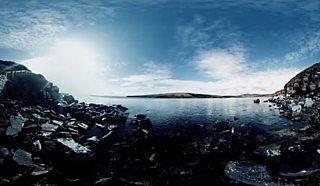
Not only can we now produce TV and Radio 3D headphone mixes but we can also create immersive 360 audio for virtual reality. This is by means of a VR tool created by R&D which is connected and synced to the BBC renderer. You are able to mix your sound for 360 and virtual reality content while viewing it on a VR headset.
That sound mix is done in an ‘object mixing’ environment. Objects can be connected to elements of the VR picture so when the viewer moves, the sound also moves (or stays with the picture). This is called dynamic binaural audio and was used on a pioneering piece of VR content by R&D called Turning Forest.
Recently I’ve been utilising the same technology on a new production for R&D called The Tragic Story of Betty Corrigall (above), directed by Peter Boyd Maclean. It’s a traditional tale set in Orkney and offers some beautiful 360 video of island locations to get immersed in while you’re experiencing the narrative - essentially an audio experience with elements of the audio dynamically linked to the immersive video.
There are many projects on the horizon for the new BBC Wales 360 mixing facility in Cardiff so keep a look out - and both ears pricked - for new immersive audio content coming your way.
Listen again to a BBC Radio 3 evening of plays by Samuel Beckett, newly recorded in binaural sound, on BBC iPlayer.
Blog: Reality check for virtual reality
Blog: What makes good 360 video?
Blog: Personalised cookery show from BBC R&D is a piece of CAKE
