
After more than ten years of working as a journalist in different media, I’ve seen the methods of gathering and publishing stories change. Communication has never been faster, but when a story or clip takes off online, it’s not the speed of the upload or the technology you created it on that counts: it’s the story.
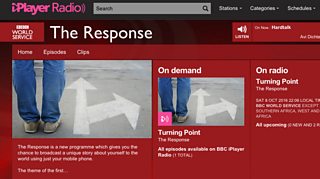
That’s the thinking behind a new series called The Response on the World Service. It was an idea which seemed so simple there had to be something wrong with it. What if I appealed online for stories on a theme, such as ‘Turning Point’ or ‘What My Parents Taught Me’ and asked people to talk into their phone’s voice recorder and email us their stories so we could edit them together?
Five years ago, The Response would have been unlistenable due to poor sound quality. But working in a newsroom I’d used smartphone voice recorders to get contributions from people who couldn’t get to a BBC building. I’d seen phone technology blossom, turning them into crystal clear recorders which surpassed some studios. It seemed we could reverse the conventional model in which we chase people to record them and simply give them a place to send something; then see what we get.
I wrote up the idea for my editor Nicola Swords and before long we had a pilot. The technology not only worked; it yielded a relaxed, intimate style of storytelling which could not be captured in a studio. Personalities shone through.
The first episode of The Response reflected the format’s unique reach. We’ve heard the cockerels crowing behind one man’s story of growing up with 50 siblings and 14 stepmothers in Dar es Salaam; a woman in Washington surprising herself with tears as she tells us about finding love at 61; we’ve heard a Christian transporting bibles in Nigeria rethink his attitudes after a Muslim gave him shelter during a flood.
I’m convinced these voices were only captured because we’ve offered a platform which has kept pace with the technology in our pockets – devices which have spread into previously difficult to reach countries. And the most important aspect of every one that made the air is that they’re great stories.
There are of course drawbacks. While the idea may be simple, the execution isn’t. An uncoached smartphone contribution with no interviewer can sound great, but often a lot of editing is required to bring the best out of a story.
Sometimes a great tale is marred by background noise and we’ll ask people to have another go. And with contributions ranging from the joy of taking dance lessons to a suicide attempt after the death of a parent, the usual journalistic skills of placement and tactful editing apply. While the contributions may be easy to send, knitting them together and editing is no mean feat. In the worlds of Dolly Parton “It takes a lot of money to make me look this cheap.” For The Response, I’d say it takes a lot of effort to make it look this easy.
It’s fair to say that manically pushing the idea on social media while crafting the contributions into a workable half hour takes time. Making radio against a deadline is usually pretty simple. If you don’t have enough recorded material, you get more. But when you’re reliant on voluntary contributions, you don’t have that luxury - so steadfast promotion is key to avoiding sleepless nights of wondering when your next contribution is coming.
But I’m enjoying working on a format which is a platform for listeners’ creativity. It’s fair to say that commissions like this are adventurous, so I’m grateful to work on it and to the people who have supported it. So far it’s allowing us to hear from people we’ve often found hard to reach. Giving listeners far and wide the opportunity to broadcast to us rather than the other way round has been a revelation.
Long term, I don’t see sustainability of the series as a problem in that people love to hear and tell stories. The goal is to reach a point where people chatting in a bar or café say “you should send that to The Response”.
The Response is on the BBC World Service.
