Overview of Bloom by Imtiaz Dharker
In Bloom by Imtiaz Dharker, the speaker talks directly to their baby, commenting initially on how the baby is just themself, with no symbolic or universal significance.
The poem then explores the A statement which contains words or phrases that contradict each other, and which raises a question about how both could be true. created by their love for the child. The baby is just like many other elements of nature but at the same time, the whole universe exists within them.
The speaker describes their longing to be so close to the baby, to actually experience the baby’s thoughts and feelings. Ultimately, the speaker surrenders their sense of self to this feeling. The whole world exists in their love for the baby: and so the speaker is in touch with and loves the whole world.
This poem explores themes of:
- the power of emotions and family relationships
- new beginnings, and new understandings
- humanity's connection to nature
Looking for some quick revision? Try an interactive quiz for Higher English.
You can read Bloom by Imtiaz Dharker on the Scottish Poetry Library website.
Form and structure of Bloom by Imtiaz Dharker
This poem is made up of 17 lines, divided into six stanzas:
- the first five stanzas are made up of three lines each
- the final stanza with two lines
Dharker uses When the sentence runs onto the next line instead of neatly finishing at the end with a full stop or comma, occurs a few times in the poem. One such example is in lines two, three and four, when she refers to “the depth and breadth and height/ My soul can reach when feeling out of sight/ for the ends…” – it is as if the love she describes is so vast it cannot be neatly contained by the structure of the lines, instead bursting forth and spilling onto the next line. several times in the poem, for example at the end of stanzas one, two and four. This gives a sense of fluidity, of flowing emotions that can't be contained within the regular structure, and are spilling out on to the page. The sense or meaning flows from one stanza to the next.
There is an underlying Containing iambs. (When we emphasise the second syllable not the first syllable like ‘to-day’, this is called an iamb). rhythm, but it is modified to accommodate normal speech rhythms. There is no regular rhyme scheme.
Using the When a narrator uses 'you' and 'your' to speak directly to the reader, creating a sense of intimacy. Second person narratives are very rarely used in fiction (‘you’) throughout to talk directly to the baby makes the initial comments all the more uncompromising and also effectively captures the feelings of intimacy and absolute love. The paradox is all the clearer as the poem begins by stating the baby’s lack of importance beyond their own existence. This will be reversed later in the poem.
- Stanza 1 - The speaker tells the baby that they are not of world-changing significance, just a baby.
- Stanza 2 - The speaker expands on this point: the baby is a small ingredient of nature, just like a snail, a leaf or any tiny sea creature.
- Stanza 3 (turning point) - "And yet" introduces the contradictory idea that the baby is actually a dynamic life force in the universe, like a star, the life within a plant or the tide.
- Stanza 4 - The speaker expresses a desire to really connect with and fully understand their baby’s thoughts, feelings and the core of their being.
- Stanza 5 - The speaker recognises that connecting with the baby is more important than their sense of self. The baby ‘contains’ the whole world, ie everything important and alive in existence.
- Stanza 6 (two lines) - The speaker emphasises how the baby ‘is’ the world and how, by protecting their baby, they are showing their connection with the whole world.
Stanza one
The speaker talks directly to baby in an emphatic opening line:
You are nothing more than yourself
This immediately undermines any sense of the baby’s importance, to the world. However, the use of "You" as the first word, paradoxically, suggests that the baby is central to the poem, to the speaker’s life. It is an unusual opening which holds the reader's attention, as usually a poem about someone is full of praise and even an exaggerated form of praise.
The apparent undermining of the baby's importance continues:
not a message […] / not here to save mankind or even me.
- "not a message" suggests the baby not a sign of communication from a higher power
- "not here to save mankind" is a blunt expression, which reinforces the idea of the baby’s lack of wider significance
- the words "or even me" are almost shocking in their insistence that the baby is not there to give her a purpose or life centre
For some, the things the baby is not offer a comparison to Jesus, who Christians believe was the embodiment of God's message, and the saviour of mankind.
Repetition of negative words like "nothing…not…not" make clear the point that the speaker is absolutely rejecting such a comparison. At first, this baby is defined as ordinary and by what they are not.
This is a technique used in other famous works of literature, notably Shakespeare's Sonnet 130 ('My mistress' eyes are nothing like the sun'), where the poet describes all the things she is not, before coming to the conclusion: "And yet, by heaven, I think my love as rare/As any she belied with false compare."
The opening stanza of Bloom also ends on a positive, definitive statement "You are". This is a statement of the baby’s being, just in and of itself. It is the first note of what the baby is rather than what they are not. These words also link through The use of run on sentences with no punctuation at the end of lines or across stanzas. to stanza two.
Stanza two
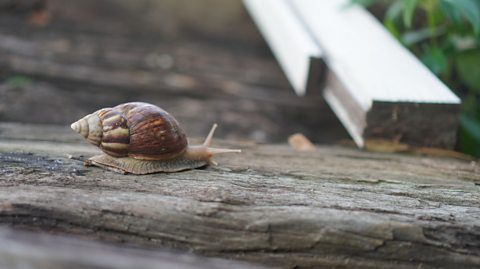 Image source, Getty Images
This stanza is made up of a series of A simile is a word or phrase used to make a comparison for dramatic effect, using 'like' or 'as'., comparing the baby to things in the world of nature. Each line begins with "like", so it feels like a list of things that the baby is similar to. The comparisons assert the baby's place in the world, but they are mostly small and ordinary. The baby is compared to:
- a snail
- a A group of animals who have a soft body, no spine, and often covered with a shell, including snails, oysters and octopi.
- a leaf
- the sea
- "the smallest" sea creature
We do not think of leaves or tiny sea creatures having individual identities. They exist as part of a crowd, a point emphasised in:
a leaf among thousands on a tree
We note also that most of these comparisons do not involve ‘cute’ or ‘sentimentalised’ animals. Their relative simplicity as organisms suggests the baby in the early stages of human development. Like all these entities (and like the sea) the baby is just ‘there’, not there for a reason beyond their own existence. The repetition of "like a" at the start of lines 1-3 emphasises this determination not to make the baby’s life about something else.
The repetition in "only there" and "just there" (which begins stanza three) reinforces this sense of existing for no other symbolic or romanticised reason. These expressions also stress how small the baby is, and suggest their existence is recent.
Image source, Getty ImagesVideo - What is a simile?
The second stanza of Bloom is a series of similes that compare the baby mainly to small creatures, using "like".
Brush up on your understanding of similes with this short Higher English revision video.
What is a simile? How and why would you use one?
Simile!
A way to compare two things by using the words “like” or “as”
"Using a simile is like painting a picture with words.”
Their food was tough as old boots.
Imagine chowing down on an old shoe?!
This simile suggests that the food was leathery, dry and impossible to chew.
No thank you!
Be careful you don’t get similes mixed up with metaphors.
Metaphors compare two things by saying one is the other.
Similes always use “like” or “as”.
In her poem “George Square” Jackie Kay uses a simile to describe a protest:
“the banners waved at each other like old friends”
As well as suggesting how the banners move and wave together, this simile hints that the atmosphere at the protest was familiar, united and sociable.
Similes don’t always describe something clear, they can be much more complex.
In the novel The Cone Gatherers, Robin Jenkins compares the character Duror to a tree:
“He was like a tree still straight, still showing green leaves; but underground death was creeping along the roots”
Here, Duror is compared to a tree that seems healthy, but is dying on the inside.
This powerful simile tells us that although Duror may appear healthy and well on the outside
Inside, he is being slowly consumed by his hatred.
Using similes is a fun and effective way to explain something complex without using a long list of adjectives.
You can get as creative AS you LIKE!
Stanza three
After the The use of run on sentences with no punctuation at the end of lines or across stanzas. of "just there", the first line of stanza three introduces a turning point which is highlighted by repetition (‘And yet, and yet’).
just there. And yet, and yet I watch your face
The speaker turns the whole theme around by showing how absolutely central to their world, and therefore to the whole world, the baby is. A series of powerful statements, beginning with ‘I watch your face’ suggest the speaker is gazing at the baby, searching for connection and understanding.
There are three comparisons: all natural, everyday wonders.
- a star
- a living leaf
- the tide
Each is dynamic:
- the star is ‘waking in your eyes’ a miraculous sense of the universe captured in the baby
- the ‘sap rise to a leaf’ refers to the life-force nourishing the plant
- the ‘tide-rush’ is a powerful force impacting the whole world
The rhythm of ‘in your eyes’, ‘to a leaf’ and ‘to the moon’ creates a sense of movement, of life force.
Stanza four
The speaker tries to get as close to the baby and their life as possible. Gazing is not enough; they want to engage and understand:
I try to live the life inside your head
The active verbs ‘live’, ‘think’ and ‘feel’ capture their desire to become one with the baby.
This central idea is emphasised through a number of sound effects. For example, there is:
- alliteration in ‘live’ and ‘life’
- repetition in ‘think’ and ‘thinking’
- The repetition of vowel sounds in a series of two or more words. in ‘feel’ and ‘beat’
The final words, emphasised by repetition, convey the protective love felt for such a tiny, vulnerable creature:
small body, small weight
This leads into a particularly potent enjambment with stanza five.
Stanza five
The opening words, emphasised by this enjambment, ‘in my arms’ are a summary of the physical closeness of maternal love.
This stanza explores the impact the baby has had on the speaker: their sense of their own importance is now what is diminished, compared to the overwhelming love for the baby.
The words ‘more than my self’ echo stanza one: ‘nothing more than yourself’. This indicates the emotional journey the mother has been on.
This is the gift you give
This metaphor, highlighted by The repetition of the same sounds or consonants in two more words nearby each other. , shows the speaker’s realisation of what matters in the world. The simplicity of the expression suggesting just how basic, but fundamental, this understanding is.
The smooth rhythm is broken up by A break in poetic rhythm in the middle of the line: a momentary pause., for example ‘…gift you give. Cradling…’ and the repeated use of enjambment, convey a sense of overflowing emotions for the baby that don't all come out neatly.
The speaker then sums up the powerful feeling they have of connectedness with all of the world, when they hold their baby:
I feel the world and all its waking life
The harmony of such a feeling is shown in the In poetry, iambic pentameter is a rhythm of an unstressed syllable followed by a stressed syllable, with a total of 10 beats per line. in the final line, with the repeated ‘l’ and ‘w’ sounds aiding the fluid rhythm.
Stanza six
The short, final stanza brings to a climax the ideas that have developed before.
Holding you, I hold the world/ wishing it for ever safe.
This line suggests both that the baby is the whole world to the speaker and that they now understand and love all the world. The speaker’s love is for the baby, but also outward-looking: their protectiveness extends to all things. The paradox is complete: the baby has, after all, changed the world.
What are the themes in Bloom?
The power of love
The poem demonstrates the immense power of love to transform attitudes to the world. The speaker begins by showing their awareness of their child’s insignificance to the wider world. Yet their love for the baby is so intense that the whole world seems contained within the child. By loving the child, the speaker is connecting to everyone and everything:
Holding you, I hold the world
The strength of this bond also makes it clear to the speaker that all of nature is interconnected, and all of life is significant.
New beginnings and understandings
The speaker comes to a new, profound understanding of what is important in life.
Their need for closeness with their baby leads to an all-embracing desire to understand and care for the whole world. We see how such an epiphany can transform our perspective, leaving us with an exhilarating new way of relating to the world. The speaker sums it up in words said to the baby:
This is the gift you give
A baby is a new life and a new beginning, but throughout this poem the speaker has also made a new connection with the world they inhabit.
Humanity and nature
The speaker relates her new-found realisation of the life force within the baby to the miracles we see around us in nature:
- the appearance of stars
- the growth of plants
- the movement of the tides
They are all powerful, natural and beautiful. We are all part of the world that contains them. Connecting to their baby makes the speaker realise this:
I feel the world and all its waking life
This makes it clear that the strength of their bond makes the speaker see and feel the connections between all of nature, but it also emphasises that in nature, all life is significant. Everything is the world, and the world is all its life.
Comparison with other poems by Imtiaz Dharker
Both Bloom and Bairn describe the experience of being a new parent, using first person perspective.
In Bloom the parent comes to realise a paradox: the child is like millions more, no more significant than a leaf on a tree; yet, to the parent, the baby is all-important and ‘contains’ all the world. The parent loves the world through loving the baby.
In Bairn, the new parent finds their life forever changed positively by the power of the baby’s presence.
Both The Knot and Stitch are linked with Bloom as they have the relationship between parent and child at the centre. The mother in each poem is a determined character who attempts to dominate and narrow down their child’s world. In Bloom the speaker understands how love for their child has changed their perspective and opened up their appreciation of the world around them.
Send this deals with change, and the power of emotion as the speaker recalls their old home city, as it transforms and changes in their absence. In Bloom when the speaker wants to get so close to their baby they say "I try to live the life inside your head", this is reminiscent of Send this, where the speaker of that poem vows to "carry/ the unfinished walls of my city/ with me, in my pocket." These intimate feelings for other people and places are so strong that they stay with the speakers all the time.
In Letters to Glasgow, the theme of being the 'whole world' can be seen through the 'blue dot' on the phone, which as well as being the GPS tracking the train, could also be a metaphor for Earth. The connectedness of the passengers on the train also suggests the notion of people not being individually significant, but to the people who love them they are "love letters, delivered home."
Revise Bloom by Imtiaz Dharker
Revise Bloom and other poems by Imtiaz Dharker with interactive quizzes for Higher English.

More on Imtiaz Dharker
Find out more by working through a topic
- count3 of 7

- count4 of 7

- count5 of 7
- count6 of 7

