Overview of Letters to Glasgow by Imtiaz Dharker
Letters to Glasgow by Imtiaz Dharker describes a train journey north to Glasgow, travelling through Cumbria and Dumfries and Galloway, with huge landscapes opening up, then towards Glasgow, arriving at Central Station. The speaker of the poem is a traveller who observes their fellow-passengers, rather than explicitly telling their own story.
- The speaker never uses ‘I’ to convey their impressions of the train, though there are personal touches such as watching the blue dot on map on their phone, and interacting with a fellow passenger.
- ‘I’ is used by the old lady telling her story; ‘we’ by the train announcement.
- The train journey is a metaphor for life, with life lessons being learned and a sense of moving forward.
- The ‘letters’ travelling to Glasgow are in fact the people, each with their own feelings and reasons for going to the city.
The poem deals with themes of:
- change and new experiences
- memory and time
- the power of emotions and human experience
Looking for some quick revision? Try an interactive quiz for Higher English.
You can read Letters to Glasgow by Imtiaz Dharker on the Scottish Poetry Library website.
Context
Night Mail by W.H. Auden
Night Mail is a famous poem written by W.H. Auden in 1936 for a documentary about the train bringing the post through the night from England to Scotland. The poem is well known for capturing the rhythm of a train rattling along the tracks.
In 2016, Imtiaz Dharker was one of six poets invited to write a poem inspired by Night Mail for a BBC documentary. Letters to Glasgow is a more human reworking of Night Mail in which the letters are people travelling north by train to Glasgow.
Night Mail’s opening line: ‘This is the night mail crossing the border’ is echoed in ‘crosses the border’ in Letter to Glasgow.
You can watch 'Night Mail' on the British Film Institute website:BFI: Watch Night Mail
Glasgow Central Station and the ‘Heilanman’s Umbrella’
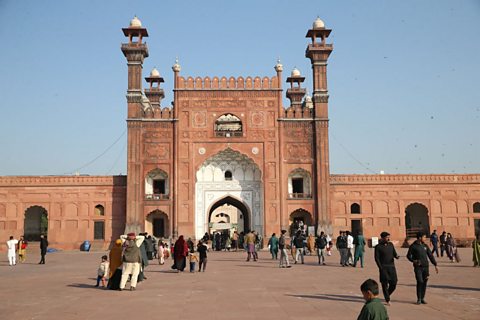
Glasgow Central Station was opened in 1879. It is still to this day one of the busiest stations in the UK, and a major hub for trains to and from the south and the west. One of its famous features is the ‘Heilanman’s Umbrella’ (or Hielanman's Umbrella) a glass-walled bridge crossing Argyle Street.
During the later phase of the Highland Clearances, 30,000 Highland people, who spoke Gaelic, were displaced from the Highlands and came to live in Glasgow. Many used the shelter of the bridge as a sheltered meeting place: it came to be known as the ‘Heilanman’s Umbrella’ as a result.
You can learn more about the Highland Clearances in this guide: 'What factors led to the migration of Highland Scots?'
 Image source, Getty Images
Form and structure of Letters to Glasgow
The poem Letters to Glasgow is 73 lines long, divided into 25 stanzas:
- all of the stanzas, except one, are three lines long
- one stanza is one line long (stanza 21) and consists of a train announcement
There is no regular rhyme pattern: instead there are occasional rhyming couplets and a rich range of other sound effects to create a sensory impression of the journey.
Dharker uses The use of run on sentences with no punctuation at the end of lines or across stanzas. many times throughout to capture the movement and speed of the train. The rhythm at times reflects the train sounds, as well as other sensory and emotional experiences. Among other devices, Dharker employs:
- alliteration ("whoosh of wheels")
- personification ("The future comes in and puts down its bags.")
- onomatopoeia ("clicking and pecking")
Structure
- Stanzas 1-5 - The opening creates an impression of the excitement of travelling north as landscape opens up.
- Stanzas 6-13 - The poem focuses on an individual traveller, a woman looking back on her life and remembering people she has loved. There is a sense that a train journey, sitting facing your neighbours as you travel together, is a chance to enter someone else’s life briefly.
- Stanzas 14-20 - Focus returns to the more normal sounds and sights of this and many journeys. The rubbish collector, who knows the route well, balances carefully as the train seems to speed up. The railway rhythm intensifies as the journey enters its final stage
- Stanzas 21-25 -
- Stanza 21 is one line, the train announcement of their approaching final destination.
- From then on, the train slows down and arrives in Glasgow, and the approach to Central Station is described in welcoming detail. The people are compared to love letters finally being delivered.
Stanzas 1-5
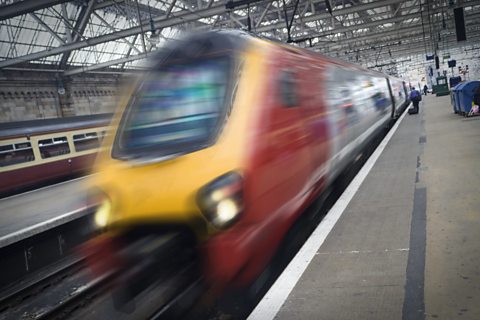 Image source, Getty Images
The poem begins with an opinion expressed as a definitive statement which, though not in first person, is intensely evocative:
Heading north is a leap of the heart
This conveys a leap of joy and excitement as the train heads towards Glasgow. The speaker is watching their journey progress through the "blue dot" moving on the map on their phone. The blue dot is the GPS marker of the train's location, although as Earth is sometimes referred to as 'the pale blue dot', there's an underlying suggestion that the world, and all of life is contained in the train.
the blue dot / is a pulse that crosses the border.
The word choice "pulse" describes the dot’s literal movement on the screen, but it links with the earlier mention of "heart" and suggests the speaker's exhilarating feelings as the train "crosses the border". The dot's 'pulse' is a synecdoche for each passenger and their excitement, as well as the literal marker for the train as a whole. This is also an An allusion is when you refer to a person, place, event or idea that other people will know. For example to a famous story or piece of literature. to the famous poem, Night Mail, by WH Auden, which is about the overnight train carrying letters and other post from England to Scotland, as it also includes a reference to "crossing the border".
The sense of exhilaration is continued as the word choices throughout the beginning of this poem are full of movement, echoing the train as it moves through a big landscape.
train chases river, races/ after it like a riever,
The wordplay of "river" and "riever" keeps the momentum going and Personification is when a writer gives human characteristics to something that isn’t human. the train. The similes Dharker employs here both suggest freedom and energy:
- "like a riever" - A ‘riever’ (or ‘reiver’) refers to a group of outlaws who raided land between the English and Scottish borders centuries ago. This was a turbulent time in history, and "rievers" were lawless, thieving people involved in many battles. This historical reference emphasises the importance that "cross[ing] the border" from England to Scotland may have for some people.
- "like a long distance runner" - This simile links back to the "chase" and "races" that the speaker has mentioned. It suggests the speed of the train and the length of the journey, but also the excitement the passengers are feeling as they move along their journey.
This sense of energy and pace continues with the metaphor:
with its flag of light flying behind.
There is not a literal flag flying behind the train. The metaphor creates an image of the train whizzing by in a blur, its shape distorted by speed. A combination of The repetition of the same sounds or consonants in two more words nearby each other. in "flag…flying" and The repetition of vowel sounds in a series of two or more words. in "light…flying behind" intensifies this sense of energy and life.
In stanza four, the word "between" is repeated and given emphasis through enjambment, placing it at the beginning of two lines. This is significant, as train journeys are by their nature between two places, and that state of being in between is where the passengers find themselves. Between "in here and out there" stresses the separation of the passengers from the landscape the train is passing through. There is also a suggestion of many journeys undertaken along this familiar route: "home and elsewhere" and different journeys "layered" in memories:
one journey is layered over the other/ one time on another
We again get the sense that the people on the train may be individuals, but they are all connected in some way. Their journeys have brought them to the same point, for now.
Stanza five continues this idea of serendipity and introduces the idea of the letters mentioned in the title:
Meeting a stranger/ on a train, getting to know them better,/is like opening an unexpected letter.
The simile "like opening an unexpected letter" echoes the poem's title but also suggests the surprise and delight in getting to know "a stranger". The perfect rhyme of "better" and "letter" emphasises the importance of this idea, and the rhythm at this point is mimicking the train's movement.
Image source, Getty ImagesStanzas 6-13
There is a brief change in Narrative voice is the perspective the story is told from, you could think of it as the 'speaker' of the poem. This speaker may not reflect the poet's views. The writer chooses a narrative voice carefully, as it can have an important effect on the work and the reader’s response. at this point in the poem. The italicised words of a fellow traveller (a "stranger") tell the speaker about her life. She shows the speaker photos and invites them into her life.
A conversational tone is created "That’s me… and that… that’s the two of us" with this repetitive vocabulary mirroring the train’s movement. The use of ellipsis tells us that there was more to the woman's story, it was an in-depth conversation. A feeling of intimacy is conveyed when the woman repeats her daughter’s teasing words: "Look at you posing!".
Throughout stanzas seven to ten a gentle, soothing feeling comes from the rhythm and the soft, When a word sounds like the word it is describing. For example, ‘buzz’ or ‘hiss’. sounds: "hush…shoosh", "floats", "rocks", "hum", "dreams", "whoosh of wheels". The woman is lulled into a dream-like memory state, remembering the songs she sang, the voices of her mother and, then, her lover.
The train journey reflects the woman’s journey through her life, from child to adult. Specific, precious details such as these in stanza nine bring the memories to life:
- "the jacket she liked"
- "share half a sandwich"
- "tea with milk and one sugar"
These details might seem frivolous but they hint at the poem's key theme of human connection. The woman is a stranger to the speaker, and the reader, at the beginning of this journey but soon we learn intimate details about her lover's clothes, how she preferred to take her tea, and the connection of sharing a sandwich too. It is as if her partner actually "came back for a while" and the woman falls asleep, smiling while remembering. The image of "his arm brushing hers" and his conversation about Ecclefechan (a town passed by the train) suggest this was a journey the couple took in the past, sitting side by side, looking out of the window. The repetition of "for a while" makes it clear this is not permanent, or real.
The speaker reflects on the power of such experiences to bring memories to life in stanzas eleven and twelve.
The train is a memory-keeper, it carries / something alive,
The use of run on sentences with no punctuation at the end of lines or across stanzas. is used to draw the reader's attention to this statement. In particular, "something alive" runs onto a new stanza, placing importance on the people inside the train and their memories, hopes, and dreams.
The speaker then compares these living memories to "words in a letter", reflecting the poem's title. However, it's important to note that these letters are "not gathering dust". This is not a stagnant moment or memory. There is a sense of dynamic life, of literally going somewhere, with shared memories becoming part of that living journey. The following line sums this up in a calm, reflective way:
This is how love moves on and survives.
The woman dreaming about the past, looking out the window, which is compared to her screen and the reflection of "the man on the phone" represent the past and present journeying together into the future, echoing the phrase "one time on another" in stanza five. In stanza thirteen, however:
her life looks back […] The future comes in and puts down its bags.
The Personification is when a writer gives human characteristics to something that isn’t human. of "the future" evokes the journey of life, with the future represented by a traveller carrying baggage.
Video - What is personification?
Imtiaz Dharker presents the future as a passenger on the train, putting down their bags.
Brush up on your understanding of personification with this short Higher English revision video.
What is personification? How and why would you use it? Bitesize explains with examples from ‘Home’ by Iain Crichton Smith.
Personification
Giving an inanimate object human feelings or actions.
“The thirsty flowers seemed to reach out and beg for water.”
The flowers can’t actually move or beg, but by personifying them, their need is made more human and understandable.
As well as actions, like moving or speaking, personification can also attribute a human feeling to an object.
“The apple sat, proud as punch, at the top of the fruit bowl”
The personification of the ‘proud’ apple, and its prominent position in the fruit bowl makes it seem more appealing.
Without the personification, this would just be a description of a lifeless scene.
Describing objects as if they are people is a way to make sentences more exciting.
In Iain Crichton Smith’s short story ‘Home’, he uses personification to describe how a street has changed:
“Instead of small shops, supermarkets were springing up, flexing their huge muscles”
The personification here tells us that the supermarkets are an intimidating addition to the town.
Their “huge muscles” represent their wealth and the power that these big businesses have over smaller rivals, and the fact they are “flexing” tells us they are flaunting this power, or showing off.
The personification paints a striking image, and means the writer can avoid a long explanation of business economics.
Why don’t you try bringing your writing to life with personification?
It can really make it sing!
Stanzas 14-20
At this point in the poem, there is a shift and the noise of ordinary travel sounds take over. The The sounds of words to express or underline their meaning, eg 'crunch', 'pop'. of "clicking and pecking" suggests both busy travellers on keyboards and the train noises. It also conjures up images of hens pecking - a departure from the very personal memories of the older woman. Coming after "The future comes in and puts down its bags" at the end of the last stanza, this switch to impersonal images and sounds is marked and highlights the contrast with the earlier memories.
While the speaker was having a moment of connection with a stranger, other passengers are too busy to notice each other. This is emphasised by:
half-heard, half-knowing
This suggests that many passengers are not fully present on their journey. They are too busy, too caught up in their own lives, to acknowledge each other.
In stanza sixteen as the speaker lists rubbish, the "used up things" left behind by these anonymous passengers. The list starts with physical rubbish ("cardboard wrap", "cellophane","paper napkins") but ends with abstract concepts ("time-pass, stifled / yawn.") that emphasise the lack of interest shown by these passengers. These discarded, forgettable items are in stark contrast to the personal memories of the woman we have just met.
The busy rubbish collector is seen in stanza seventeen "stopping for breath" and "feeling the change" – the "different drumming" sound of the train – as they near the end of the journey. There is the illusion of things moving and changing outside as the train rushes past:
- "sheep are fast"
- "houses are quicker"
The view of Glasgow is realistic, not romanticised as they approach Central Station in stanza twenty. "All the lost things" continuing the idea of the train litter. The "butt-end of town" reflects the train passing through less loved parts of the city, as well as suggesting cigarette ends thrown away. The idea of mess and graffiti reflects the frustration of youth, which seems to "fizzle out against walls" as people feel trapped in this part of town. However, we return to the familiar, lively rhythm of the train in stanza twenty-one with the metaphor "and the wires are dancing" and the personification of "meeting and parting, saying goodbye". This image literally describes overhead cables criss-crossing as different railway lines come together on the approach to the station. It also suggests the connections we make with other people; the brief interaction with other passengers, or the "meeting and parting" with loved ones at the station. In a wider sense, this represents all the human connections we make in our lives.
This makes us hopeful, in time for the train reaching its destination.
Stanzas 21-25
Stanza 21 is one italicised line: the train announcement that prepares travellers for arrival.
We are now approaching, we are now approaching
The rhythm and language of the poem here takes on a train-like rhythm and rhyme. The speaker presents a traditional view of Glasgow with references to its shipbuilding past.
over the Clyde […] over the water
The "ghostly foghorn" highlights that the ships are in the past and that industry is dead. The passengers are then referred to as "they". They are separate from the speaker, as if the speaker is detached and observes without being part of the group.
In stanza twenty-three the passengers prepare to leave the train and disembark in Glasgow:
some of them visiting, some returning
The repetition of "some" emphasises their contrasting reasons for the trip. They are all one group, but different from each other: some are going home, others are discovering a new place. They prepare to leave with "baggage" and "belongings", the matter-of-factness emphasised by The repetition of the same sounds or consonants in two more words nearby each other. . Then we are surprised by:
They take up their longings
This shorter line abruptly breaks from the rhythm, creating more impact with this emotional statement. It link back through rhyme to the "belongings", but this time refers to the people’s emotional needs at this point in their life journey. These "longings" echo the "dreams" of the lady who remembers a former lover earlier in the poem. This theme of longing and desiring human connection is also reinforced in the final stanza when the speaker uses a simile to describe the end of the passengers' journey "as if someone has waited for them too long".
They can now see the station and its features which "gather them in":
- "the tall windows"
- "the glass bridge"
- "Heilanman's Umbrella lit"
The use of the word "gather" suggests a togetherness and a welcome. Although the speaker sees that each passenger is different, on their own journey, they are connected by their shared humanity. The poem ends by reinforcing the idea of the travellers as "love letters", this comparison evoking a sense of the love they bring with them, that humanity brings on our journey through life.
as if they are love letters, delivered home.
What are the themes in Letters to Glasgow?
Change and new experiences
Letters to Glasgow is a poem full of energy and movement: the idea of change leading to new experiences is developed throughout. The pace of the changes is shown by the developing landscape and the speaker experiences the excitement of meeting new people, "like opening an unexpected letter".
The train trip symbolises the journey through life and the speaker observes and interacts with passengers, all on their own travels, as "The future comes in and puts down its bags." There is a note of warning, in the lack of connection between the passengers in the stanzas 14-17 - these new experiences can be missed if we don't engage with our journey and connect with others.
Arriving in Glasgow, the passengers get ready to disembark and start the next stage of their journey.
Memory and time
The speaker refers to the train as a "memory-keeper". The old woman who shows the speaker photos and recounts memories of her youth exemplifies this : the train, a relaxed, lulling environment is ideal for confidences. Stories shared are remembered and kept alive:
This is how love moves on and survives
Although the old woman is looking back, facing away from the direction of the train, remembering her past and the man shown on her phone screen, she is still journeying into the future. Both past and future are important to our sense of ourselves.
The power of emotions and human experience
Throughout the poem, the power of emotions is demonstrated, right from the first line, where the speaker describes the exhilaration of travelling north as "a leap of the heart".
The woman who chats to the speaker remembers affectionately times gone by, preserved in her memory, like the snapshots she shares. Little experiences like having a cup of tea, sharing "half a sandwich" with her lover, perhaps on an earlier version of this train journey, are the reality of human experience, cherished despite their ordinariness. The warning-note in the poem comes when people stop connecting with each other ("half-heard, half-knowing"). The message is that we are all connected, our journeys overlap, and the apparent insignificance of our memories and lives is what makes us human.
As the train arrives in Glasgow, the passengers "take up their longings" along with their luggage - their hopes and dreams for the future go with them as they alight. The people are described as "love letters, delivered home" as they arrive, showing that they are precious.
Comparison with other poems by Imtiaz Dharker
In Letters to Glasgow we see the dynamism and energy of the train as it moves towards its destination and into the future, bringing its collection of humanity with it. In the same way, the energy of the city being constructed in Send this is moving human civilisation forward. The city may be unfinished and unlovely, but it represents something vital in the human spirit: the desire to create a life for ourselves. In both poems, the future announces itself with a note of caution - but ultimately the strength of human emotion and connection prevails.
The train is a place where stories are shared and people confide, for example the old lady remembering her experience of young love. There is a sense of all sorts of human life sharing the same space, of the importance of our common humanity. In Bairn and Bloom, the importance of emotion and shared humanity is made clear through the greater awareness and understanding which the parents of new children experience. Bloom sees the mother of the baby imagine her child is the whole world, and in Letters to Glasgow we see an Earth-like blue dot represent a train full of people with hopes and dreams, and longings"
Stitch and The Knot are two poems based on childhood memories - the idea of connecting with our pasts and holding those memories dear, especially when we have lost loved ones is also seen in the chat with the older lady in Letters to Glasgow.
Revise Letters to Glasgow by Imtiaz Dharker
Revise Letters to Glasgow and other poems by Imtiaz Dharker with interactive quizzes for Higher English.