What is Princess & The Hustler about?
- Princess & The Hustler by Chinonyerem Odimba is a play in three acts.
- Odimba’s motivation for writing the play was to allow young Black girls to feel “beautiful” as well as “strong and capable”.
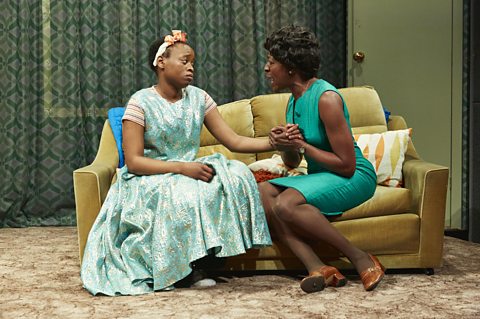
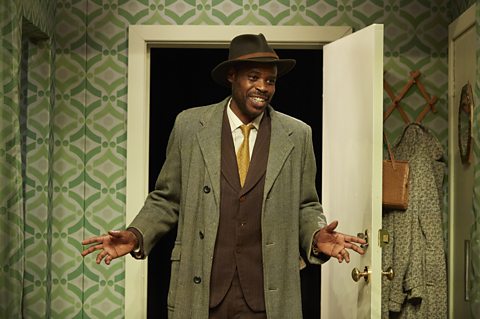
- The play follows Princess, a 10-year-old girl living in Bristol, and her family. Her father, The Hustler, unexpectedly returns after a long time away.
Princess & The Hustler plot overview
Timeline
This timeline shows key moments from Odimba’s play Princess & The Hustler.
Activity
Context: The Bristol Bus Boycott

Odimba set Princess & The Hustler during the Bristol Bus Boycott of 1963.
At this time, the Bristol Omnibus Company were upholding a When equal employment opportunities in a particular industry or organisation are denied to members of ethnic minorities. which meant that they refused to hire anyone who was Black or Asian as bus drivers or conductors.
At the time, many companies followed similar legal, yet racist, policies.
In April 1963, people in Bristol protested against this racial discrimination and refused to ride the buses until the bus company ended their colour bar. This finally happened in August 1963.
Activity: Slideshow
Click through the slideshow to learn more about the Bristol Bus Boycott in 1963.
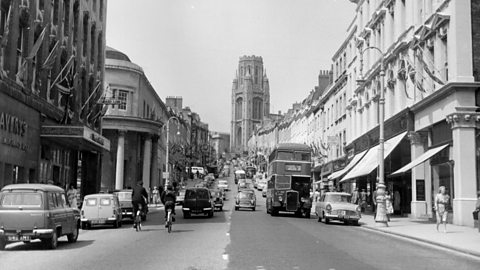
Image caption, The Bristol Bus Boycott began in 1963 after the city's leading bus company, Bristol Omnibus Company, refused to employ Black or Asian bus crews. The ‘colour bar’ policy, which was in use in many other UK cities at this time, was a part of the daily racial discrimination that was commonplace for the UK's Black and Asian communities.
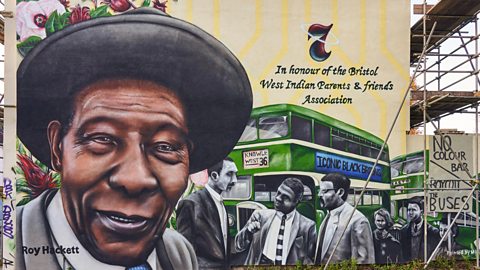
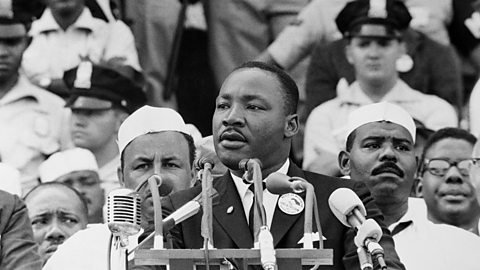
1 of 3
Act One
The Hustler returns
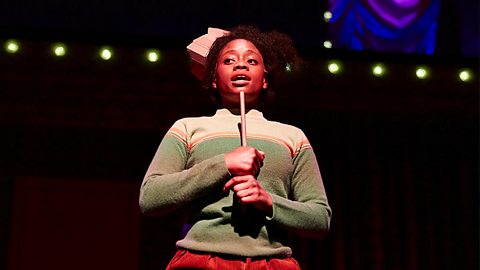
Princess & The Hustler opens on Christmas day, 1962. Princess, a young Black girl, is in the cupboard room pretending to be the winner of Weston-Super-Mare’s Beauties of the West contest.
Her mother, Mavis, is looking for her and her brother, Wendell Junior. Mavis is angry because it is early in the morning and Junior has already been out taking photographs with his friends.
Wendell, ‘The Hustler’, arrives at the door. He is Mavis’s husband but has been absent for years. At first Mavis threatens Wendell and repeatedly tells him to leave. She calms down when Wendell reveals he has another daughter with him, Lorna, and asks Mavis for support. Lorna is mixed-race.
Christmas dinner
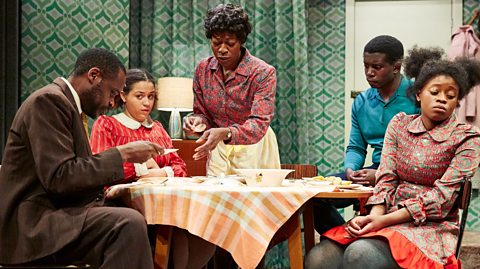
Wendell and Lorna stay for dinner. Mavis tells Princess that Wendell is her and Junior’s father. It is clear that Junior is not happy to see him as his behaviour is To be unwelcoming or unfriendly.. Mavis says Lorna can stay with them until Wendell finds somewhere for him and Lorna to live.
A white woman called Margot, who is a neighbour and close family friend, enters. She is curious about what is happening and Behaving in a way that suggests a playful sexual attraction. with Wendell before she realises who he is. She takes Princess and Lorna to her flat to play “dressing up” to give Mavis some space.
The Docks
Three days later, Princess and Lorna are sitting at the docks waiting for Wendell. Wendell returns with a bundle of bank notes which he hides from them. He gives one note to the girls, then leaves again.
Wendell Junior arrives with his friend, Leon, to take photographs. Junior is angry that their father left Princess and Lorna alone. He sends them home with Leon. Wendell returns and Junior confronts his father about being absent and irresponsible. Junior says:
You've come back just so you can leave again. That’s what you want isn’t it? To break us all over again.
They have an argument and a physical “struggle”, after which Wendell says he won’t leave until he’s made Junior “proud as ar peacock”. He leaves Junior crying “hard hot tears”.
Wendell stays
It is now January 1963. Princess, Lorna and Margot are sat at the table when Wendell arrives. When Wendell makes a joke about Mavis, Margot defends her saying she “Looks after everyone. And I look after her.” Wendell explains how hard he is finding it to secure a job.
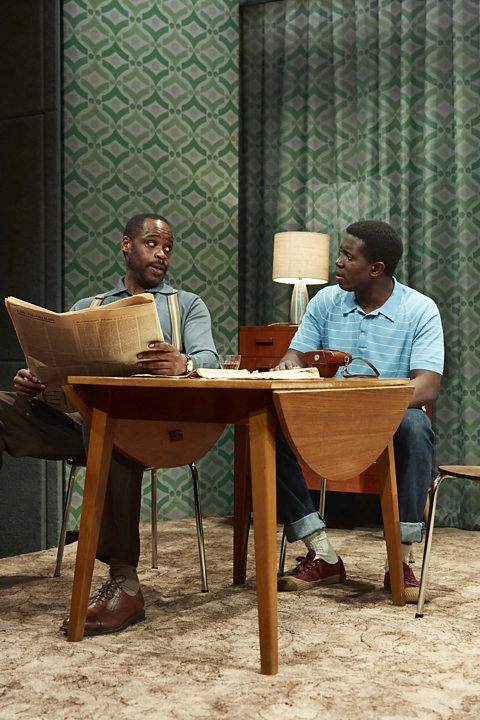
Junior and Leon enter. Margot flirts with Leon, who tries to flirt back. Wendell tries to protect Junior and Leon from Margot’s sexually suggestive comments. He says that they are just “boys”. Junior takes offence at this saying:
I’m not a boy! You think I don’t know about the world. About what it means to be a man… a Black man.
He wants Wendell to know that he has grown up while he’s been away.
Junior mentions the When equal employment opportunities in a particular industry or organisation are denied to members of ethnic minorities. and the protests that Leon's father is involved with. He argues that “Leon’s daddy been more of a daddy to me than you!”.
Wendell angrily tells Junior about some of the ways he has been racially abused since living in England, including how Lorna's mother, a white woman, accused him of Sexual assault involving sexual intercourse or other types of sexual penetration without consent..
Mavis, Princess and Lorna return. Princess convinces Mavis to let Wendell stay. Mavis sets out some clear boundaries: he must share a room with his son and follow her rules.
Question
How many children does Wendell have?
Wendell has three children: two with Mavis and one with another woman.
It becomes clear early on that Wendell Junior knows Wendell is his father, however Princess is not aware until Mavis tells her.
None of the characters know that Wendell has a third child until he introduces Lorna.
Act Two
Wendell and Mavis become close
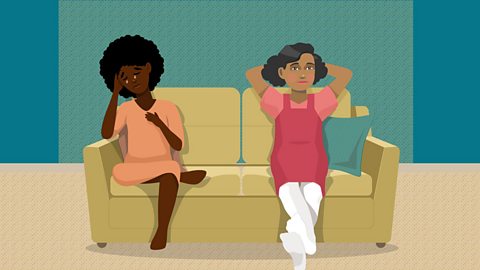
It is now May 1963. Princess returns home from school upset because Lorna has been invited to a birthday party and she hasn't.
This is the first hint of Discrimination against people with a dark skin tone, typically among people of the same ethnic or racial group. in the play because there is a suggestion that Lorna is invited to the party because her skin tone is lighter than Princess’s. Lorna explains to Mavis: "Barbara says she can't invite Phyllis!".
Wendell flirts with Mavis and she tells him how difficult it's been since he left. They begin dancing and laughing together. Junior interrupts them and finds out that Wendell has bought him a flash for his camera as a gift.
Junior tells his parents about a march that will happen in five days in support of a bus boycott. He says Black people and students at Bristol University will refuse to ride the buses to raise awareness about the Bristol Omnibus Company’s racially discriminating policies. Wendell offers his support for the cause.
The boycott
It is now June 1963. Princess is in the cupboard room, acting out being the winner of Weston-Super-Mare’s Beauties of the West contest - just like at the start of Act One. This time, however, the mood is Quiet and somewhat sad. .
As Princess imagines accepting her award, she starts to talk about how people in school say she can't be pretty. She looks at her reflection, touches her lips and references her hair and skin as she says this, suggesting that she is being bullied because of her appearance as a young Black girl.
I want to be the prettiest girl in the whole of Weston-super-Mare and Bristol…But everyone in school says I can't be…
Mavis, Margot and Wendell arrive home. They are laughing – they have been out dancing and are “a bit tipsy”.
Things grow tense between Margot and Wendell when they discuss the bus boycott. Margot calls it “silly” and suggests that people shouldn’t take the colour bar personally. She expresses concern that white people, like her brother, might lose their jobs because of it.
Wendell points out the Discrimination within the systems that influence our everyday lives. For example, education and employment. in the country – how Black men are struggling to find work – and vows to double his efforts with the protest.
After Margot leaves, Mavis calls Wendell her “husband” and the two begin flirting again.
Princess is still sitting behind the cupboard door listening in.
Junior is attacked

Wendell is reading snippets of the newspaper about the boycott to Mavis, Princess and Lorna. He tells Princess and Lorna that they can't see Margot anymore. He says she is Uneducated or deliberately unaware..
Junior enters “bleeding and hurt”. He has been physically attacked by some white boys after a march in support of the boycott.
Princess worries that they’ll get attacked too. Lorna replies saying that she won’t because “I’m not like you”. She says:
I'm not Black like you. I'm only half. Half of everything.
Junior encourages his father to leave
The date is 24th August 1963. Margot visits Mavis for the first time in a while. Mavis expresses her support for the bus boycott and her dissatisfaction at how her life has turned out in England. Margot thinks that Wendell and “those others” are just “stirring it up”. Margot doesn’t believe Wendell can really change for the better.
Princess is claiming to be sick and “lies on the sofa” but none of the other characters understand what is wrong with her.
Wendell and Junior argue. Junior gives his savings to his father and says he should use the money to leave. Junior remembers how upset his mother was when Wendell left the first time. He says he doesn’t hate Wendell; he just loves his mother and sister more.
Junior leaves, and then Wendell leaves – without the bag of money.
Princess, who has been lying on the sofa this whole time, sits up and goes to her cupboard room. There is no magic there – it is just a normal cupboard. She:
kicks and screams – and destroys her cupboard world.
Mini quiz
Act Three
Princess runs away
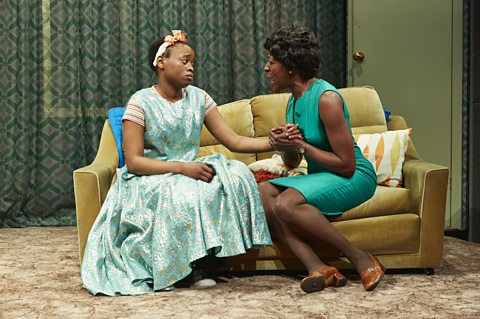
The date is still 24th August 1963, but it is now evening. Wendell and Princess are both missing. Junior, Mavis and Leon are worried. Junior suggests that his father has shown “his true colours”.
In the next scene, Margot returns home to find Princess hiding there. Princess has cut her hair “short and uneven”. She is upset and tells Margot that the racist bullying at school has got worse and that the other children exclude her. Princess sleeps at Margot’s that night, wearing an old ballgown.
The next day Margot returns Princess home. Junior is hanging his developed photographs up around the room and there is one of Princess he has captioned ‘My Sister, The Beauty Queen’.
Mavis tells “Auntie Margot” that she is always welcome at their home.
The boycott ends
The date is 28th August 1963. Wendell returns home drunk after being missing for two days. He has been celebrating the bus boycott’s success and says:
Wi take on de system an’ it look like wi might beat dem.
Junior accuses him of taking his money and coming back anyway, but Wendell denies this. Margot returns the money, which Princess had taken and left in Margot’s home.
Wendell proposes to Mavis, even though they are technically still married, and shares his plans to find work first thing in the morning.
A short while later, the family are dressed up to go out. Mavis tells Princess how beautiful she is and they hug and dance.
Wendell enters, shortly followed by Junior and Lorna. Junior takes a picture of them all, then there is a voice-over of a radio announcement stating that the boycott is over. The bus company has agreed not to discriminate by race when hiring bus drivers.
Princess the beauty queen
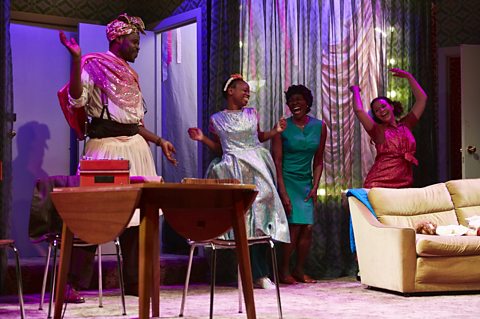
It is September 1963. Princess is dressed in a swimsuit and cloak, similar to how she was dressed at the start of the play.
Wendell appears wearing make-up, a skirt, shawl and headdress.
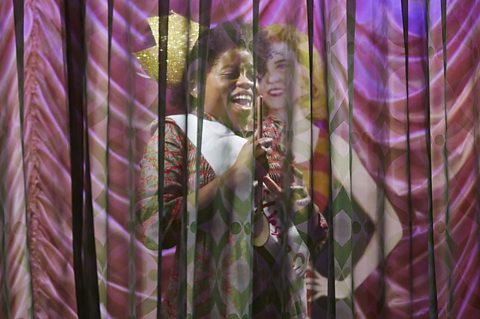
They enter the cupboard room. Princess pulls out a beautiful crown and her imaginary pageantry world comes alive as Wendell crowns her.
She is joined onstage by a line of beautiful Black women “of all sizes and nations”.
Question
What could Princess’ crown symbolise in the play?
The crown could symbolise Princess’s perception of and love for herself.
At the beginning of the play, the crown is “cardboard and tinsel” when she doubts herself and is being bullied.
At the end of the play, it is made of “the most wonderful sparkles” when she has learnt to love and celebrate herself.
Her crown could also symbolise approval from those who love her. Her mother tells her that she can do anything she wants and “if anyone ever try to tell you any different you just show them your crown!”
In a similar way, her father places the crown on her head in the final scene as a symbol of love.
Princess & The Hustler plot quiz
Test your knowledge of the plot of Princess & The Hustler by completing this multiple-choice quiz.
GCSE English literature revision podcasts. audio
Whether you're at home or on the go, listen to these podcasts by Bitesize and BBC Sounds to refresh your memory of key texts.

More on Princess & The Hustler
Find out more by working through a topic
- count2 of 5
- count3 of 5