Who was Jutland Jack?
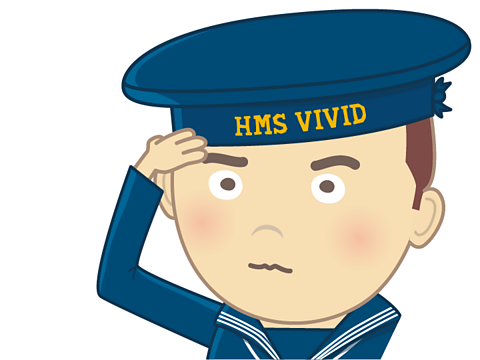
Jack Cornwell, known as ‘Jutland Jack’, was a young sailor who died during the Battle of Jutland, the biggest sea battle of World War One.
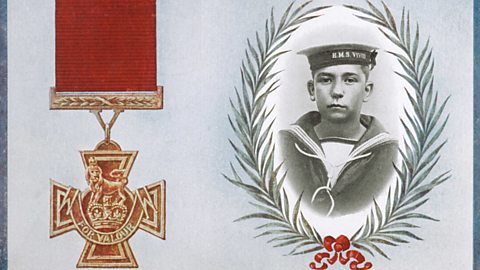
For his bravery during the battle, he was awarded a Victoria Cross, Britain’s highest award for acts of outstanding bravery in battle.
Jack was one of the youngest people to be awarded a Victoria Cross during World War One.
Watch: the life of Jack Cornwell
Watch this animation for a short summary of Jack Cornwell's life.
NARRATOR: Jack Cornwell. Hero of Jutland.
Jack was born in 1900.
As a young boy, he joined the scouts and was proud of his badges.
His first job was as a delivery boy.
But when World War One began, Jack wanted to become a sailor.
He tried to join the Royal Navy in 1914 but was too young.
He tried again in 1915 and was accepted.
He learnt how to work as part of ship’s crew and to obey orders.
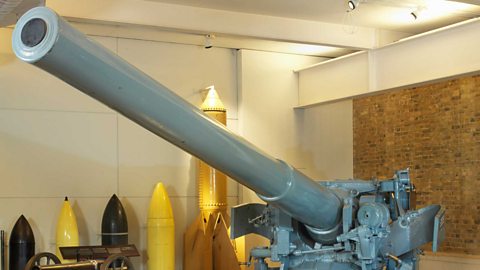
He trained as gun layer helping to aim the guns at a target.
In 1916, the Royal Navy was sent to sea.
They met German ships near Denmark and opened fire.
The battle of Jutland had begun.
The battle lasted for hours. Many men were killed.
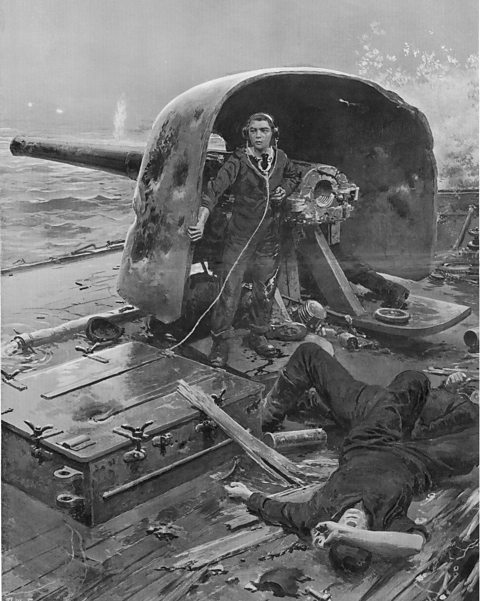
Only Jack was left, wounded and in pain but he stayed by his gun waiting for orders.
When the battle was over, rescuers found Jack and took him to hospital in Grimsby.
He died before his mother had a chance to see him.
People read about Jack in the newspapers. He was a national hero.
Jack is remembered for his courage and is one of the youngest people to be awarded the Victoria Cross.
Jack's early life
Family
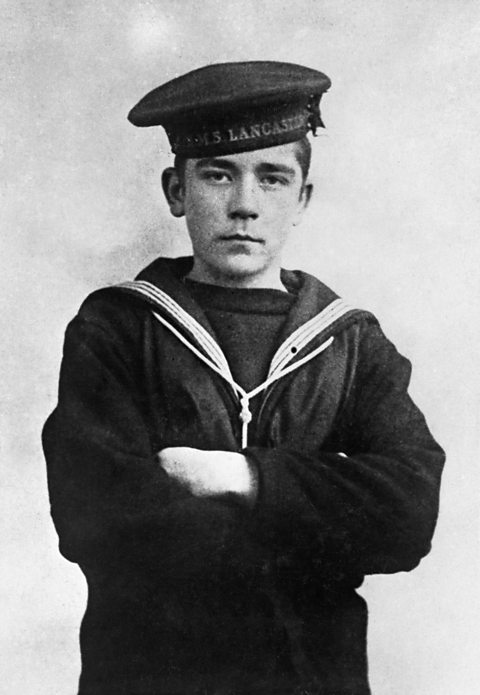
Jack, whose real name was John Travers Cornwell, was born on 8 January 1900 in Leyton in Essex, now known as the London borough of Newham.
Jack came from a large family and had five other siblings. He did not come from a rich background.
Jack’s father worked as a soldier, a milkman and a tram driver to earn more money.
School
When Jack moved to his new home in Little Ilford he attended Walton Road School.
In the early 1900s every child between the ages of 5 to 14 was supposed to go to school. Some children aged 12 to 13 left early to go to work.
When Jack was 13 he left school to become a delivery boy, where he worked on vans delivering goods for a tea company.
Boy Scouts
Jack’s love of outdoor adventures began when he became a Scout. He was proud of his badges and was praised for rescuing a girl stuck in a drain.
How Jack joined the Navy
Jack didn’t work as a delivery boy for long.
In August 1914 the war began and Jack plus thousands of other men left their jobs to volunteer for the Army or the Navy.
When Jack first applied to the Navy he was turned away because he was too young.
In July 1915 he tried again without his parents’ permission. He gave the names of his boss at work and his old headmaster as references.
This time Jack was accepted into the Navy.
Jack was sent to Devonport near Plymouth for training as a gun layer or ‘sight setter’.
He learned how to aim the guns at a target, plus how to obey orders and work as part of a ship’s crew.
The Battle of Jutland
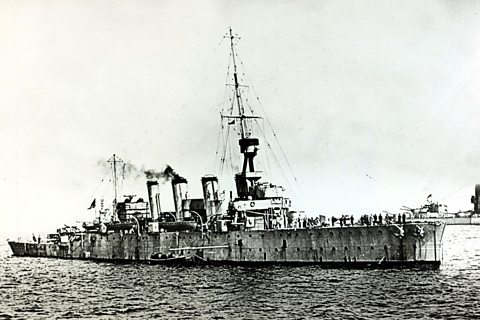
After completing his training, Jack joined the crew of HMS Chester on 2 May 1916.
Jack, with around 400 other men, sailed to the North Sea to fight the German ships that approached them.
On 31 May 1916 British sailors spotted German ships off Jutland in Denmark, so the guns opened fire.
The Battle of Jutland had begun.
What happened to Jack?
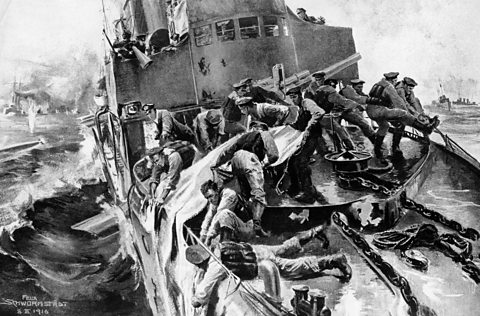
After firing their guns for hours, Jack’s ship came under fire from four German ships.
Big missiles known as ‘shells’ hit Jack's ship. All of Jack’s gun-crew were killed or badly wounded.
Only Jack was left standing. Although he was in pain and with shells still hitting the ship, he stayed by his gun waiting for orders.
When rescuers found him, he was alive but terribly wounded by flying splinters of metal.
Even though the ship was damaged, HMS Chester got back home and Jack was taken to hospital in Grimsby.
The doctors sent for his mother. Before she arrived Jack died on 2 June 1916.
How do we remember Jack?
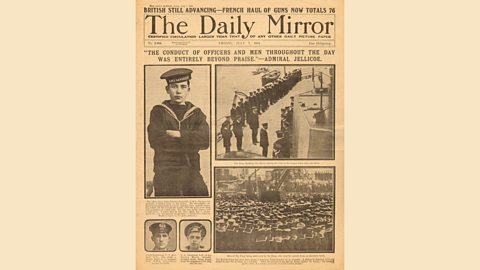
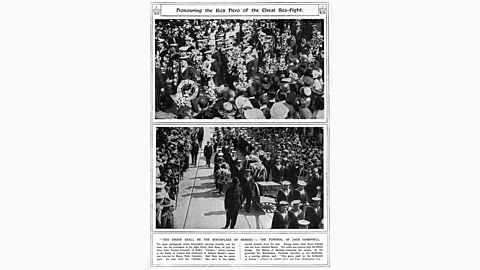
Image caption, Jack's life story was spread across newspapers and books
The story of Jack's death circulated across multiple sources, as seen with the Daily Mirror article above, and it generated a lot of public interest during the First World War.
1 of 4
Activities
Activity 1: Quiz – Life of Jack Cornwell
Activity 2: History Explorer game
Play this game to test your knowledge and learn even more facts about World War One.
History Explorer: Secrets through time
History Explorer: Secrets through time: KS2 History

Horrible Histories: Raid and Trade game! game
Play Horrible Histories: Raid and Trade KS2 History

More on World War One
Find out more by working through a topic
- count10 of 43
- count11 of 43
- count12 of 43