What were conditions like for women?
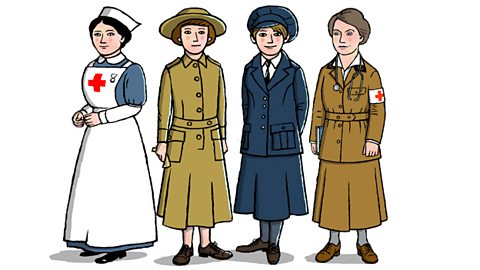
Women were not allowed to fight as soldiers in World War One. So they found other ways to help on the front line.
Conditions were dangerous for women travelling to the war zones. They were at risk from enemy fire.
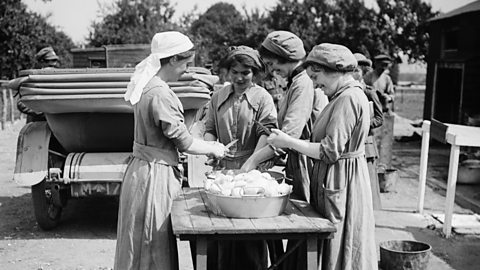
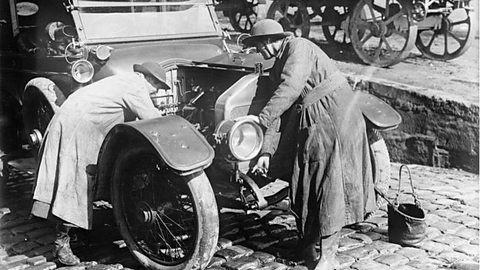
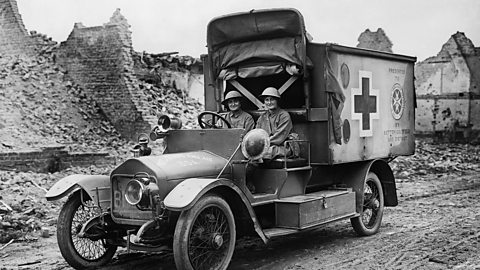
Some worked as mechanics, cooks or doctors. After working long hours, they slept on uncomfortable camp beds and had to be up early for duty.
Women on the front line were very brave. For many this was the first time they had ever been away from Britain.
Why did the Women’s Army Auxiliary Corps start?
By 1917 the Army was running short of men.
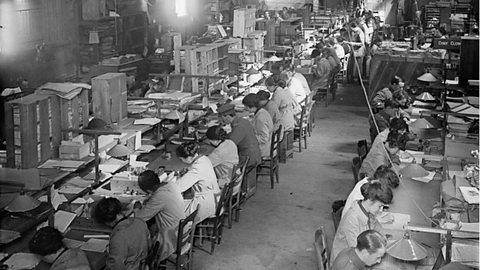
The War Office realised that some front line jobs which did not involve fighting were being done by men. They decided that women could do these jobs instead.
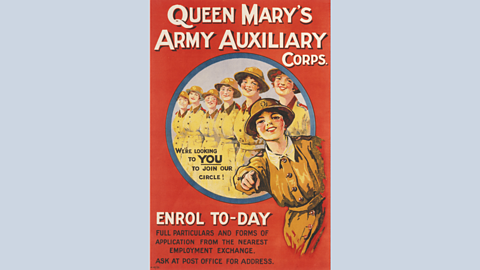
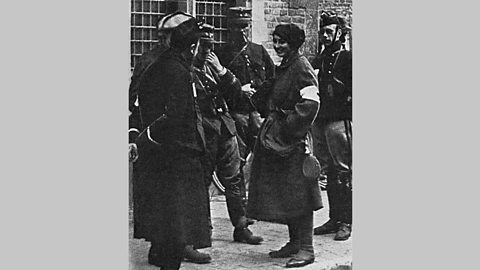
Image caption, Volunteers joined the Women's Army Auxiliary Corps (WAAC)
They wore green or 'khaki' uniforms: a small cap, jacket and skirt. They exercised every day, taking part in Morris dancing and hockey to keep fit. The WAAC was later known as later known as Queen Mary's Army Auxiliary Corps.
1 of 4
Heroic women
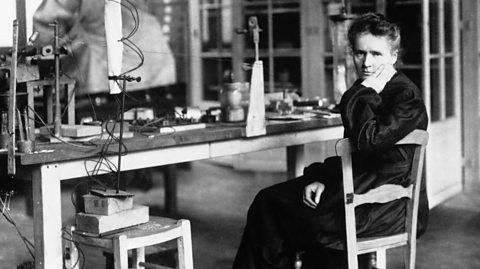
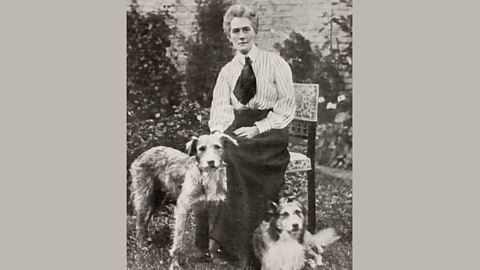
Some women became famous for the way they helped soldiers.
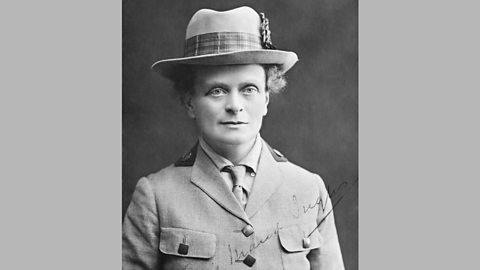
- Flora Sandes joined the St John Ambulance service. In the confusion of war she was enrolled in the Serbian army. She was the only British woman to officially serve as a soldier in World War One. She became a Sergeant Major.
- Gabrielle Petit from Belgium was one of the first female spies. She gathered information about the Germans for the British Secret Service.
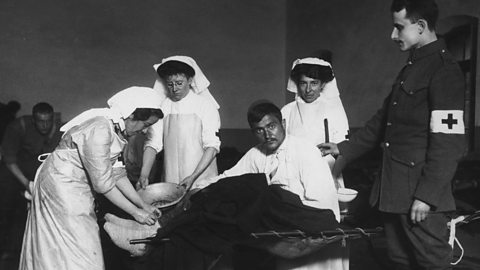
Other women became heroes for their work in medical roles.
Medicine and first aid
Before war broke out there were only approximately 200 female doctors.
A shortage of trained medical staff during World War One gave opportunities for women to take a wide range of crucial roles.
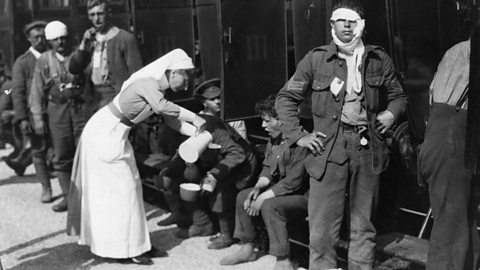
Image caption, Women went to France as Voluntary Aid Detachment (VAD) nurses
They cared for the wounded and sick in 'rest stations', where soldiers had a few days to recover, and in convalescent homes, where they could stay until they were as well as possible.
1 of 6
How did life change for women?
At first some women saw the front line of war as an adventure. They quickly realised the reality was harder and sadder than the stories they had read.
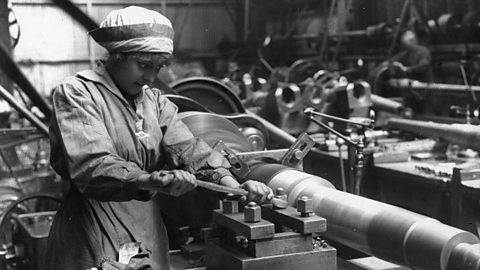
Women learnt new skills. Some worked as doctors, mechanics and in other jobs which would have been unthinkable before the war.
Like women at home they had tasted independence and didn't want it to end.
Activities
Activity 1: Quiz – Women's jobs in World War One
Activity 2: History Explorer game
Play this game to test your knowledge and learn even more facts about World War One.
History Explorer: Secrets through time
History Explorer: Secrets through time: KS2 History
Horrible Histories: Raid and Trade game! game
Play Horrible Histories: Raid and Trade KS2 History
More on World War One
Find out more by working through a topic
- count10 of 43
- count11 of 43
- count12 of 43
- count13 of 43