How were injured soldiers treated?

The war was a time of change for the treatment of injuries and illness.
Injured and sick soldiers needed to be treated quickly so they could go back to fighting as soon as possible.
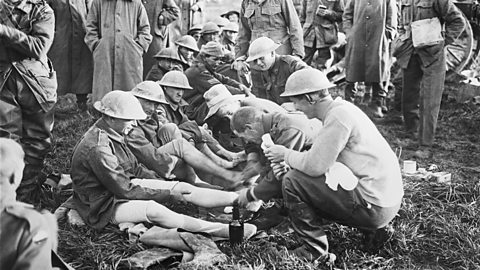
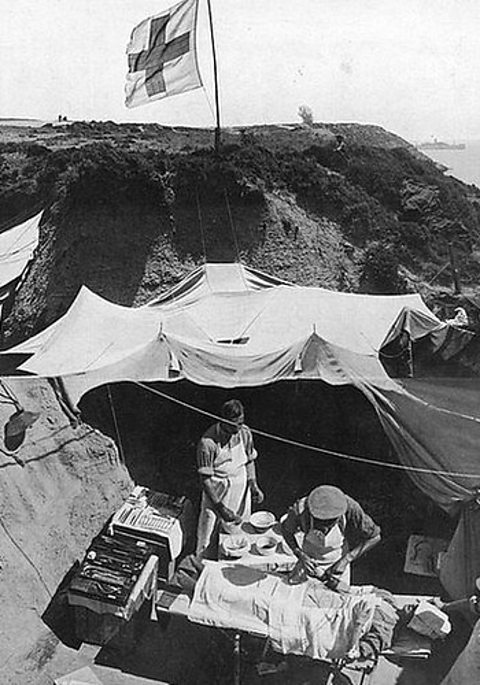
Casualty stations were set up near battlefields, some by the Red Cross.
Women on the front line
Female volunteers worked as nurses and drove ambulances.
Most worked 14-hour days and sometimes even longer when there were lots of injured soldiers.
Injuries and illnesses
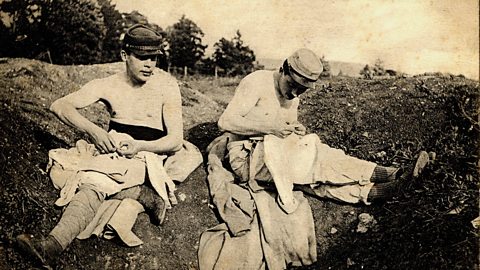
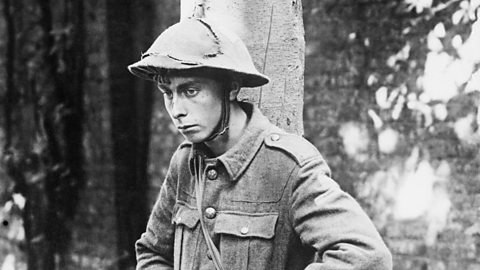
Soldiers not only took injuries in battle. They also suffered from illnesses and diseases caused by the dreadful conditions in the trenches.
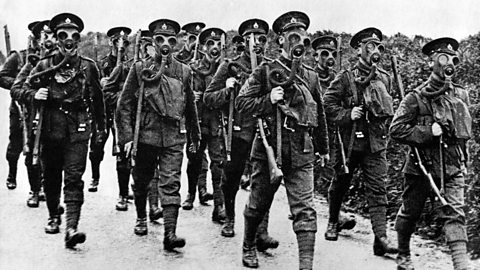
Image caption, Poisonous gas was used as a weapon
The First World War was the first-time poison gas was used on a large scale during war. The gas could affect someone in just a few minutes so protective masks were given to all soldiers. Many soldiers suffered from the effects of gas attacks for the rest of their lives. The poet Wilfred Owen wrote about the effect of a gas attack in Dulce et Decorum Est.
1 of 4
What is triage?
The Royal Army Medical Corps (RAMC) was set up to care for British troops.
It used a special system called 'triage' where sick soldiers were put into one of three possible groups:
| 1 | Slightly injured. | Soldiers who did not need much care. They were quickly given treatment wherever they were and then carried on fighting. | |
| 2 | Need hospital. | Soldiers who needed to be transported for treatment. They were taken to the nearest hospital base. | |
| 3 | Beyond help | Soldiers who did not have much chance of getting better. They were made comfortable but little treatment was given as others had priority. | |
Medical Advances
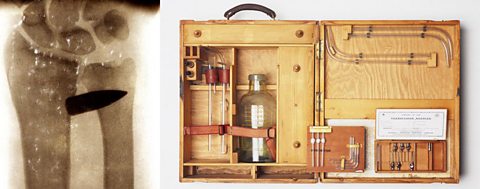
X-ray technology helped surgeons to detect where a bullet had penetrated. Many operations were performed during the war thanks to this.
Blood was first stored successfully during World War One. Doctors could now give blood transfusions to soldiers. Before, soldiers with burns, tissue damage and contagious diseases would have usually died.
What was Spanish Flu?
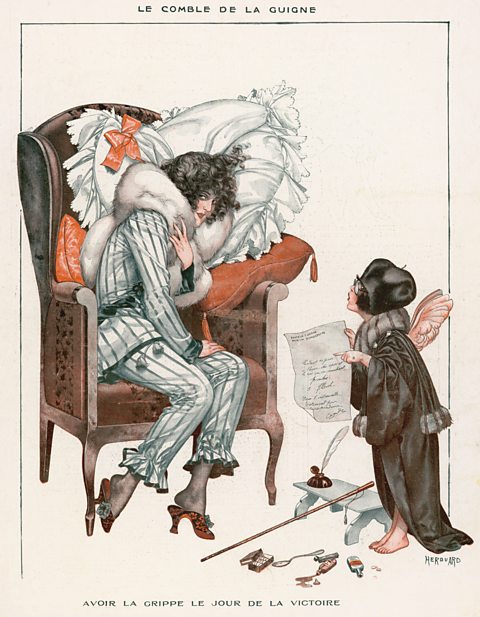
Spanish Influenza (flu) was first reported in March 1918. It was called "the greatest enemy of all" because it infected a third of the world's population.
It became known as Spanish Flu. Spain was neutral during the war. Newspapers in Spain were not restricted in what they could report. This meant they reported the deadly pandemic in detail whereas those at war did not.
What was the cause?
Some people thought the outbreak might be caused by poison gas. Today we know it developed in animals and birds, then spread to humans.
Influenza moved around the world on ships trading goods with other countries.
Soldiers lived closely together in camps and trenches which helped the infection to spread.
How did the world change?
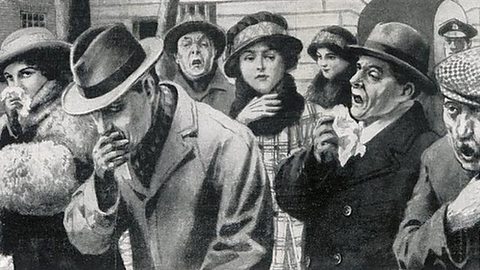
40-50 million people died from Spanish flu. This was many more people than the war itself.
How were soldiers cared for after the war had ended?
After the war ended, soldiers returned to civilian life. For some, this was easier because they had survived the war with no mental or physical injuries. However, for others, it was different.
Physical conditions people returned with included amputations, lung problems and blindness.
Shell shock was a term used for a psychological condition we now call post traumatic stress disorder. Sadly, this was not understood and some believed it was an example of cowardice. Ten years after the war had ended, many were still being treated for shell shock.
Activities
Activity 1: Quiz – Medicine during World War One
Activity 2: History Explorer game
Play this game to test your knowledge and learn even more facts about World War One.
History Explorer: Secrets through time
History Explorer: Secrets through time: KS2 History
Horrible Histories: Raid and Trade game! game
Play Horrible Histories: Raid and Trade KS2 History
More on World War One
Find out more by working through a topic
- count12 of 43
- count13 of 43
- count14 of 43

- count15 of 43

