What is propaganda?
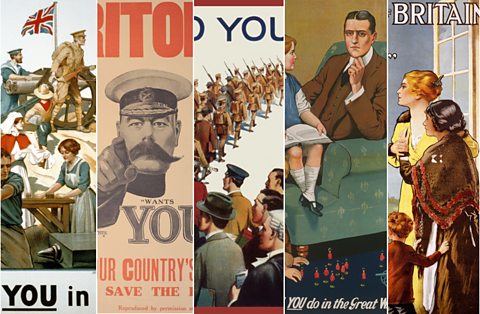
Propaganda is used to try to make people think a certain way.
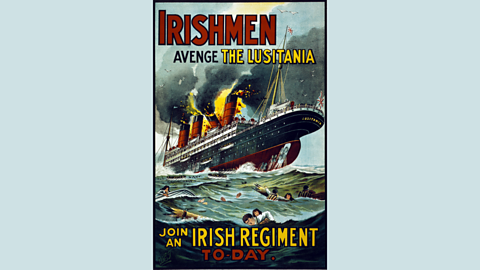
Stories about bad things the Germans had done were told to make people angry and frightened so everyone would want Britain to beat them in the war.
But many tales were untrue and Germany told the same stories about Britain.
Why did it matter?
What the public thought about the war really mattered.
The government needed to recruit lots of soldiers and wanted people to support them.
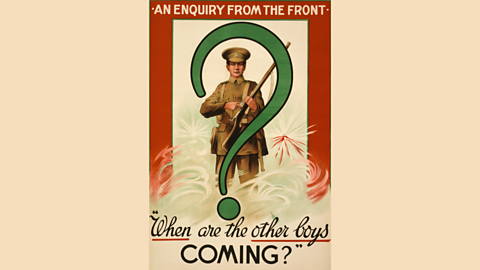
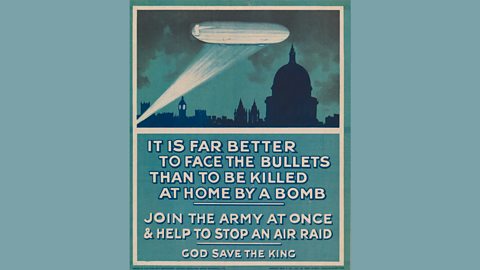
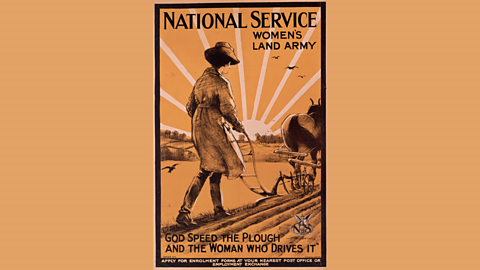
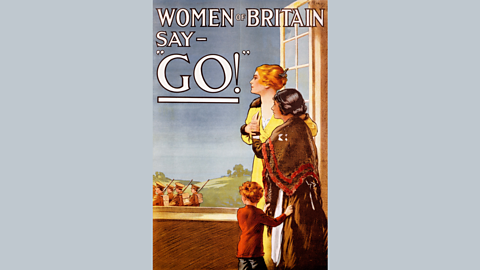
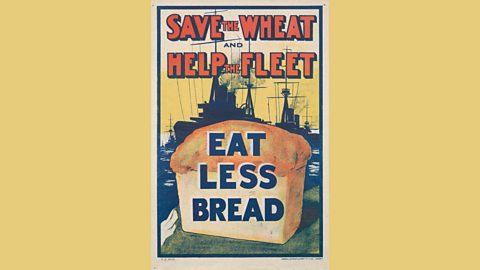
Posters were printed that made the army look exciting.
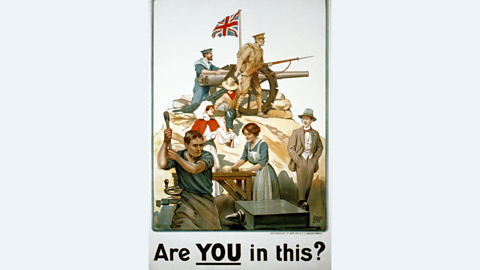
Other posters told men it was their duty to join, that they would feel proud if they did and guilty or embarrassed if they didn't join.
How were posters used?
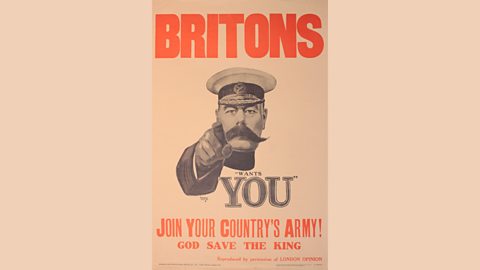
Image caption, This famous poster used the face of Lord Kitchener to persuade men to join the army. Kitchener died when his ship hit a German mine.
1 of 8
What did newspapers report?
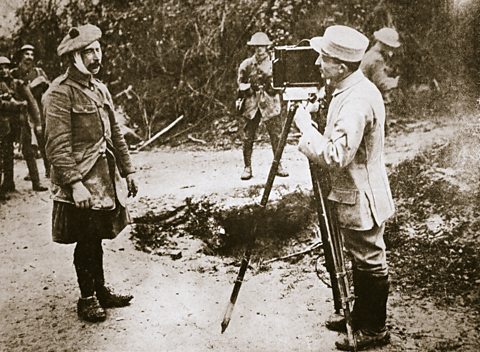
At first journalists were not allowed to report from the Western Front.
Many found secret ways to travel there. One journalist, Basil Clarke, hid on a train full of French soldiers.
In April 1915 the ban was stopped and some journalists went to the front.
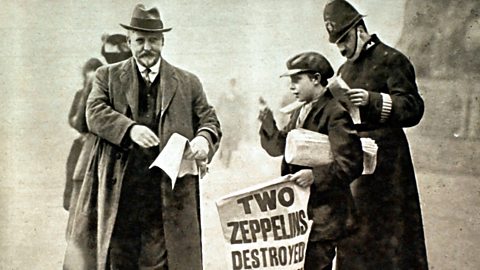
Image caption, People in Britain wanted to know what was happening
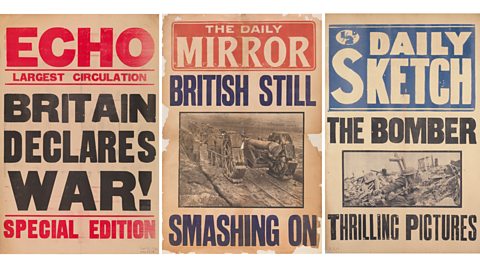
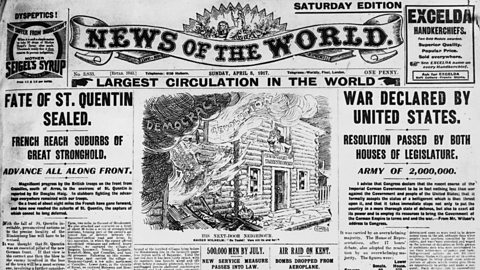
But the Government knew spies might read the papers. A law was passed to stop newspapers from printing information which could help the enemy or make British people feel unhappy about the war.
1 of 3
How did reporting change?
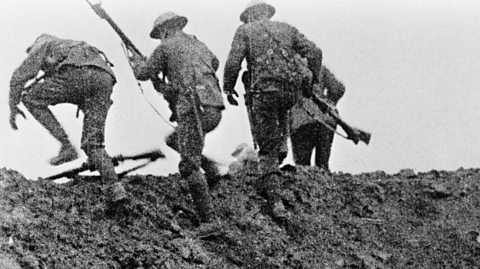
In August 1916, a famous British film was shown in cinemas about The Battle of the Somme.
A few parts of the film were acted but most of it was real.
Around one million people saw the film in the six weeks after it was released.
It was the first time people at home could see soldiers in the trenches, guns firing and wounded men.
Filming and reporting from the Front let people find out what was really happening in the war.
Although it was upsetting, people were glad that they could finally see it.
Activities
Activity 1: Explore these posters
Posters were very carefully designed with words and images which had a special effect on the viewer.
There are three famous posters below.
Click on the posters to find out how they were used for propaganda.
Activity 2: Quiz - World War One Propaganda
Activity 3: History Explorer game
Play this game to test your knowledge and learn even more facts about World War One.
History Explorer: Secrets through time
History Explorer: Secrets through time: KS2 History
Race Across the Continents game - new update! game
Help this team of adventurers race their way to victory. Explore the globe in this exciting game update to discover new audio voiced by Ade Adepitan and fun animations. Challenge yourself with brand-new achievements and become a high-flyer!
More on World War One
Find out more by working through a topic
- count11 of 43
- count12 of 43
- count13 of 43
- count14 of 43

