Key points
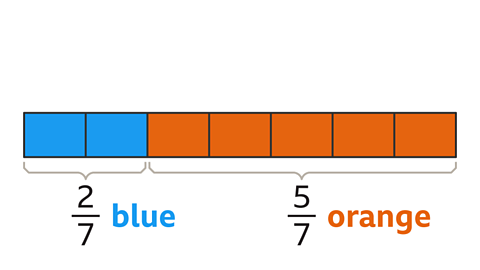
Division in a given A part-to-part comparison. is also known as sharing in a given ratio.
Similar processes are used when dividing an amount in a ratio and finding a fraction of an amount.
To divide in a given ratio:
- One or more rectangular bars drawn to represent information. can be used to support understanding
- a numerical method without bar models can also be used
Understanding the link between ratios and fractions is a valuable skill to practise.
Understanding the link between ratios and fractions
Examples
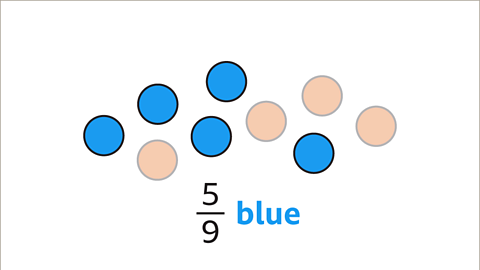
To understand the link between a A part-to-part comparison. and a fraction, it is important to know that:
the ratio represents the parts that make up the whole
the total of the parts gives the Number written on the bottom of a fraction. The denominator is the number of equal parts. Eg, for 1⁄3, the denominator is 3 of the fractions
each part of the ratio gives the Number written at the top of a fraction. The numerator is the number of parts used. Eg, for 1⁄3, the numerator is 1 for that fractional part
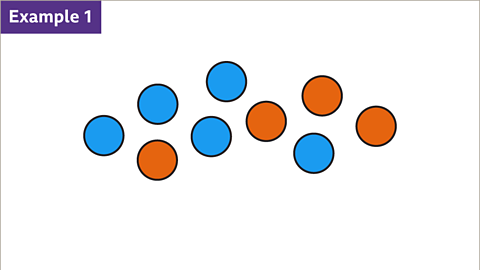
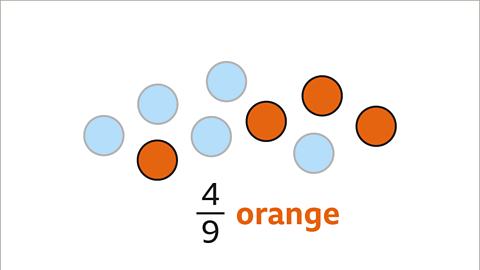
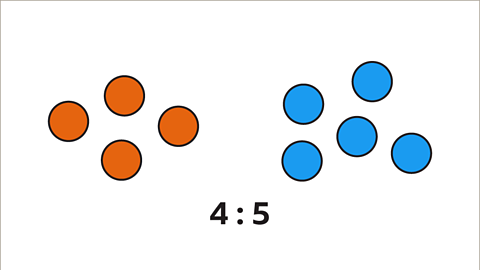
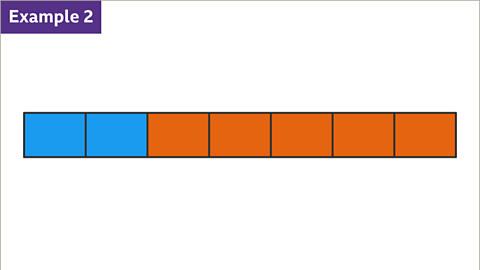
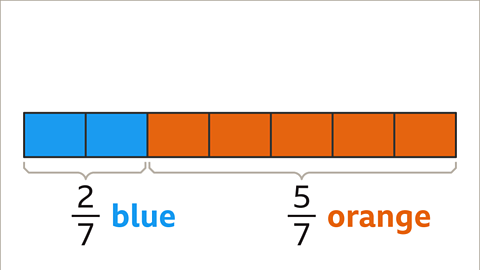
Image caption, There are nine circles. 4 circles are orange and 5 circles are blue. Find the fraction of orange circles, the fraction of blue circles and the ratio of orange to blue circles.
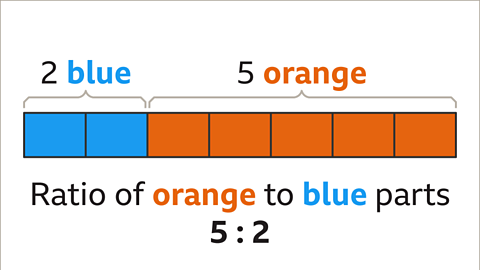
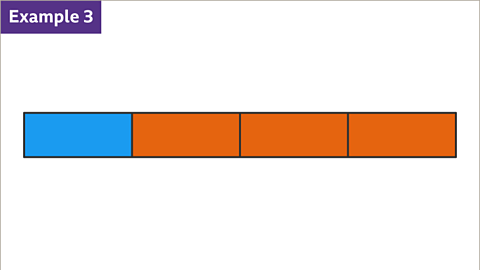
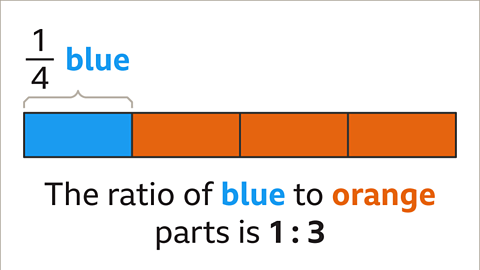
1 of 9
Question
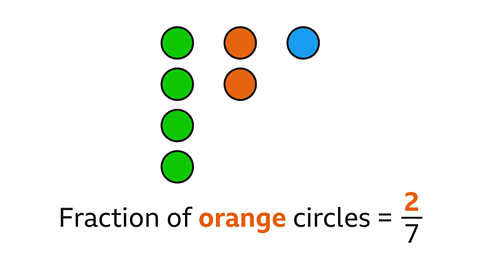
The ratio of the number of green to orange to blue circles is 4 : 2 : 1
What fraction of the circles are orange?
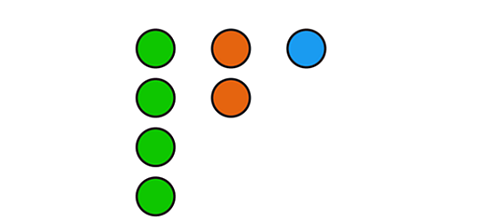
The ratio of circles is 4 : 2 : 1
The total number of parts is 7 (4 +2 + 1) - this gives the denominator of the fraction.
The ratio has 2 parts that are orange - this gives the numerator of the fraction.
The fraction of orange circles is \( \frac{2}{7} \)
Using bar models to divide in a given ratio
To divide in a A part-to-part comparison. using One or more rectangular bars drawn to represent information.:
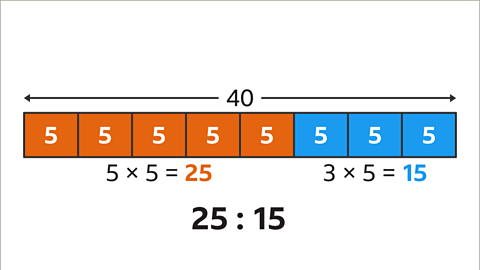
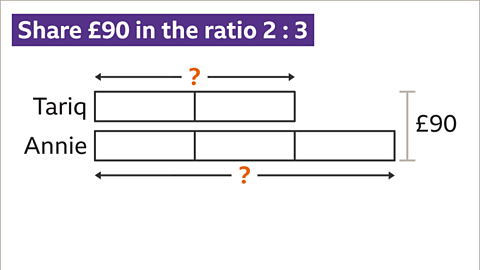
Draw a One or more rectangular bars drawn to represent information. to represent the whole and split it into the total number of parts.
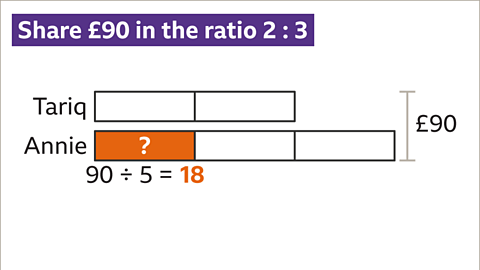
Find the value of one part by dividing the whole by the total number of parts.
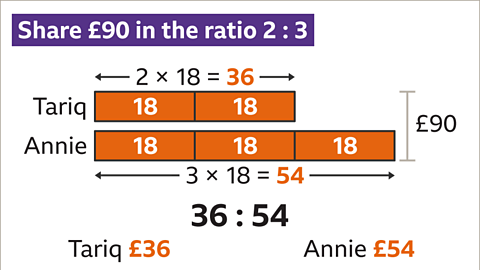
Calculate the value of each share of the ratio by multiplying the number of parts in each share of the ratio by the value of one part.
Examples
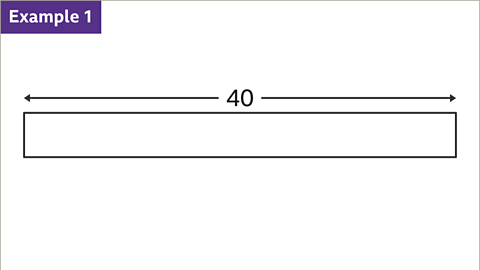
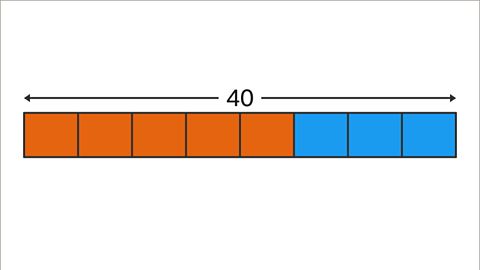
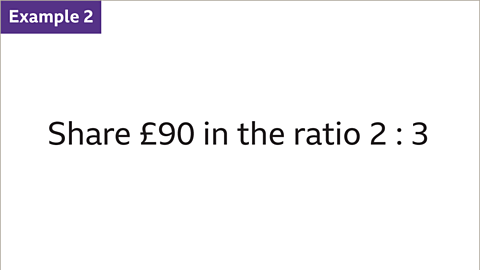
Image caption, The bar represents the whole. Divide 40 in the ratio 5 : 3

1 of 8
Question
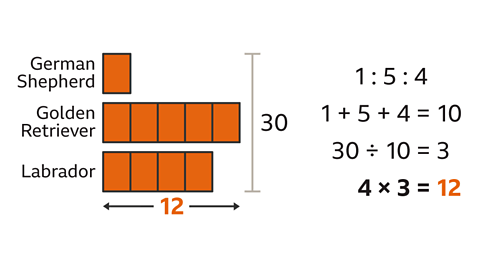
There are 30 dogs (German Shepherds, Golden Retrievers and Labradors) at a doggy day care centre in the ratio 1 : 5 : 4. How many Labradors are there?
Draw bars to represent the amount of German Shepherds, Golden Retrievers and Labradors.
German Shepherds are 1 part of the ratio, Golden Retrievers are 5 parts and Labradors are 4 parts.
The total number of parts in the ratio represents all 30 dogs. 1 + 5 + 4 = 10
Divide the total (30) by the total number of parts in the ratio (10) to find the number of dogs represented by one part. 30 ÷ 10 = 3
Calculate the number of Labradors by multiplying the number of parts (4) by the value of each part (3). There are 12 Labradors.
How to divide in a given ratio – numerical method
To divide an amount in a given A part-to-part comparison.:
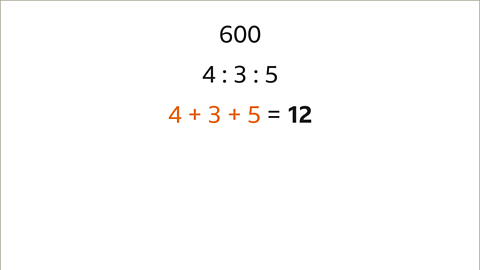
To add up. the parts of the ratio to get the total number of parts.
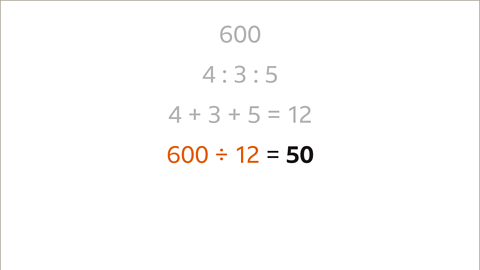
Find the value of one part by dividing the amount by the total number of parts.
Find the value of each share in the ratio by multiplying the number of parts in each share by the value of one part.
Examples
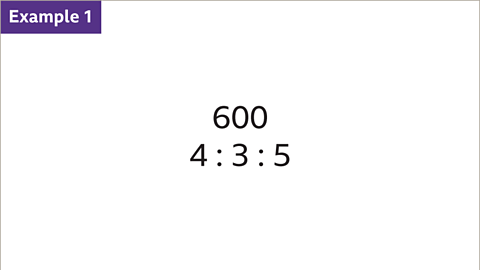
Image caption, Divide 600 in the ratio 4 : 3 : 5
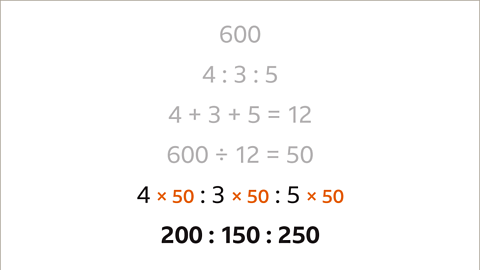
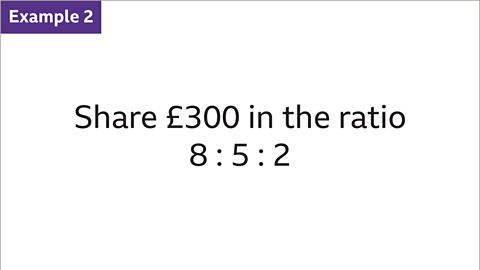
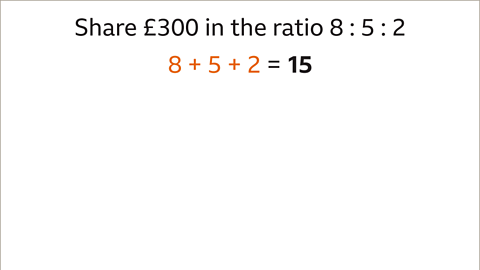
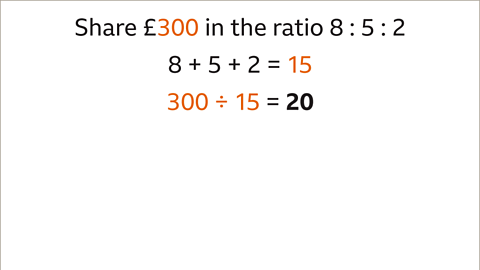
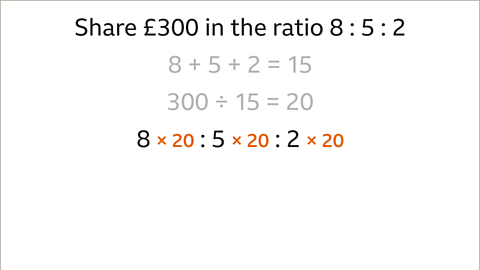
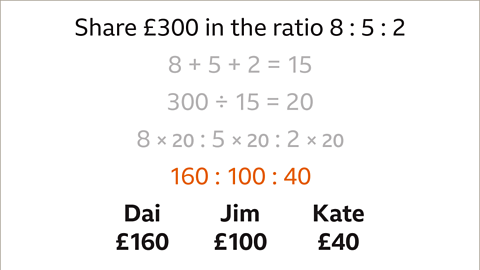
1 of 9
Question
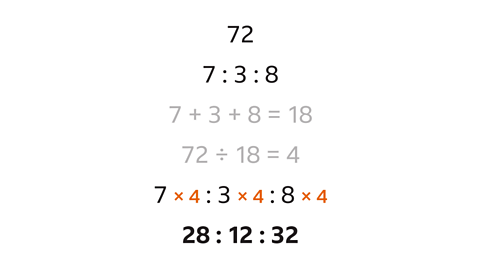
Divide 72 in the ratio 7 : 3 : 8
Sum the parts of the ratio. 7 + 3 + 8 = 18. There are 18 parts in total.
To find the value of one part, divide the amount (72) by the total sum of the parts (18). 72 ÷ 18 = 4. The value of one part is 4
To find the value of each share in the ratio, multiply each ratio share (7, 3, 8) by the value of one part (4).
72 divided in the ratio 7 : 3 : 8 is 28 : 12 : 32
Game - Sharing ratios given a total
Complete this puzzle on sharing ratios given a total from our Divided Islands game.
Play the full Divided Islands game.
Practise division in a given ratio
Quiz
Practise division in a given ratio in this quiz. You may need a pen and paper to complete these questions.
Real-world maths
Video
Ratios are often used in jobs where liquids must be mixed in the correct proportions.
Watch the video to see how a hairdresser needs to mix a hair colour dye solution and a developer in a specific ratio to achieve a particular shade safely. The ratio can vary depending on the types of products being mixed.
Ratio proportions need to be just right when dyeing hair or a client’s hair may get damaged.
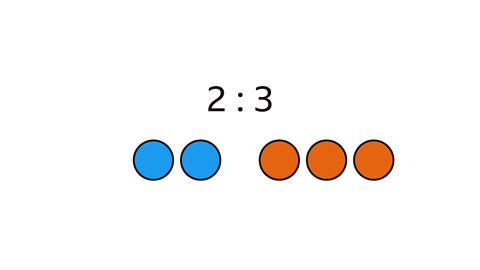
A 200 ml blend of colour and developer is required for a client. The required shade uses colour and developer in the ratio 2 : 3
200 ml is divided in the ratio 2 : 3
The hairdresser needs to mix 80 ml of colour and 120 ml of developer.
Play Sudoku with BBC Bitesize!
Every weekday we release brand new easy, medium and hard Sudoku puzzles. Perfect for testing your skill with numbers and logic.
More on Ratio
Find out more by working through a topic
- count3 of 5
- count4 of 5
- count5 of 5
- count1 of 5