Key points about physical and mental wellbeing in French
Use the A verb that describes an action that is happening now or that happens regularly, eg I eat breakfast every day. to talk about your current habits and routine.
The Used to describe things in the past, actions that used to happen regularly or an incomplete action. can be used to talk about what you used to do.
This guide contains a Higher Tier only listening activity.
Vocabulary - Talking about healthy habits and routines
Useful phrases to help describe regular activities to stay fit, happy and healthy include:
| French | English | French | English |
|---|---|---|---|
| Je prends le petit déjeuner chaque matin. | I have breakfast every morning. | Je vais au collège à pied tous les jours. | I go to school every day on foot. |
| Je joue au foot pendant la récré. | I play football at break. | Je fais un cours de danse le mardi soir. | I do a dance lesson on Tuesday evenings. |
| Je fais de l’exercice dehors. | I exercise outside. | Je vais au centre sportif une fois par semaine. | I go to the sports centre once a week. |
| Je vais au lit avant 10 heures. | I go to bed before 10 o’clock. | On fait du vélo le weekend. | We go cycling at the weekend. |
| Je fais du sport pour ma santé physique et mentale. | I do sport for my physical and mental health. | Le dimanche, je me repose. | On Sundays, I rest. |
| Je passe du temps dans la nature. | I spend time in nature. | Je note mes pensées. | I make a note of my thoughts. |
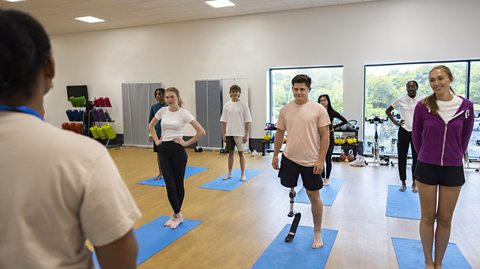
For example:
J’aime passer du temps dehors, dans la nature. - I like spending time outside, in nature.
Je fais du sport regulièrement parce que c’est bon pour ma santé mentale. - I do sport regularly because it’s good for my mental health.
Grammar - Using the present and imperfect tenses together
The present tense can be used to talk about things that happen regularly.
The imperfect tense can be used to describe something that used to happen or what someone or something was like in the past.
You can use these two tenses together to describe how your habits have changed.

For example:
Quand j’étais petite, j’étais assez sportive mais, maintenant, je n’ai pas le temps. - When I was little, I was quite sporty but now I don’t have the time.
Avant, je faisais du vélo chaque semaine. Maintenant, je fais de la danse. - Before, I used to go cycling every week. Now, I do dance.
Forming the present tense of regular verbs
To form the present tense of regular verbs, take the ending off the infinitive and add the necessary endings for each person.
Click or tap on the Show more button to find out how to conjugate regular er, ir and re verbs in the present tense.
Regular er verbs
jouer – To play
| Conjugated verb form | English |
|---|---|
| Check your connection, refresh the page and try again. | I play |
| Check your connection, refresh the page and try again. | you play (singular, informal) |
| Check your connection, refresh the page and try again. | he/it plays |
| Check your connection, refresh the page and try again. | she/it plays |
| Check your connection, refresh the page and try again. | one plays/we play |
| Check your connection, refresh the page and try again. | we play |
| Check your connection, refresh the page and try again. | you play (singular formal/plural) |
| Check your connection, refresh the page and try again. | they play (masculine/mixed) |
| Check your connection, refresh the page and try again. | they play (feminine) |
Regular er verbs
choisir – To choose
| Conjugated verb form | English |
|---|---|
| Check your connection, refresh the page and try again. | I choose |
| Check your connection, refresh the page and try again. | you choose (singular, informal) |
| Check your connection, refresh the page and try again. | he/it chooses |
| Check your connection, refresh the page and try again. | she/it chooses |
| Check your connection, refresh the page and try again. | one chooses/we choose |
| Check your connection, refresh the page and try again. | we choose |
| Check your connection, refresh the page and try again. | you choose (singular formal/plural) |
| Check your connection, refresh the page and try again. | they choose (masculine/mixed) |
| Check your connection, refresh the page and try again. | they choose (feminine) |
Regular ir verbs
perdre – To lose
| Conjugated verb form | English |
|---|---|
| Check your connection, refresh the page and try again. | I lose |
| Check your connection, refresh the page and try again. | you lose (singular, informal) |
| Check your connection, refresh the page and try again. | he/it loses |
| Check your connection, refresh the page and try again. | she/it loses |
| Check your connection, refresh the page and try again. | one loses/we lose |
| Check your connection, refresh the page and try again. | we lose |
| Check your connection, refresh the page and try again. | you lose (singular formal/plural) |
| Check your connection, refresh the page and try again. | they lose (masculine/mixed) |
| Check your connection, refresh the page and try again. | they lose (feminine) |
For example:
Nous jouons au foot avec la première équipe. - We play football with the first team.
Je choisis toujours des loisirs actifs. - I always choose active hobbies.
Ils perdent quand ils ne font pas d’effort. - They lose when they don’t make an effort.
Forming the present tense of irregular verbs
Many of the most common, high frequency verbs are irregular in the present tense including:
avoir - to have
être - to be
aller - to go
faire - to do/make
Click or tap on the Show more button to revise how to conjugate the frequently used irregular verbs.
Avoir - to have
| Conjugated verb form | English |
|---|---|
| Check your connection, refresh the page and try again. | I have |
| Check your connection, refresh the page and try again. | you have (singular, informal) |
| Check your connection, refresh the page and try again. | he/it has |
| Check your connection, refresh the page and try again. | she/it has |
| Check your connection, refresh the page and try again. | one has/we have |
| Check your connection, refresh the page and try again. | we have |
| Check your connection, refresh the page and try again. | you have (singular formal or plural) |
| Check your connection, refresh the page and try again. | they have (masculine or mixed) |
| Check your connection, refresh the page and try again. | they have (feminine) |
Être - to be
| Conjugated verb form | English |
|---|---|
| Check your connection, refresh the page and try again. | I am |
| Check your connection, refresh the page and try again. | you are (singular, informal) |
| Check your connection, refresh the page and try again. | he/it is |
| Check your connection, refresh the page and try again. | she/it is |
| Check your connection, refresh the page and try again. | one is/we are |
| Check your connection, refresh the page and try again. | we are |
| Check your connection, refresh the page and try again. | you are (singular formal or plural) |
| Check your connection, refresh the page and try again. | they are (masculine or mixed) |
| Check your connection, refresh the page and try again. | they are (feminine) |
Aller - to go
| Conjugated verb form | English |
|---|---|
| Check your connection, refresh the page and try again. | I go |
| Check your connection, refresh the page and try again. | you go (singular, informal) |
| Check your connection, refresh the page and try again. | he/it goes |
| Check your connection, refresh the page and try again. | she/it goes |
| Check your connection, refresh the page and try again. | one goes/we go |
| Check your connection, refresh the page and try again. | we go |
| Check your connection, refresh the page and try again. | you go (singular formal or plural) |
| Check your connection, refresh the page and try again. | they go (masculine or mixed) |
| Check your connection, refresh the page and try again. | they go (feminine) |
Faire - to do/make
| Conjugated verb form | English |
|---|---|
| Check your connection, refresh the page and try again. | I do/make |
| Check your connection, refresh the page and try again. | you do/make (singular, informal) |
| Check your connection, refresh the page and try again. | he/it does/makes |
| Check your connection, refresh the page and try again. | she/it does/makes |
| Check your connection, refresh the page and try again. | one does/makes, we do/make |
| Check your connection, refresh the page and try again. | we do/make |
| Check your connection, refresh the page and try again. | you do/make (singular formal or plural) |
| Check your connection, refresh the page and try again. | they do/make (masculine or mixed) |
| Check your connection, refresh the page and try again. | they do/make (feminine) |
For example:
Il a beaucoup d’énergie pour toutes ses activités. - He has a lot of energy for all his activities.
Je suis membre d’un club de natation. - I am a member of a swimming club.
Nous allons aux cours de danse. - We go to dance lessons.
Elles font un effort pour aller au lit tôt. - They make an effort to go to bed early.
Forming the imperfect tense
Imperfect tense verb endings
To form the imperfect tense of regular verbs, take the nous form of the present tense, remove the ons and add the following endings:
| er verbs | ir verbs | re verbs | |
|---|---|---|---|
| Infinitive | Check your connection, refresh the page and try again. (to speak) | Check your connection, refresh the page and try again. (to choose) | Check your connection, refresh the page and try again. (to lose) |
| nous (present tense) | Check your connection, refresh the page and try again. | Check your connection, refresh the page and try again. | Check your connection, refresh the page and try again. |
| remove ons | jou | choisiss | perd |
| je/j’ | Check your connection, refresh the page and try again. - I used to play/was playing | Check your connection, refresh the page and try again. – I used to choose/was choosing | Check your connection, refresh the page and try again. – I used to lose/was losing |
| tu | Check your connection, refresh the page and try again. – you (singular informal) used to play/were playing | Check your connection, refresh the page and try again. you (singular informal) used to choose/were choosing | Check your connection, refresh the page and try again. you (singular informal) used to lose/were losing |
| il | Check your connection, refresh the page and try again. – he used to play/was playing | Check your connection, refresh the page and try again. – he used to choose/was choosing | Check your connection, refresh the page and try again. – he used to lose/was losing |
| elle | Check your connection, refresh the page and try again. – she used to play/was playing | Check your connection, refresh the page and try again. – she used to choose/was speaking | Check your connection, refresh the page and try again. – she used to lose/was losing |
| on | Check your connection, refresh the page and try again. – one/we used to play/one was, we were playing | Check your connection, refresh the page and try again. – one/we used to choose/one was, we were choosing | Check your connection, refresh the page and try again. – one/we used to lose/one was, we were losing |
For example:
À l’école primaire, on jouait dans la cour. - At primary school, we used to play in the playground.
En quatrième, je choisissais toujours les frites pour le déjeuner. - In year 4, I always used to choose chips for lunch.
Malheureusement, on perdait souvent les matchs de foot. - Unfortunately, we often used to lose football matches.
Other useful verbs that are regular in the imperfect tense include:
avoir - to have
faire - to do/make
aller - to go

For example:
J’avais des clubs après le collège. - I used to have clubs after school.
Elle faisait plus d’exercice. - She used to do more exercise.
On allait au gymnase trois fois par semaine. - We used to go to the gym three times a week.
The only irregular verb in the imperfect tense is être (to be):
| French | English |
|---|---|
| Check your connection, refresh the page and try again. | I was |
| Check your connection, refresh the page and try again. | you were |
| Check your connection, refresh the page and try again. | he was |
| Check your connection, refresh the page and try again. | she was |
| Check your connection, refresh the page and try again. | one was / we were |
The present and imperfect tenses – Mini quiz
Choose the correct pairs of verbs to complete the following sentences.
Press Start to begin the activity.
Find out more about using these two tenses in the Present tense regular and irregular guides and the Imperfect tense guide.
Vocabulary to describe unhelpful choices
Useful vocabulary for describing lifestyle choices that aren’t helpful for maintaining physical and mental wellbeing include:
| French | English |
|---|---|
| mener une vie malsaine | lead an unhealthy life |
| aller au lit trop tard | go to bed too late |
| être toujours devant un écran | be always in front of a screen |
| manger beaucoup de fast-food | eat a lot of fast food |
For example:
J’évite d’aller au lit trop tard pendant la semaine. - I avoid going to bed too late during the week.
All Foundation Tier vocabulary listed in this guide can be found on the vocabulary sheet below.
Grammar - Using negative forms to talk about lifestyle and wellbeing
Present tense
To say ‘not’, use ne and pas, on either side of the conjugated verb.
Use n’ before a vowel or silent h.
In the present tense, they are placed around the main verb in the sentence.
For example:
Je ne dors pas bien. - I don’t sleep well.
Perfect tense
In the perfect tense, the negative words wrap around the auxiliary avoir or être.
For example:
Ils n’ont pas bu. - They didn’t drink.
Near future tense
In the near future tense, the negative words are placed around the conjugated form of aller.
For example:
Nous n’allons pas acheter de fast-food. - We aren’t going to buy fast food.
Verbs followed by the infinitive
Where a verb is followed by an infinitive, the negative words wrap around the first verb, the one that is conjugated, and the infinitive follows it.
For example:
Je ne veux pas pleurer. - I don’t want to cry.

Remember
After a negative structure, du, de la, de l’ and des become de or d’.
For example:
On ne mange pas de légumes. - We don’t eat vegetables.
Other negative structures
These other negative structures are also formed by wrapping the negative words around the conjugated verb:
| Negative form | English | Example |
|---|---|---|
| ne … rien | nothing | Elle ne boit rien. – She doesn’t drink anything. |
| ne … jamais | never | Nous n’allons jamais arrêter. – We’re never going to stop. |
| ne … personne | nobody/no one/not anyone | Je ne connais personne ici. – I don’t know anyone here. |
Remember
Be careful not to confuse une personne (a person/someone) with ne … personne (no one):
For example:
Il y a une personne dans la piscine. - There is a person/someone in the swimming pool.
Il n’y a personne dans la piscine. - There isn’t anyone in the swimming pool.
Negative forms - Mini quiz
Translate the following sentences into French.
We don’t like running.
On n’aime pas courir. / Nous n’aimons pas courir.
Use n’ … pas around the conjugated verb when it starts with a vowel.
He’s not going to do anything.
Il ne va rien faire.
Use ne … rien around the conjugated verb to translate ‘not anything’ or ‘nothing’.
I don’t see anybody.
Je ne vois personne.
Use ne … personne around the verb to translate ‘not anyone’, ‘nobody’ or ‘no one’.
Find out more about using negative forms in the Negative forms in French guide.
Vocabulary sheet
Click or tap on the image below for a list of useful vocabulary to use when describing physical and mental wellbeing.

Higher Tier - Vocabulary - Physical and mental wellbeing
| French | English |
|---|---|
| J’utilise une appli pour gérer mes soucis. | I use an app to manage my worries. |
| J’exprime mes émotions. | I express my emotions. |
| s’asseoir toute la journée | sit down all day |
All vocabulary listed in this guide can be found on the vocabulary sheet below.
Higher Tier - Grammar - Imperfect endings
To form the imperfect tense for nous, vous, ils and elles, take the nous form of the present tense, remove the -ons and add the following endings:
| -er verbs jouer (to speak) | -ir verbs choisir (to choose) | -re verbs perdre (to hear) | |
|---|---|---|---|
| nous form of present | nous jouons | nous choisissons | nous perdons |
| remove -ons | jou- | choisiss- | perd- |
| nous | jouions | choisissons | perdions |
| vous | jouiez | choisissiez | perdiez |
| ils/elles | jouaient | choisissaient | perdaient |
Other useful verbs to know that are regular in the imperfect tense are avoir (to have), faire (to do/make) and aller (to go).
For example:
Ils avaient de meilleures amies avant. - They had/they used to have better friends before.
Vous faisiez du vélo pendant l’été ? - Did you used to go cycling during the summer?
Nous allions au stade pour les matchs. - We used to go to the stadium for matches.
The only irregular verb in the imperfect tense is être:
| French | English |
|---|---|
| nous étions | we were |
| vous étiez | you were |
| ils étaient | they were |
| elles étaient | they were |
Higher Tier - Grammar - Negative forms
These other negative forms are also constructed by wrapping the negative words around the conjugated verb:
| Negative form | English | Example |
|---|---|---|
| ne … plus | no longer, not anymore | Elle ne court plus. – She doesn’t run anymore. |
| ne … que | only | Ils n’ont qu’un choix. – They only have one option. |
| ne … ni … ni | neither … nor | Je ne mangerai ni viande ni poisson. – I will eat neither meat nor fish. |
| ne … pas encore | not yet | On ne veut pas encore aller au lit. – We don’t want to go to bed yet. |
Higher Tier - Listening practice
Listen to the podcast extracts in which three students are discussing health apps and answer the questions.
Press or click on the purple START button when you are ready to begin the activity.
Higher Tier - Vocabulary sheet
Click or tap on the image below for a list of useful Higher Tier vocabulary to use when describing physical and mental wellbeing.
Now you have revised the key vocabulary and grammar for talking about physical and mental wellbeing, why not have a look at the Describing my home and neighbourhood in French guide.
More on Lifestyle and wellbeing
Find out more by working through a topic
- count4 of 5

- count5 of 5