Key points about free-time activities for mental wellbeing in French
Use jouer followed by à when talking about playing a game and de when talking about a musical instrument.
Use faire followed by de when talking about doing a sport.
Add an Used to describe verbs and adjectives. of frequency to say when and how often you do an activity.
This guide contains listening and reading practice as well as video comprehensions.
Video - Free time activities
Watch the video of Adnane describing sports and social activities he enjoys doing.
Adnane describes the activities he enjoys doing using verbs and adverbs of frequency
Que fais-tu pendant ton temps libre ?
Je pense qu’avoir un passe-temps est très important, même après avoir quitté le collège. C’est vrai que après une journée de travail ou une journée de cours, il faut prendre le temps de faire quelque chose qu’on aime, pour se relaxer. C’est ça, avoir une bonne vie bien équilibrée !
J’aime être actif, parce que pendant ma journée au travail, je ne bouge pas beaucoup, et ça, ce n’est pas bien pour la santé.
Ce qui me plaît le plus, c’est la danse. J’essaie de danser le plus souvent possible. Quand je danse, ça m’aide à m'exprimer et je me sens libre. Apprendre à danser m’aide aussi à apprendre de nouvelles choses. Par exemple, récemment, j’ai commencé à jouer au foot. Le mois dernier, je suis devenu membre d’un club de foot pour la première fois. J’aime bien y aller pendant la semaine, après le travail. J’aime aussi jouer avec mes amis.
Ouais, ouais !
J'aime aussi la boxe et jouer au basket. Le week-end prochain, je joue au basket. Je m’amuse bien, ça me détend et je me fais des nouveaux amis. C'est top !
Ça, c'est une dinguerie ce truc.
Quand je ne fais pas de sport, je mange du chocolat. Eh oui, mon petit plaisir, c'est le chocolat. Mon chocolat préféré, c'est le chocolat au caramel-beurre salé. Il faut absolument y goûter !
Par contre, il y a une chose que les Belges adorent mais que moi, je n'aime pas du tout, c'est le nougat. Mes amis aiment ça, mais pas moi.
Translation
What do you do in your free time?
I think that having a hobby is really important, even after leaving school. It’s true that after a day of work or a day of classes, you need to take the time to do something you love, to relax.
That’s what having a good, balanced life is all about!
I like to be active because during my day at work, I don't move much and that's not good for my health.
The thing I enjoy the most is dancing. I try and dance as much as possible. When I dance I can express myself and I feel free.
Learning to dance also helps me learn new things. For example, recently, I started playing football. Last month I became a member of a football club for the first time. I like to go there during the week, after work.I also enjoy playing with my friends.
Yeah, yeah!
I also like boxing and playing basketball. Next weekend, I'm going to play basketball. I have fun, release stress, and it’s a great way to make new friends. It’s great!
This thing is crazy good.
When I’ve stopped playing sports, I eat chocolate. Yeah, my simple pleasure is chocolate. My favourite chocolate is salted caramel chocolate. You must try it!
However, there’s one thing that Belgians love that I don’t like at all, nougat. My friends love it, but not me.
Vocabulary – Sports and physical activities
Useful phrases include:
| French | English | French | English |
|---|---|---|---|
| Je cours avec mon chien. | I run with my dog. | Je fais de la natation. | I go swimming. |
| Je vais au centre sportif. | I go to the sports centre. | Je pratique le yoga. | I practise yoga. |
| Je fais de la danse. | I do dance. | Je participe à des matchs de rugby. | I take part in rugby matches. |
| Je fais du sport. | I do sport. | Je marche à la campagne. | I walk in the countryside. |
| Je suis dans une équipe de foot. | I am in a football team. | Je fais du vélo. | I go cycling. |
| Je fais de l’exercice. | I exercise. | Je joue au tennis. | I play tennis. |
| Je joue au football. | I play football. | Je fais du cheval. | I go horse riding. |
For example:
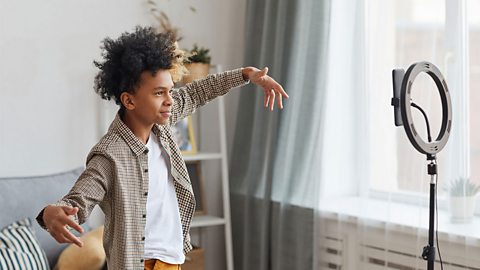
Je ne suis pas très actif mais j’aime faire de la natation. - I am not very active but I like going swimming.
Je suis vraiment sportive! Moi et mes amies, on joue dans une équipe de foot locale. - I am really sporty! My friends and I play in a local football team.
Grammar - The verbs ‘jouer’ and ‘faire’
In French, there are two key verbs that are used with sports and other activities:
jouer
faire
'Jouer' - to play
Jouer is a regular er verb.
When talking about playing a game, jouer is followed by A preposition is a word such as 'at', 'for', 'with', 'into' or 'from' which is usually followed by a noun or pronoun. They are used to show where something is in place or time. à.
When talking about playing a musical instrument, jouer is followed by de.
For example:
Je joue aux jeux vidéo mais je voudrais jouer d’un instrument aussi. - I play video games but I would like to play an instrument as well.
Both à and de change when combined with the Means 'the'. Definite articles change depending on whether the noun it goes with is masculine, feminine, singular or plural.le, la and les.
Using à
jouer à + le = jouer au
jouer à + la = jouer à la
jouer à + les = jouer aux
Using de
jouer de + le = jouer du
jouer de + la = jouer de la
jouer de + les = jouer des
For example:
Hier, j’ai joué au handball et demain, on va jouer au tennis. - Yesterday, I played handball and tomorrow, we are going to play tennis.
Normalement, je joue de la guitare mais la semaine prochaine, je vais jouer du piano. - Normally, I play the guitar but next week, I am going to play the piano.
Click or tap on Show more to see the verb jouer in the present, perfect and near future tenses.
| Present tense | Perfect tense | Near future tense |
|---|---|---|
| je joue - I play | j’ai joué - I played | je vais jouer - I am going to play |
| tu joues - you play | tu as joué - you played | tu vas jouer - you are going to play |
| il joue - he/it plays | il a joué - he/it played | il va jouer - he/it is going to play |
| elle joue - she/it plays | elle a joué - she/it played | elle va jouer - she/it is going to play |
| on joue - one plays/we play | on a joué - one/we played | on va jouer - one is/we are going to play |
| nous jouons - we play | nous avons joué - we played | nous allons jouer - we are going to play |
| vous jouez - you play (singular formal or plural) | vous avez joué - you played (singular formal or plural) | vous allez jouer - you are going to play (singular formal or plural) |
| ils jouent - they play (masculine or mixed) | ils ont joué - they played (masculine or mixed) | ils vont jouer - they are going to play (masculine or mixed) |
| elles jouent - they play (feminine) | elles ont joué - they played (feminine) | elles vont jouer - they are going to play (feminine) |
'Faire' - to do/make
Faire is an irregular verb and commonly used in French to talk about different sports and activities.
The verb faire often takes the preposition de before a noun.
Remember that de changes when combined with the definite articles le, la and les.
faire de + le = faire du
faire de + la = faire de la
faire de + les = faire des
For example:
Ils font de la natation. - They go swimming.
Elles font du yoga. - They do yoga.
Nous faisons des promenades. - We go for walks.
Click or tap on Show more to see the verb faire in the present, perfect and near future tenses.
| Present tense | Perfect tense | Near future tense |
|---|---|---|
| je fais - I make/do | j’ai fait - I made/did | je vais faire - I am going to make/do |
| tu fais - you make/do | tu as fait - you make/did | tu vas faire - you are going to make/do |
| il fait - he/it makes/does | il a fait - he/it made/did | il va faire - he/it is going to make/do |
| elle fait - she/it makes/does | elle a fait - she/It made/did | elle va faire - she/it is going to make/do |
| on fait - one makes/does / we make/do | on a fait - one made/did/we made/did | on va faire - one is going to make/do/we are going to make/do |
| nous faisons - we make/do | nous avons fait - we made/did | nous allons faire - we are going to make/do |
| vous faites - you make/do (singular formal or plural) | vous avez fait - you made/did (singular formal or plural) | vous allez faire - you are going to make/do (singular formal or plural) |
| ils font - they make/do (masculine or mixed) | ils ont fait - they made/did (masculine or mixed) | ils vont faire - they are going to make/do (masculine or mixed) |
| elles font - they make/do (feminine) | elles ont fait - they made/did (feminine) | elles vont faire - they are going to make/do (feminine) |
For example:
Cette année, je vais faire plus d’exercice. - This year, I am going to do more exercise.
Mes parents ont fait des gâteaux pour mon équipe quand nous avons gagné le match. - My parents made cakes for my team when we won the match.
Remember
The verb faire doesn’t always translate literally as ‘make’ or ‘do’ in English. It might translate better as ‘go’, for example. Choose the most natural translation, depending on the context.
For example:
Je vais faire de la natation. - I am going to go swimming.
Il a fait du vélo ce matin. - He went cycling this morning.
Mini quiz
Choose the correct word or words to complete the following sentences.
Listening practice
You hear a radio programme in which young people are discussing sport. Listen to each extract and choose the answers to the questions below.
Nathan
- What does Nathan find difficult about his sport?
| A | swimming after school |
| B | getting up early |
| C | staying motivated |
The answer is B.
C’est dur de me lever tôt.
It is hard to get up early.
- What does Nathan do in the holidays?
| A | Relax by the pool |
| B | Swim in the sea |
| C | Compete in races |
The answer is C.
Je participe à des courses à la piscine.
I take part in swimming races.
Click or tap on Show more to see the full transcript of the audio.
Bonjour, ici c’est Nathan. Mon activité préférée, c’est la natation et je vais au centre sportif tous les jours avant le collège. C’est dur de me lever tôt mais la natation est ma passion ! Pendant les vacances, je participe à des courses de natation et je nage aussi dans le lac près de chez moi.
Hello, it’s Nathan here. My favourite activity is swimming and I go to the sports centre every day before school. It is hard to get up early but swimming is my passion! During the holidays, I take part in swimming races and I also swim in the lake near my house.
Fatima
- When did Fatima join a sports club?
| A | two months ago |
| B | two weeks ago |
| C | two years ago |
The answer is C.
Il y a deux ans, je suis devenue membre d’un club de sports.
Two years ago, I joined a sports club.
- Why does she love team sports?
| A | she likes to win |
| B | she is very good at it |
| C | she plays with old friends |
The answer is A.
Ce que j’aime, c’est gagner des matchs.
What I like is winning matches.
Click or tap on Show more to see the full transcript of the audio.
Bonjour, je m’appelle Fatima. Il y a deux ans, je suis devenue membre d’un club de sports parce que j’adore tous les sports d’équipe. Ce que j’aime, c’est gagner des matchs. C’est excellent comme exercice et je me suis faite de nouveaux amis aussi.
Hello, my name is Fatima. Two years ago, I joined a sports club because I love all team sports. What I love is winning matches. It's excellent as exercise and I have made some new friends too.
Élodie
- What sport does Élodie say she hates?
| A | football |
| B | swimming |
| C | tennis |
The answer is C.
She says: … courir, … je déteste ça.
… running … I hate that.
- Why does Élodie like the dance club?
| A | She can specialise in one style of dance. |
| B | It’s a good way to stay fit. |
| C | It’s perfect for relaxing after school. |
The answer is B.
C’est idéal pour rester en forme.
It’s ideal to stay fit.
Click or tap on Show more to see the full transcript of the audio.
Salut. C’est Élodie. Je n’aimais pas les sports qu’on faisait à l’école. Par exemple courir … je déteste ça. Par contre, l’année dernière, on a commencé à faire de la danse et maintenant il y a un club de danse après le collège. J’adore tous les styles différents et c’est idéal pour rester en forme.
Hi. It’s Élodie. I didn’t like the sports we used to do at school. For example, running … I hate that. Last year, on the other hand, we started to do dance, and now there is a dance club after school. I love all the different styles and it’s ideal to stay fit.
Vocabulary - Interests and hobbies
Useful phrases for describing hobbies and interests which people do to support their wellbeing include:
| French | English | French | English |
|---|---|---|---|
| Je joue d’un instrument (de musique). | I play a (musical) instrument. | J’écris des chansons. | I write songs. |
| Je chante avec mes amis. | I sing with my friends. | Je regarde des vidéos sur mon portable. | I watch videos on my phone. |
| Je joue dans un groupe de musique. | I play in a band. | Je joue aux jeux en ligne. | I game online. |
| Je fais de la cuisine. | I do cooking. | Je suis membre d’un groupe de théâtre. | I belong to a drama group. |
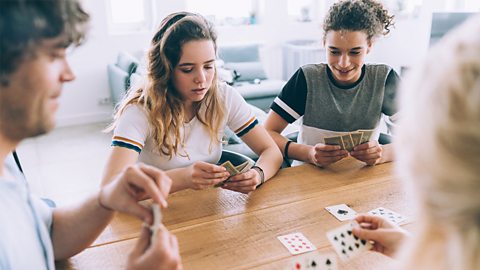
| Je prends des photos de mes animaux. | I take photos of my pets. | Je joue aux cartes avec ma famille. | I play cards with my family. |
For example:
J’ai beaucoup de loisirs différents, par exemple je prends des photos et j’écris des chansons. - I have lots of different hobbies, for example I take photos and write songs.
Je passe mon temps libre en ligne – j’aime jouer aux jeux-vidéos avec mes amis. - I spend my free time online – I like playing video games with my friends.
All Foundation Tier vocabulary listed in this guide can be found on the vocabulary sheet below.
Grammar - Adverbs of frequency
When talking about hobbies, develop your sentences by including adverbs of frequency to say how often you do each activity.
Useful adverbs of frequency include:
| French | English | French | English |
|---|---|---|---|
| toujours | always | une fois par semaine | once per week |
| tout le temps | all the time | deux fois par mois | twice per month |
| tous les jours/chaque jour | every day | parfois/quelquefois | sometimes |
| tous les samedis | every Saturday | tout le temps | all the time |
| souvent | often | ne … jamais | never |
For example:
On va au groupe de théâtre une fois par semaine, tous les samedis matin. - We go to drama group once a week, every Saturday morning.
Quelquefois, il partage ses photos en ligne. - Sometimes, he shares his photos online.
Position of adverbs of frequency

Adverbs of frequency normally come after the A word used to describe an action or state of being. in a sentence.
For example:
J’écoute souvent de la musique. - I often listen to music.
However, some adverbs, like parfois and quelquefois, usually go at the start of a sentence.
For example:
Parfois, elle aime lire des histoires d’amour. - Sometimes, she likes to read love stories.
Longer adverbial phrases like de temps en temps, tout le temps or tous les jours often go at the end of a sentence.
For example:
Ils vont à la piscine avec leur famille de temps en temps. - They go to the swimming pool with their family from time to time.
Adverbs of frequency - Mini quiz
Translate the following sentences into French.
I often do cooking.
Je fais souvent de la cuisine.
The adverb ‘often’ goes before the verb in English but the adverb souvent goes after the verb in French.
I never read in my free time.
Je ne lis jamais dans mon temps libre.
Remember that you need ne … jamais around the verb to translate ‘never’ into French.
We watch videos online twice a day.
Nous regardons / On regarde des vidéos en ligne deux fois par jour.
To translate ‘twice a day’ into French, think of ‘two times per day’.
I sometimes take photos.
Parfois/Quelquefois, je prends des photos.
The French word for ‘sometimes’ goes at the beginning of the sentence.
Find out more about using adverbs of frequency in the Adverbs in French guide.
Reading practice
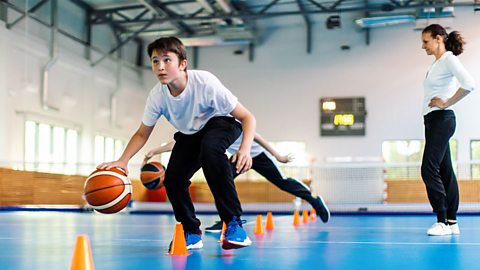
Read the following information about after-school clubs on a school website and decide if the statements below are true or false.
Activités proposées
Et vous ? Quel club allez-vous faire ?
Vous pouvez essayer un grand choix d’activités après l’école. Il n’y a pas besoin d’avoir un bon niveau. La chose importante, c’est de participer.
Parfois, nous faisons des concours, mais la majorité de nos élèves viennent pour le plaisir.
Danse
- tous les mardis de 16h à 17h
- dans la salle de théâtre
- spectacle chaque Noël
Orchestre
- chaque mercredi après-midi, de 15h à 17h
- dans la salle de musique
- il faut répéter* tous les jours à la maison aussi
- concert à la fin de l’année
(*répéter - to practise)
Handball
- lundi de 16h30 à 18h, dans la cour.
- matchs deux fois par mois.
Cyclisme*
- chaque mardi soir de 16h00 à 18h00
- au stade en ville - rendez-vous aux portes du lycée
- vous devez avoir votre propre vélo pour participer
(*cyclisme - cycling)
Read the following statements and decide if they are true or false.
- You must already have a good level of skill to attend a club.
False
Il n’y a pas besoin d’avoir un bon niveau. La chose importante, c’est de participer.
There is no need to have a high level. The important thing is to take part.
- Dance club takes place once a fortnight.
False
The text says tous les mardis – every Tuesday.
- There is a dance show once a year.
True
The text says spectacle chaque Noël – show every Christmas
- If you join the orchestra, you are expected to practise your instrument every day at home.
True
Il faut répéter tous les jours à la maison aussi ! - You must practise every day at home as well!
- There are handball matches once a month.
False
The text says matchs deux fois par mois. – matches twice a month.
- The cycling club is on Wednesday afternoons.
False
It is on Tuesdays evenings. - chaque mardi soir.
- You must have your own bike to participate in the cycling club.
True
Vous devez avoir votre propre vélo pour participer - You must have your own bike to participate.
- All the clubs take place on the school grounds.
False
Cycling is at the town stadium - au stade en ville.
Video comprehension
Watch the video of Amélie and Michel discussing birthday plans and answer the questions.
Now have a go at answering the following questions.
Click or tap on Show more to read a transcript and translation.
Transcript
Michel - Voici ton café.
Amélie - Merci … Ce week-end c’est mon anniversaire et je vais le fêter avec mes copains, Valérie et Georges - et toi - si tu veux ?*
Michel - Oui. Bien sur. Alors, qu’est ce que tu veux faire ?
Amélie - Je ne peux pas décider …
Michel - Qu’est-ce que tu aimes faire pendant ton temps libre ?
Amélie - J’aime aller au cinéma et j'aime écouter de la musique.
Michel - Et le sport? Quel est ton sport préféré ?
Amélie - J’aime aller au bowling avec mes copains. Et toi ? Quel est ton sport préféré ?
Michel - J’aime faire du cyclisme et jouer au basket mais mon frère préfère rester à la maison et jouer aux jeux vidéo. C’est nul !
Amélie - Le week-end dernier, j’ai fait de la natation avec ma soeur et après nous sommes allées faire les magasins. Qu’est-ce que tu as fait ?
Michel - Le week-end dernier, j’ai joué au badminton avec mon père. Mais ton anniversaire! Comment tu vas le fêter ?
Amélie - Je sais que Georges aime faire du parkour.
Michel - Mais c’est trop dangereux !
Amélie - Valérie préfère jouer aux jeux vidéo.
Michel - Mais c’est trop ennuyeux.
Amélie - D’accord, nous allons aller au bowling et après nous allons manger une pizza en ville.
Michel - Bon choix !
Translation
Michel - Here you go, your coffee.
Amélie - Thanks… This weekend it’s my birthday and I’m going to celebrate with my friends Valerie and George - and you - if you want?
Michel - Yes. Sure. So what do you want to do?
Amélie - I can’t decide …
Michel - What do you like doing in your free time?
Amélie - I like going to the cinema and listening to music.
Michel - And sport? What’s your favourite sport?
Amélie - I like going bowling with my friends. And you? What’s your favourite sport?
Michel - I like cycling and playing basketball but my brother prefers staying at home and playing video games. It’s rubbish!
Amélie - Last weekend I went swimming with my sister and afterwards we went shopping. What did you do?
Michel - Last weekend, I played badminton with my dad. But what about your birthday! How are you going to celebrate?
Amélie - I know that George likes to do parkour.
Michel - But it’s too dangerous!
Amélie - Valerie prefers playing video games.
Michel - But that’s too boring.
Amélie - OK, we are going to go bowling and afterwards we are going to go and eat pizza in town.
Michel - Good choice!
Video comprehension - Personal acitivities
Watch the short video of Bilal, a Chelsea Football Club academy player, talking about what activities he enjoys and answer the questions.
Bilal talks about what activities he enjoys doing
What activity does Bilal do to relax before sleeping?
Why does he enjoy swimming?
Reading.
He likes being in the water.
Mes passe-temps préférés sont la lecture et la natation. J’aime la lecture parce que ça me calme avant de dormir et j’aime aussi la natation parce que j’aime être dans l’eau.
My favourite hobbies are reading and swimming. I like reading because it relaxes me before sleeping and I also like swimming because I like being in the water.
Vocabulary sheet
Click or tap on the image below for a list of useful vocabulary to use when describing free time activities for mental wellbeing.

Higher Tier – Vocabulary – Free time activities
Useful phrases include:
| French | English | French | English |
|---|---|---|---|
| Je fais de l’athlétisme. | I do athletics. | J’enregistre des vidéos pour mes réseaux sociaux. | I record videos for my social media. |
| Je m’entraîne au gymnase. | I train at the gym. | Je crée des cadeaux et des cartes pour mes amis. | I create presents and cards for my friends. |
| Je lis des romans. | I read novels. | Je fais des œuvres d’art. | I make art works. |
All vocabulary listed in this guide can be found on the vocabulary sheet below.
Higher Tier - Vocabulary sheet
Click or tap on the image below for a list of useful Higher Tier vocabulary to use when describing free time activities for mental wellbeing.
Now you have learned about describing free time activities for mental wellbeing why not look at the Describing tourist attractions in French guide.
More on Lifestyle and wellbeing
Find out more by working through a topic
- count3 of 5
- count4 of 5
- count5 of 5