Key points
- A single performance of an experiment and Making something better (or more accurate) than it currently is. is a way of solving a problem by using a series of To arrive at a rough or approximate answer by calculating with suitable approximations for terms.. For example, estimating what the length of a square is when you only know the area (cm²).
- Guess what the answer might be then look at the outcome. Refine your guess (based on the size of your previous answer) until you get closer to the correct answer.
- Careful consideration of your previous attempts will be more successful than a series of random guesses.
- The most effective strategies use a Done or acting in a fixed plan, methodical. approach. This involves narrowing down estimates to between 2 Integers are numbers with no fraction or decimal part. They can be positive, negative or zero. 42, 8, and 10000 are examples of integers. values before introducing decimals.
Using trial and improvement
There are steps which can be followed when using trial and improvement:
The first trial should be a whole number to make the calculation simpler.
If the trial produces an answer which is too small, try a larger whole number with the second guess.
If the trial produces an answer which is too big, try a smaller whole number with the next guess.
Continue trialling whole numbers until identifying that the answer lies between two consecutive integers.
The final guess should be halfway between the two integers that were identified.
Examples
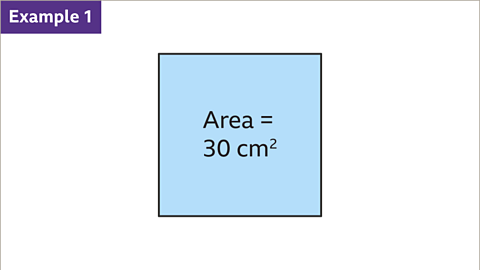
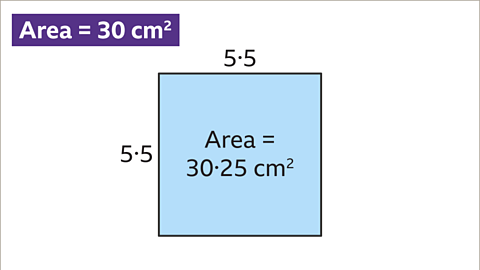
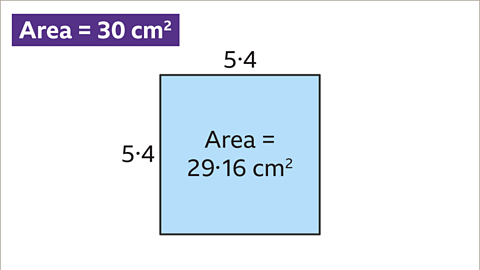
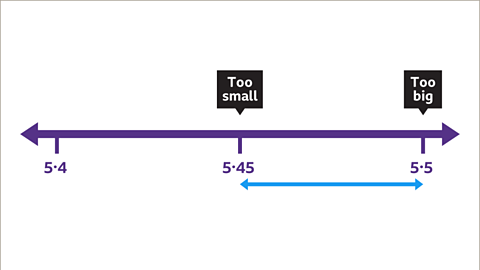
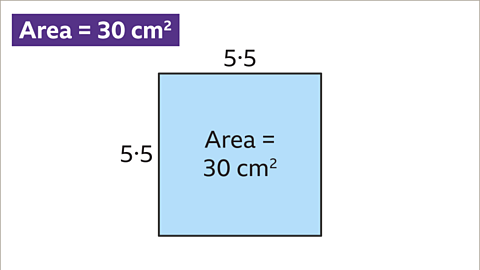
Image caption, The first trial should be a whole number. Try using the length of 5 cm. 5 x 5 = 25. This is too small.
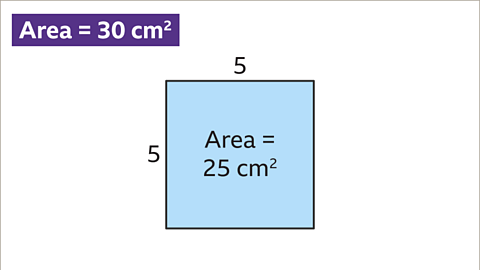
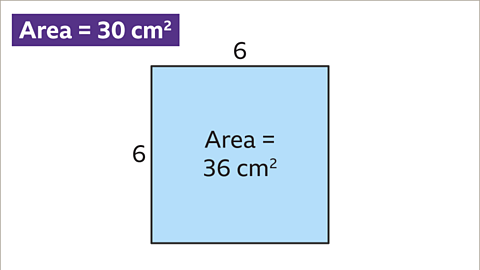
1 of 9
Question
Which two numbers are the best initial trials to use when trying to find out the square root of 20?
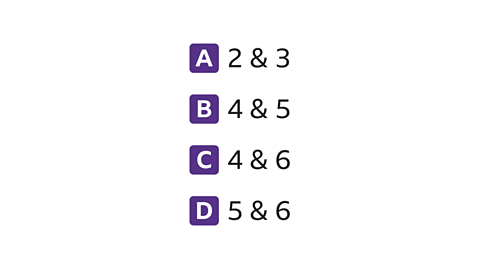
Trial whole numbers until identifying that the answer lies between two consecutive integers.
4 squared (42 ) is 16 (too small).
5 squared (52 ) is 25 (too big).
The correct answer is B: 4 & 5 would be the best initial trials.
How to find more accurate answers
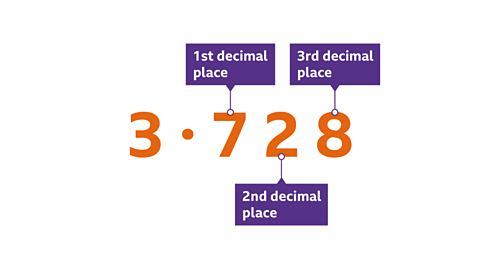
On most occasions finding the answer correct to 1 decimal place is acceptable. However, there are occasions where the answer needs to be found to a more accurate level. For example, to 2 decimal places.
Examples
How to find more accurate answers
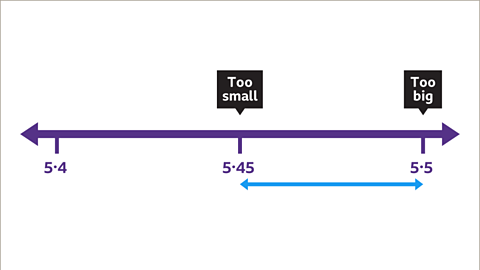
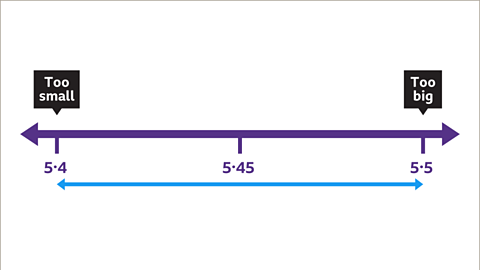
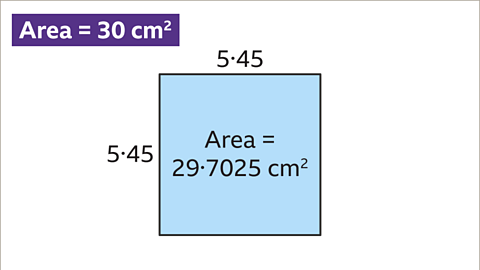
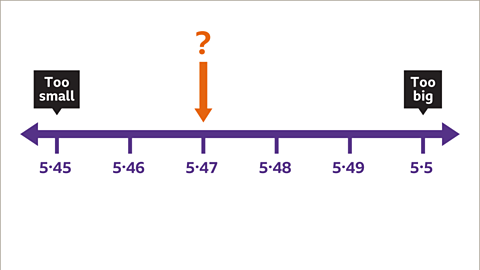
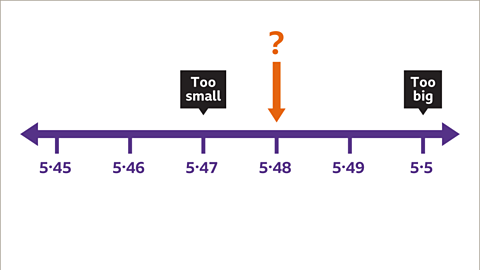
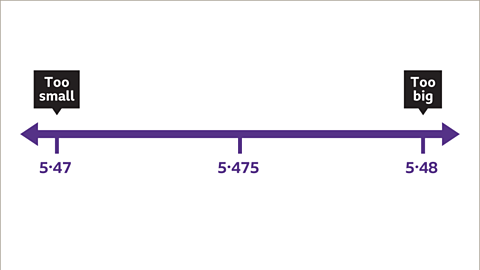
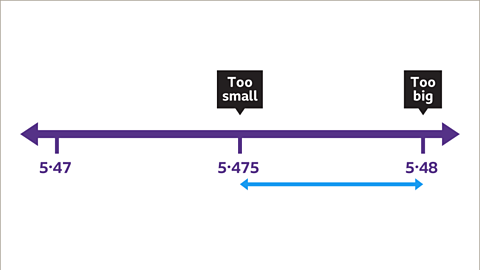
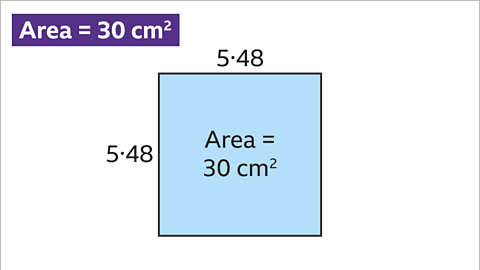
Image caption, In the previous example, it was found that the answer lies between 5∙45 and 5∙5 (or 5.50) The next set of trials should contain 2 decimal places and lie between 5∙45 and 5∙50
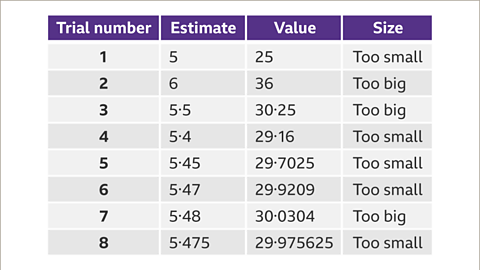
1 of 7
Question
Looking at the estimates in the table, which number would be a sensible next trial?
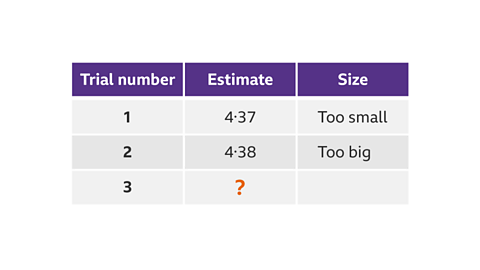
The first two guesses have identified that the number is between 4.37 and 4.38
Whilst any guess between 4.37 and 4.38 is acceptable, 4.375 would be the most sensible next trial.
Trial and improvement quiz
Practise trial and improvement in this activity.
Quiz
Real-world maths

Using trial and improvement is a strategy that is used in everyday life to help solve problems.
Haggling about the cost of an item when buying second-hand clothes on an app is like trial and improvement. The customer and seller take it in turns to make an offer and counteroffer until they reach a value that both feel is acceptable.
For example, a pair of shoes are priced at £20. The buyer offers the seller £15, and the seller responds with a counteroffer of £18. The buyer offers £16.50 and the seller makes a counteroffer of £17. The buyer accepts.
Revise for your exams with BBC Bitesize
Get ready for the GCSEs with quizzes, past papers, flashcards, podcasts and more resources!

More on Rounding and estimating
Find out more by working through a topic
- count1 of 6
- count2 of 6
- count3 of 6
- count4 of 6