Key points
- It is not always easy or necessary to give an exact value, so To arrive at a rough or approximate answer by calculating with suitable approximations for terms. can be made.
- Estimating is a way of making a calculation more manageable. For example, if you were going to buy 12 items that cost £28.99 each then an estimate of the total might be £300 (rounding both numbers to the nearest 10 is 10 lots of £30).
- As there isn't one set way to estimate, people might round their values in slightly different ways.
- A number can be rounded in different ways depending on its size. For example, to the nearest:
- whole number
- ten
- hundred
- thousand
Estimating Values
Estimating means making numbers simpler but keeping their value close to what it was. The result is not exact, but it gives an idea of what the total will be.
There are steps which can be followed to decide how to round a value to make it easier to deal with.
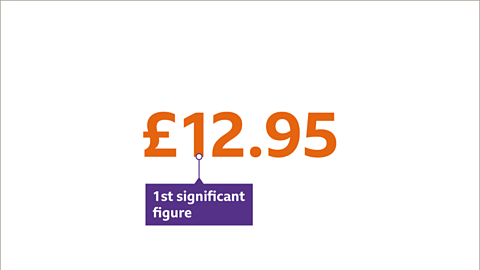
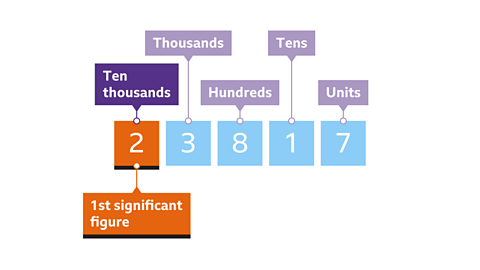
Find the most important digit in the value you have been given. This is usually referred to as the most Significant figures are each of the digits in a value, often a measurement, that contribute to the degree of accuracy of the value..
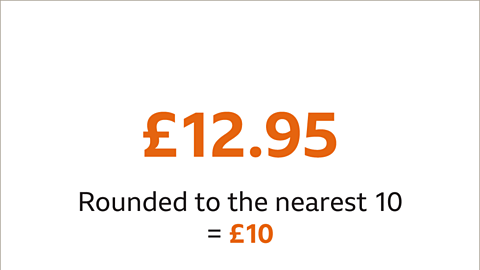
Establish what place value column the most significant figure is positioned. Round the value to that degree of Accuracy is how close a measured value is to the actual (true) value..
Refer back to the rules of rounding to decide whether this value should be rounded up or down.
Leave it the same if the next digit is less than 5 (this is called rounding down).
But increase it by 1 if the next digit is 5 or more (this is called rounding up).
Examples
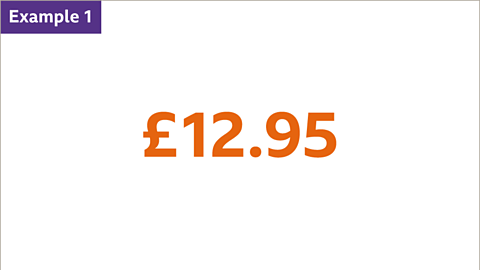
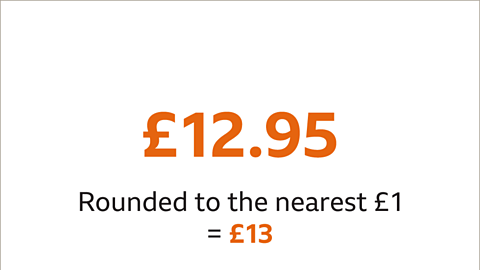
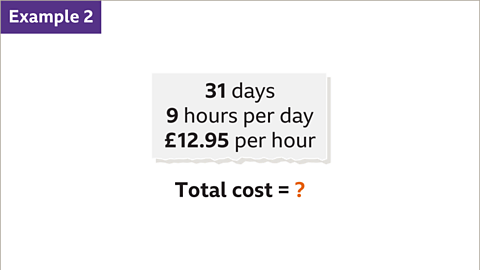
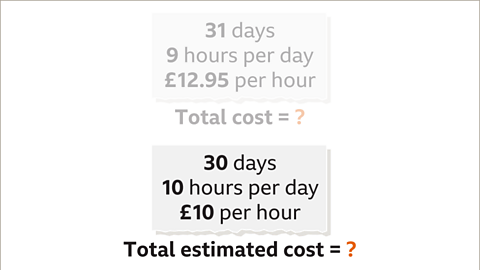
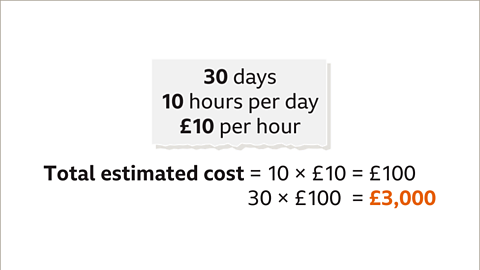
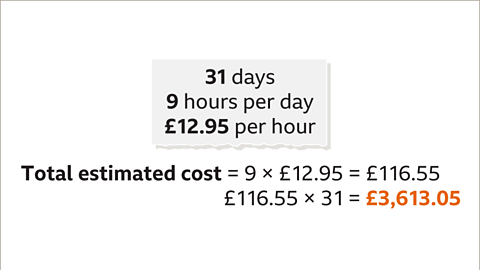
Image caption, What value could be used as an estimate for £12.95?
1 of 8
Comparing different prices
- People often make decisions about what offer might provide the best value for money. This could be when choosing between two different sized boxes of cereal in a supermarket or deciding which mobile phone contract is offering better value for money.
- Using estimation can help people to make more informed decisions about which product or offer would represent the best value.
Examples
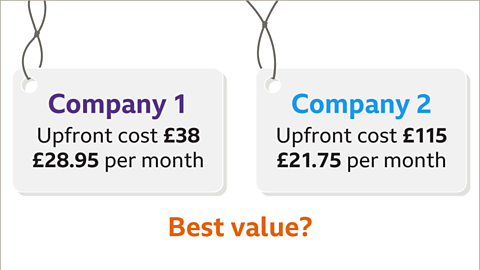
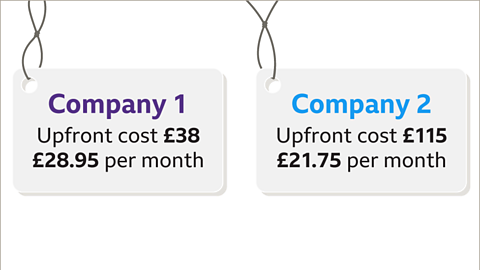
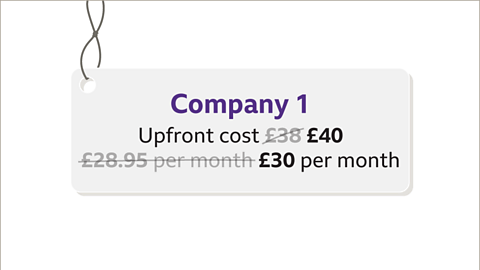
Image caption, Which offer for a 12-month mobile phone contract has the best value for money?
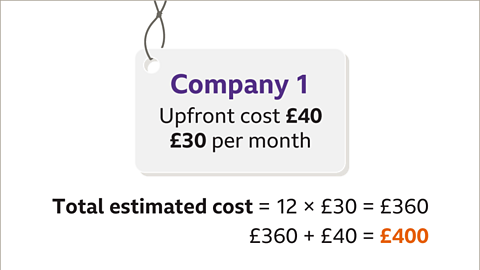
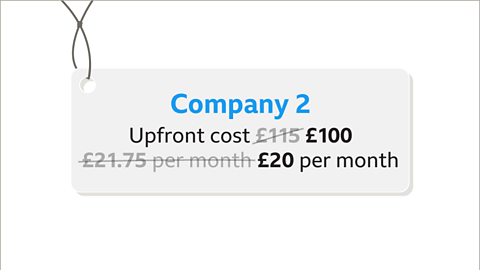
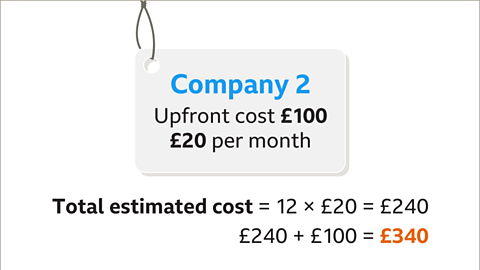
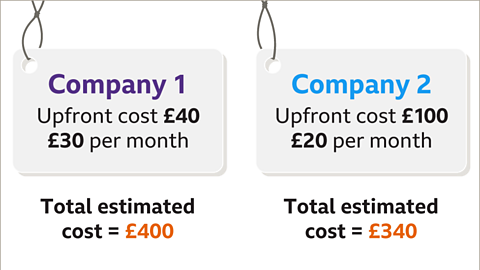
1 of 7
Question
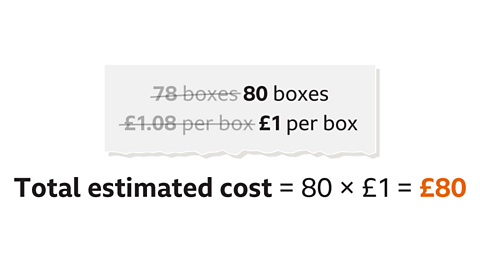
A shop wants to buy 78 boxes of cereal from the wholesaler. Each box costs £1.08. Estimate the total cost of this order.
78 rounded to the nearest ten is 80£1.08 rounded to the nearest £ is £1
The estimated cost of the order is 80 x £1 = £80
Practise estimating
Practise estimating with this quiz.
Quiz
Real-world maths
Estimating numbers is used regularly in everyday life. It is used to make calculations more manageable.
In the video, we see how estimation can be used by a catering company to predict the amount of ingredients needed for an event:0.75 kg of tomatoes are needed for 10 people.
To estimate how much produce to buy for the full party of 70 people, we need to multiply 0.75 by 7:0.75 × 7 = 5.25 kg
This tells us that we need at least 5.25 kg of tomatoes. The manager adds an extra 10% on to the total in case some of the tomatoes are squashed or damaged, and rounds up to 6 kg.
This is only an estimate as it is not always possible to predict exactly how many tomatoes are required.
Watch this film to see how an events manager uses estimating for a large scale event.
I own and run an events and catering company. So, we cater for all types of events. They might be businesses, they might be private clients, it might be weddings.
Estimation is a tool that we use when quoting for clients, when we're multiplying recipes and ultimately when we're ordering food. Having the basic skills of addition, subtraction … obviously it gets more complicated than that at various points but having a really basic understanding is what's so important. Once you've got that foundation, it's then really simple to be able to grow your business and grow your services.
For us, we try and work to recipes. We've got a very simple recipe, an Italian salad with cherry tomatoes, and we use this recipe when catering for events. For example, last month we were doing a wedding for 70 people. We want to be careful not to over-order, as the tomatoes don't freeze or keep for very long, and we don't want them to end up as waste.
So, for the salad recipe we know we need 0.75 kilograms of tomatoes to feed 10 people. We'll multiply this by 7 to get the quantity needed for 70 people, which is 5.25 kilograms. We then want to make sure we add about ten per cent of that on top, so we have enough extra in case some of the tomatoes are squashed, or the odd plate is dropped. Anything can happen in a busy kitchen like ours. The total amount of tomatoes I estimate we need for the event is 5.75 kilograms. So, I usually round this up to the nearest kilo, giving me 6 kilograms of cherry tomatoes for the salad.
Once I see everyone has been served the right portion and we have enough ingredients to cover the event, that's the main thing. At the end of the day, the less waste the better!
Play Sudoku with BBC Bitesize!
Every weekday we release brand new easy, medium and hard Sudoku puzzles. Perfect for testing your skill with numbers and logic.
More on Rounding and estimating
Find out more by working through a topic
- count3 of 6
- count4 of 6
- count5 of 6
- count6 of 6