Key points
When it’s not necessary to give an exact value, numbers can be rounded. Rounding means making a number simpler but keeping its value close to what it is.
When rounding numbers the result is less accurate, but easier to use. For example, if there were 39,828 spectators at a music concert the headline in a newspaper report might say 40,000 fans attended the event.
Depending on the size of the numbers, numbers can be rounded up or down to the nearest:
- whole number
- ten
- hundred
- thousand
Rounding Numbers
There are steps which can be followed to decide whether a number should be rounded up or rounded down.
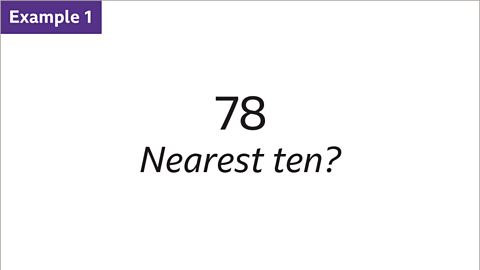
Identify the One of the symbols of a number system, most commonly the symbols 0, 1, 2, 3, 4, 5, 6, 7, 8 and 9 in the column that you are rounding to. For example, if rounding to the nearest hundred then identify the digit in the hundreds place value column.
Leave the digit the same if the next digit is less than 5 (this is called rounding down)but increase it by 1 if the next digit is 5 or more (this is called rounding up)
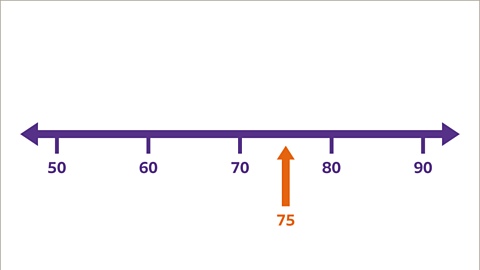
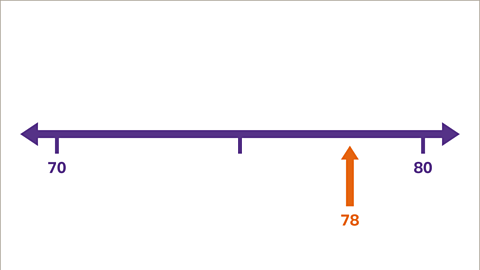
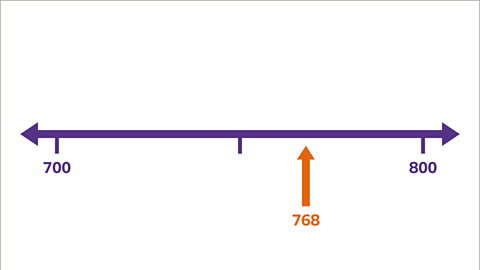
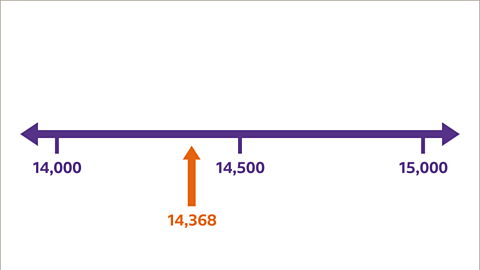
Using a A straight line on which numbers are marked at equal intervals. as a representation is a useful way of visualising whether a number is closer to one value or another.
When using values on a number line, marking the halfway point can help to identify whether to round up or down.
Examples
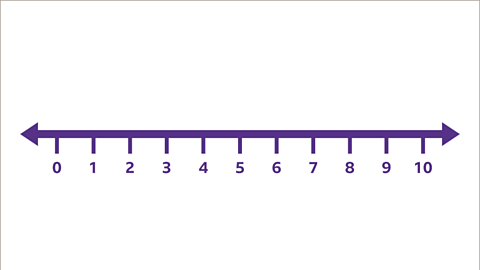
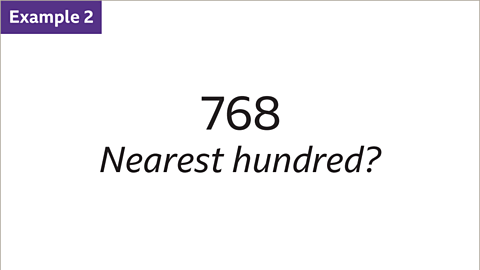
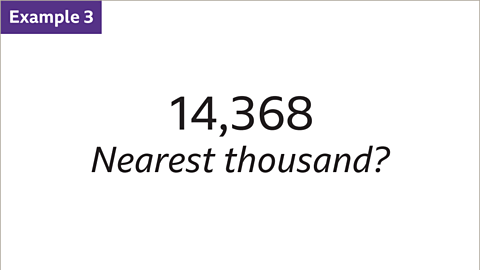
Image caption, Use a number line to identify if you need to round up or round down. The whole numbers are equally spaced on this number line. The values increase by each step to the right.

1 of 9
A range of values
Sometimes you are given a rounded version of a number and need to explain what the original value was. In effect you need to work backwards.
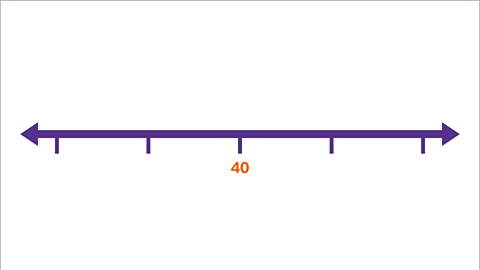
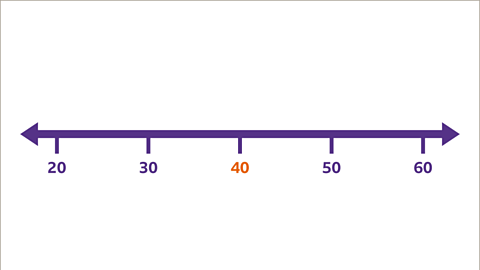
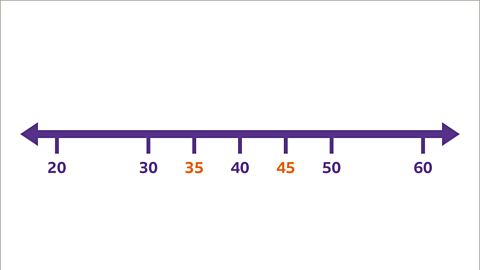
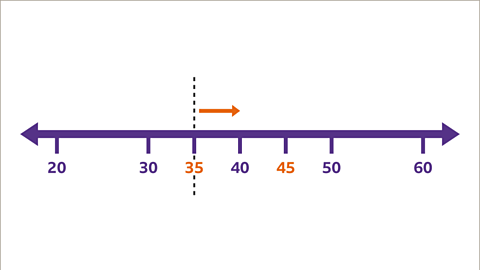
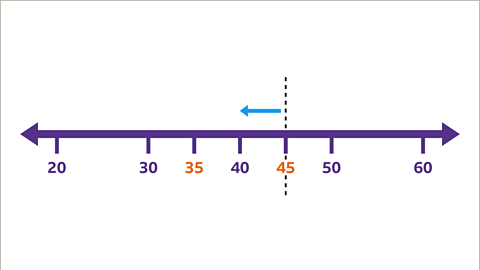
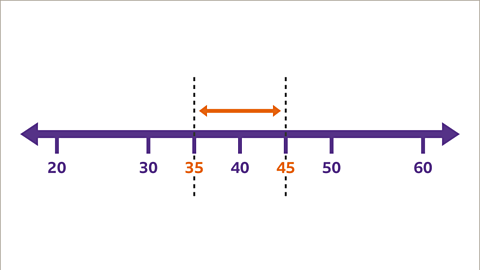
Drawing a number line is a helpful representation to identify the minimum and maximum values that could have been used.
The number line should be increasing in the same sized step that the rounded value has been given to. (For example, if the rounded value is 70 to the nearest 10, then the number line should increase in steps of 10)
Examples
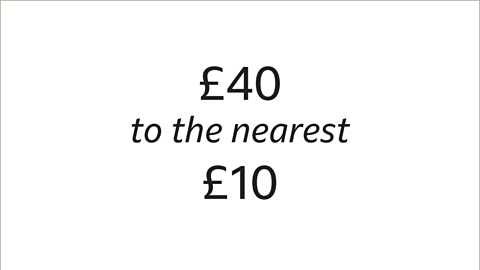
Image caption, The price of a meal is rounded to the nearest £10 to cost £40. What different amounts could the original bill have been?
1 of 7
Question
Which of these numbers when rounded to the nearest hundred give 11,600?
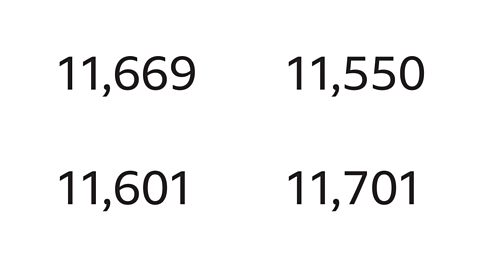
When rounded to the nearest hundred, 11,550 and 11,601 would give 11,600
11,669 is rounded to 11,700
11,701 is rounded to 11,700
Practise rounding whole numbers
Practise rounding whole numbers in this quiz.
Quiz
Real-world maths

Rounding whole numbers is used regularly in everyday life.The exact figure or value is not always needed initially, particularly if people are deciding whether they can afford a product or not.
When shopping people often round the value of items they are buying to the nearest £1 and add them together to make sure they don’t over-spend.
Newspapers and magazines may round the attendance at sporting events or festivals to the nearest thousand or ten thousand in their headlines, rather than printing the actual attendance. This makes it easier for the audience to read and remember.
Play Sudoku with BBC Bitesize!
Every weekday we release brand new easy, medium and hard Sudoku puzzles. Perfect for testing your skill with numbers and logic.
More on Rounding and estimating
Find out more by working through a topic
- count2 of 6
- count3 of 6
- count4 of 6
- count5 of 6