Learn how to write a report
Discover the skills you need to write a clear and informative report.
In this article you can learn:
- What a report is
- How to research for a report
- How to structure a report
This resource is suitable for informative writing for primary school learners.
Video - Report writing
Watch this video to learn how to research and structure an informative report.
Discover the skills you need to write clear and informative reports
How to write a report.
Reports present the facts on a subject in a clear, informative and interesting way for the reader.
It looks like this poor soul has to create a report for his boss.
How should he go about doing it? A report is a well organised factfile. But where do these facts come from?
They come from research. You can gather the relevant information you need from many places.
From your library by choosing books about your report subject or checking encyclopaedias and as long as you keep safe and secure, the internet is wonderful for cross-checking your sources.
Just be careful what you search for.
Once you have all of the information, it is time to write the report. You can write a report in whatever way you like: on paper, in a jotter or on a computer.
The important thing is that you present the information in a clear way to the reader.
Begin the report with a proper title so your reader knows what you're writing about.
Now, you need an introduction, a sentence or two that summarises what you report is about.
Break up your information was subheadings. If you organise your notes, this will be an easy task.
Using your research, write clear detailed paragraphs in your own words under each heading.
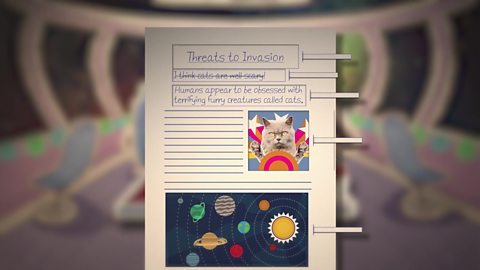
Remember this is factual writing so don't include your opinion and the language should be formal.
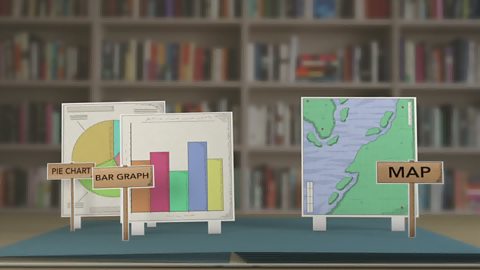
Think about your layout and maybe you could add some pictures to help illustrate the points in each part of your report.
These can be maps, graphs, diagrams, drawings or photographs.
Congratulations. Your report has informed your boss in a clear and most effective way.
What is a report?
A report is a well-organised fact file.
Reports present the facts on a subject in a clear, informative and interesting way for the reader.
How to research for a report
Facts come from research. You can gather the relevant information you need from many places. For example:
- choosing books from a library about your report’s subject
- checking encyclopaedias
- researching and cross-checking your sources on the internet
It is important to stay safe and secure when you're online. Be careful what you search for.
Once you have all the information, it is time to write the report. You can write a report in whatever way you like: on paper, in a jotter or on a computer.
The important thing is that you present the information clearly.
Learn to tell the difference between facts and opinions: What are facts and opinions?
How to structure information in a report
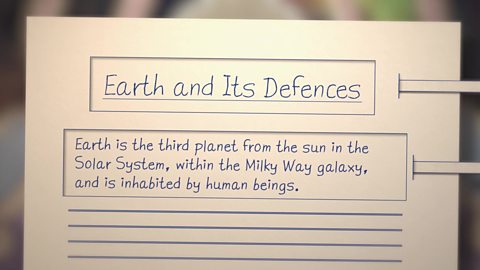
Image caption, Title and introduction
You need a title for your report so your reader knows what you are writing about. After your title, your report should have an introduction - a sentence or two that summarises what your report is about.
1 of 3
Title
Begin the report with a proper title so your reader knows what you are writing about.
Introduction
Now you need an introduction. This is a sentence or two that summarises what your report is about.
Sub-headings and paragraphs
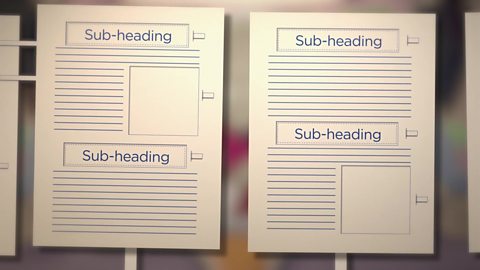
- Break up your information with sub-headings.
- If you organise your notes this will be an easy task. Using your research to help you write clear, detailed paragraphs, in your own words under each heading.
- Remember this is factual writing, so do not include your opinion and the language should be A way of speaking or writing. In formal writing you should avoid using any words or phrases that seem casual or chatty. .
Illustrations
Think about your layout. Could you add some pictures to help illustrate the points in each part of your report? These could be:
- maps
- graphs
- diagrams
- drawings
- photographs
Remember:
The report should inform the reader in a clear and effective way.

Key words about report writing
- Check your connection, refresh the page and try again. – For example: 'We learned all about the seaside from the informative talk and slide show.'
- Check your connection, refresh the page and try again. – For example: 'I was trying to find a book in the library that was relevant to the seaside.'
- Check your connection, refresh the page and try again. – For example: 'They were asked to remember the factual piece of information.'
Test your knowledge
Quiz
Challenge

Write your own report.
- Choose a subject you’d like to find out about and prepare to research about it.
- Gather your facts and decide on a title. Now you can begin to create your report.
- Make it interesting by adding illustrations and use sub-headings to help with the layout.
There's more to learn...
How do I record and display data? video
Learn more about using graphs and charts to display information.

Is information on the web always reliable? revision-guide
The web is a great place to find information. But should you trust everything you see?

More on Factual writing
Find out more by working through a topic
- count7 of 8
- count1 of 8

- count2 of 8