Quick version
A significant percentage of Irish migrants settling in Scotland were Protestants. They had a different experience of building a new life in Scotland than Irish Catholics.
- Irish Protestants shared the same religious faith as most of Scotland.
- Irish Protestant migrants tended to be more highly skilled than Irish Catholic migrants and therefore found better jobs.
- Irish Protestants generally had an easier time assimilating into Scottish society.
- Sectarian tensions between Catholic and Protestant present in Ireland were renewed in Scotland.
The Protestant organisation, the Orange Order, was founded in Ireland in 1795. By the 1830s, Orange Lodges were established in Scotland in areas with larger communities of Irish Protestants.
Irish Protestants contributed to Scottish society through involvement in politics and trade unionism and through sports such as involvement in football clubs such as Rangers, Hearts, and Dundee F.C.
Learn in more depth
Irish Protestant migration to Scotland
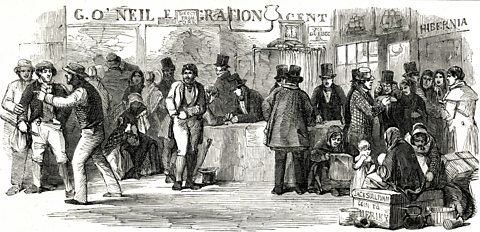 Image source, ALAMY/Chronicle
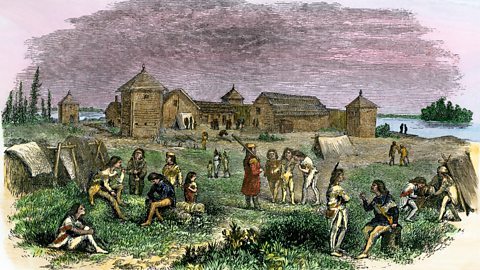
 For many of the Protestant Irish who emigrated in the 19th century, Scotland was not a strange land. Many of their ancestors had moved to Ireland (in particular the Ulster region) from Ayrshire, Wigtownshire and Argyll in the 17th century during the process known as the Plantation of Ireland.
Since then, links had been strengthened through education, trade and family connections – and as a result, assimilation into mainstream Scottish society was often much more straightforward.
By 1830, Irish Protestants made up around a quarter of the total Irish immigration to Scotland, although in some areas and occupations their number was much greater than this average suggests.
The Irish Potato Famine (1845-49) saw mass migration from Ireland. Scotland was a common destination for Irish migrants, and a significant percentage of the migrants arriving in Scotland were Protestants from the northern counties of Ireland.
Image source, ALAMY/Chronicle Irish Protestant assimilation in Scotland
Irish Protestant migrants tended to assimilate more easily into Scottish society than Irish Catholics. There were several reasons for this:
- Scotland was largely Protestant and so Irish Protestants shared the same religious faith as most Scots
- Protestant communities in Ireland had historic cultural links to Scotland
- Scotland and northern parts of Ireland had similar industries – such as shipbuilding – so work was easy to find in Scotland
This ease of assimilation extended into other areas of society. The children of Irish Protestant generally attended the same state schools as Scottish Protestant children.
Employment for Irish Protestants
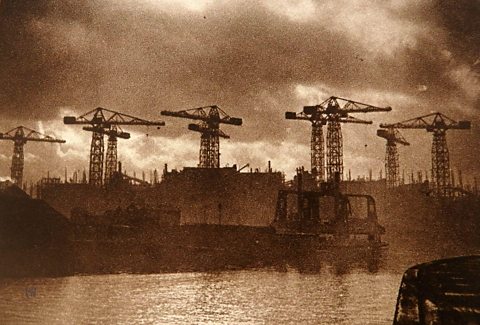 Image source, ALAMY
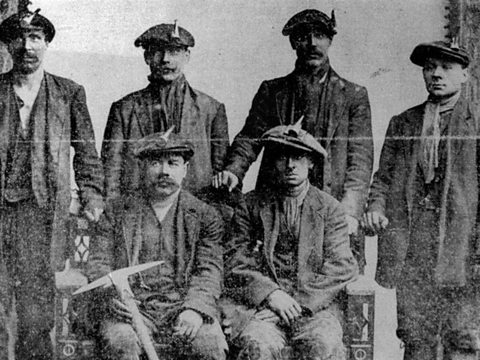
Protestant Irish migrants were usually found in higher-skilled occupations than their Catholic counterparts.
Protestants often arrived in Scotland having been directly recruited by employers for skilled or semi-skilled employment. Adverts were placed in Belfast newspapers and those who applied travelled to Scotland with warrants provided by their firms.
On arrival in Scotland, many found themselves with accommodation allocated to them and schooling provided for their children.
The iron foundry, Bairds of Gartsherrie, employed large numbers of Protestant Irish in its Coatbridge works. Protestant Irish workers also outnumbered Catholic workers in the textile industry in some areas.
Another major employer of Protestant Irish workers was the Clyde shipyards. The Harland and Wolff Shipyards in the Govan area of Glasgow were the Scottish base of Belfast's famous Harland and Wolff Shipyards. It was not unusual for Protestant workers from the Belfast yards to move to Scotland and find work in the Clyde yards.
Partly due to the influx of Protestant workers, the Govan community became strongly associated with Protestantism and Irish Unionism.
Image source, ALAMYIrish Protestantism and Scottish society
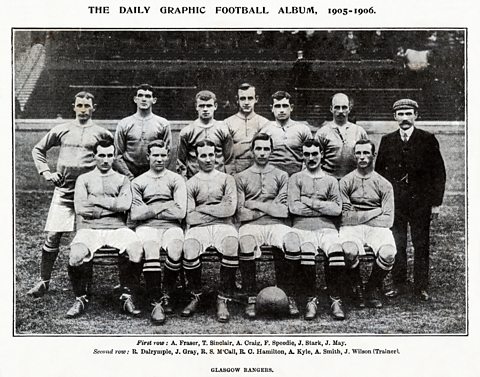 Image source, Lordprice Collection / ALAMY
As was the case in communities that were home to significant numbers of Irish Catholics, one visible way Irish Protestants contributed to Scottish society was through football clubs.
Whereas Glasgow club Celtic F.C. was formed to cater for the city's Irish Catholic community, Rangers F.C. became associated with Protestantism and Irish Unionism.
In Edinburgh, Hearts of Midlothian F.C. was traditionally viewed as a Protestant club while city rivals Hibernian F.C. catered, like Celtic, for the city's Irish Catholic community.
Similarly, Dundee F.C. was traditionally associated with Protestantism while city rivals Dundee United F.C. (originally formed as Dundee Hibernian) was established for the Irish Catholic community.
While sectarianism is still a feature of Scottish society, most football clubs have strived to neutralise the religious aspects to supporting the clubs.
Image source, Lordprice Collection / ALAMYGrowth of Orange Orders
Founded in Armagh in 1795, the Orange Order, (and named after King William III, Prince of Orange) held the aim of defending Protestants against the Catholic secret societies that were becoming assertive in the area. By 1830, there were lodges in Galloway, Ayrshire, and Glasgow.
Although not all Protestants were members of the Orange Order, there is a correlation between the strength of the Order and the scale of Protestant settlement in a town or region.
For example, all six Orange Order lodges in Glasgow were situated in weaving districts where significant numbers of Protestant had settled.
Membership of the Orange Order became a family tradition and "Orangism" began to influence basic rituals of life – weddings and funerals for example.
In the 1860s, an influx of skilled men from Belfast to work on the Clyde shipyards further strengthened Protestant community links and identity in the west of Scotland.
This helped to maintain the close links between Ulster and Glasgow. It also increased the number of Orange lodges in shipbuilding districts.
By 1914, the three largest “Orange” areas in the country were found in Greenock, Partick and Govan – all ship building areas.
Relationship with Catholic communities
The relationship between Irish Protestant and Irish Catholic communities in Scotland is complex.
The religious tensions between the groups as experienced in Ireland was played out in Scotland. The two communities often competed for jobs and housing and political and social influence in their new adoptive nation.
Despite conflict, cooperation between the Protestants and Catholics in Scotland also has long traditions. Both Irish Protestants and Irish Catholics were active in trade unions to improve pay and conditions for all workers irrespective of religion.
The Labour Party movement in Scotland also traditionally appealed across religious divisions and had strong representation of Catholics and Protestants in its membership.
Test what you have learned
Quiz
Recap what you have learned
Irish Protestant migrants had a different experience of building a new life in Scotland than Irish Catholics.
- Irish Protestants shared the same religious faith as most of Scotland
- Irish Protestant migrants typically found better jobs
- Irish Protestants generally had an easier time assimilating into Scottish society
Sectarian tensions between Catholic and Protestant that had been present in Ireland were renewed in Scotland.
The Protestant organisation, the Orange Order, was founded in Ireland in 1795 but Orange Lodges were established in Scotland in areas with larger communities of Irish Protestants during the mid 1800s.
Irish Protestants contributed to Scottish society through involvement in politics and trade unionism and through sports such as involvement in football clubs such as Rangers, Hearts, and Dundee F.C.
More on Migration and Empire
Find out more by working through a topic
- count6 of 13
- count8 of 13