Before castles were built in Scotland, people built different types of shelters to keep warm and dry. Some shelters were also built to keep people or their things safe from attack.
In this article you can find out:
- What kinds of buildings existed in Scotland before castles
- What a fortification is
- Examples of early fortifications in Scotland
This resource is suitable for Castles topics for P2, P3, P4, P5, P6 and P7 (First and Second Level Curriculum for Excellence).
Find out what types of buildings existed in Scotland before castles were built.
Early fortifications
We call these early buildings fortifications. A Check your connection, refresh the page and try again. is a building, wall or fence used to keep people and places safe from attack.
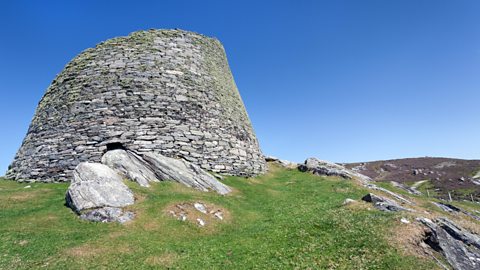
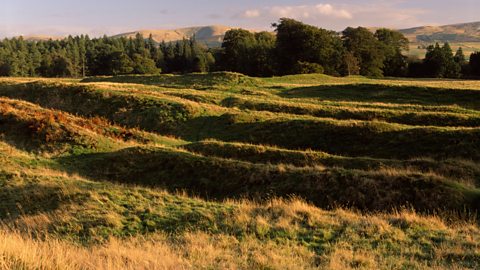
Look through the slideshow to see different types of fortifications from across Scotland.
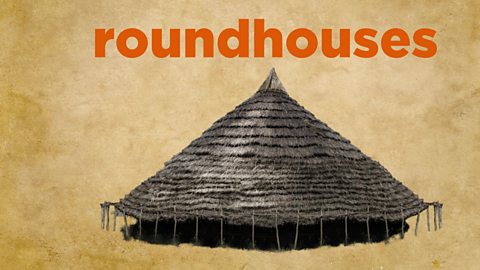
Image caption, Roundhouse
A roundhouse is a circular house with a thatched roof and walls made from local material.
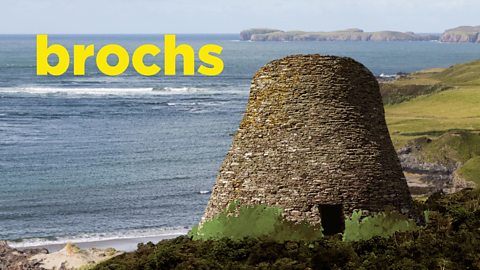
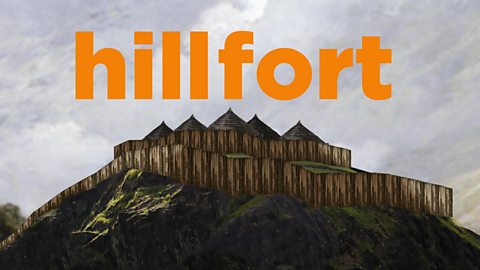
1 of 5
Evidence of early fortifications in Scotland
Even though these A building, wall or fence used to keep people and places safe from attack. are very old you can still see evidence or where they were and what they looked like today.
Look through the slideshow. Try comparing the ruins you can see now with what they might have been like hundreds or thousands of years ago.
Early fortifications in Scotland
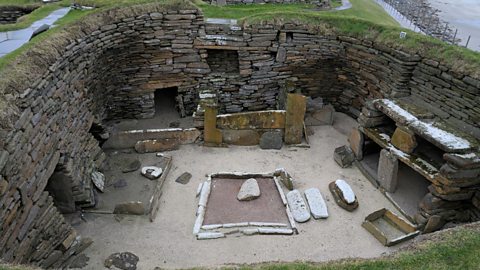
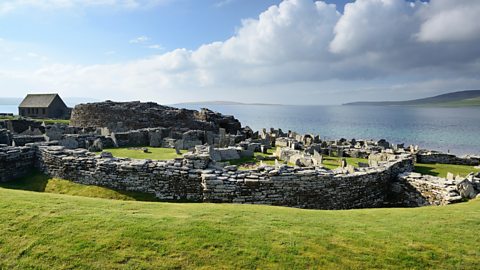
Image caption, Roundhouse at Skara Brae
Some ancient roundhouses have been found in the ground at Skara Brae, Orkney. They are about 5000 years old but you can still see some of the furniture and where they kept a fire burning. (BigTom / Alamy Stock Photo)
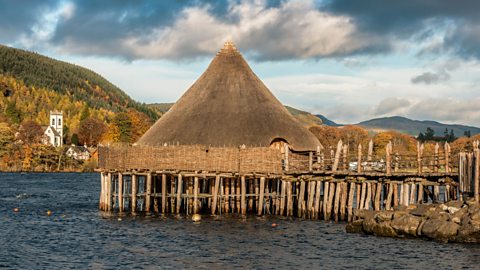
1 of 5
Discovering Skara Brae with Stenness Community School
Join pupils from Stenness Community School in Orkney to learn all about the fascinating history of Skara Brae.
Made in collaboration with Historic Environment Scotland.
Test your knowledge
Quiz
Draw an early fortification.
Choose an early A building, wall or fence used to keep people and places safe from attack. to draw a picture of:
- roundhouse
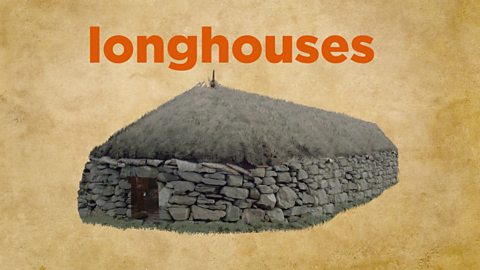
- longhouse
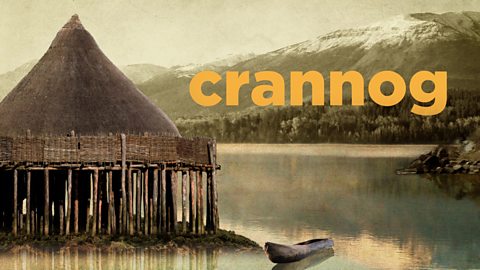
- crannog
- broch
- hillfort
Research the building you have chosen. Find out about its features and try to include them in your drawing.
Some questions to think about:
- What shape is it? Was it round or long and narrow?
- What materials did people use to build it? Did they use stone or wood?
- Where was it usually built? Was it built up high or near water?
Explore more
Life in Scotland before castles
Before castles were built, different communities of people built their own shelters and fortifications in Scotland. For examples, Vikings built longhouses and Romans built hillforts.
Life in a Viking settlement. video
Find out about life in a Viking settlement with Bitesize - 2nd level History.

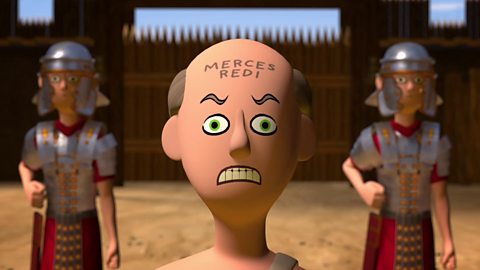
Life in a Roman fort. video
Forts were camps where Roman soldiers lived. Find out more.
More on Castles
Find out more by working through a topic
- count3 of 16
- count4 of 16
- count5 of 16

- count6 of 16