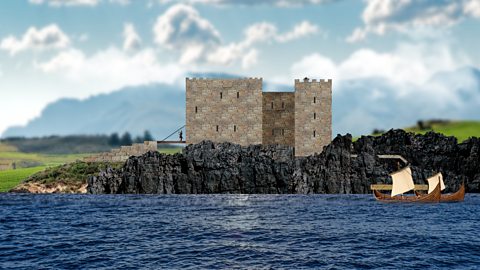
King David I organised the people that lived around his castles by creating towns called Royal Burghs.
In this article you can find out:
- Who King David I was
- What a burgh was
- Why burghs and marketplaces were built around castles
- Types of goods sold at a Medieval market
This resource is suitable for Castles topics for P2, P3, P4, P5, P6 and P7 (First and Second Level Curriculum for Excellence).
Find out more about burghs and marketplaces in the video below.
King David's burghs
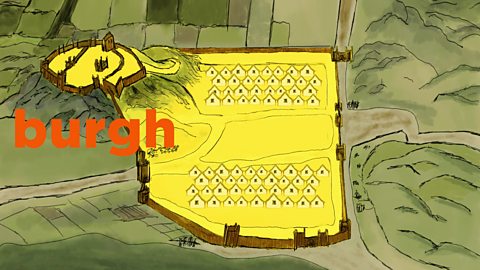
- Before King David I, there were no official towns in Scotland.
- People would often set up houses near castles and they would make and sell things.
- King David I decided to organise these groups of houses into royal burghs.
- These burghs often had marketplaces where people could buy and sell things they grew or made.
Medieval markets
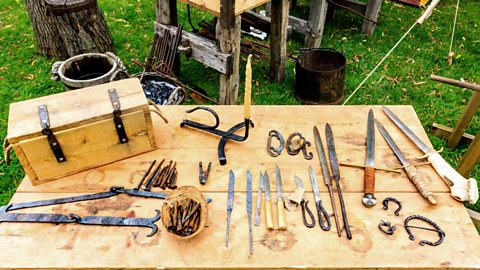
Click on the slideshow below to find out what people made and sold at burgh markets.
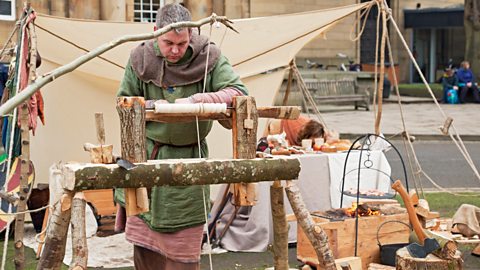
Image caption, Woodwork
Wood was one of the most common building materials in the Middle Ages. Craftsmen who worked with wood were called "carpenters". They made furniture and other objects from wood and sell them at the market.
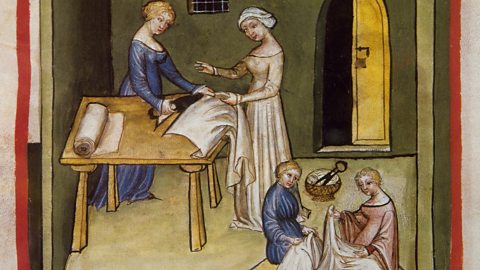
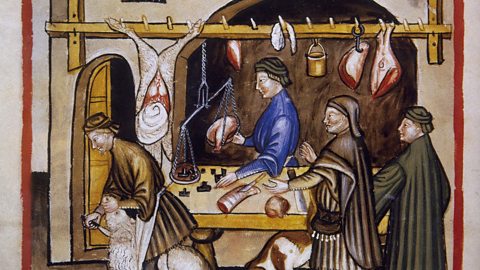
1 of 4
Did you know...
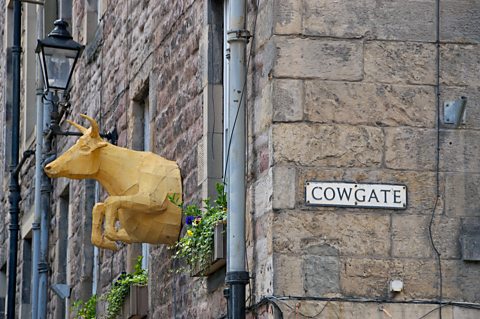
- The Cowgate in Edinburgh was named after the cattle which were sold at the markets there in 1428.
- Cows were herded down the street on market days.
- The word "gate" is a Scots word for "way" or "road".
Medieval homes
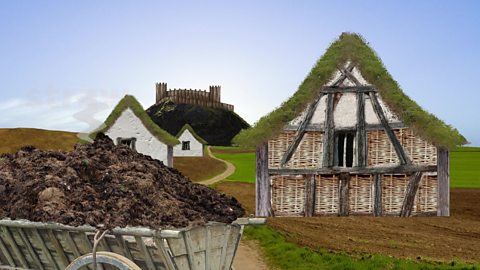
Not everyone could live in a big stone castle, the poorer people lived in small huts, made of wattle and daub.
Wattle and daub was woven wooden strips stuck together with wet soil, clay, or maybe even cow poo!
Test your knowledge
Create a poster for a medieval market
Imagine you have a stall at a medieval marketplace. You would like more people to visit the marketplace and buy your goods. Design an eye-catching poster encouraging people to visit the market.
You might want to ask yourself:
- Where is the market? Is it near a royal castle?
- When will the market take place? Medieval markets were usually held once a week.
- How much does it cost to enter the market? Remember, King David I would charge people a to buy and sell at his markets.
- What kinds of things can they buy there?
If you need some help designing a poster, take a look at this guide: How to make a poster
More on Castles
Find out more by working through a topic
- count5 of 16

- count6 of 16
- count7 of 16

- count8 of 16